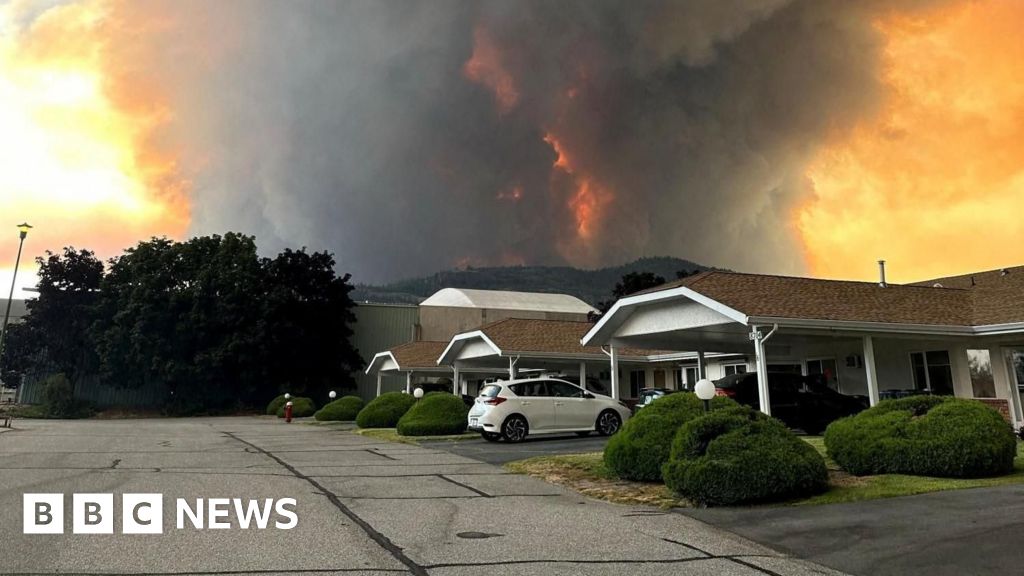
More than 12,000 residents in British Columbia’s Okanagan region remained under evacuation orders Monday as the Bald Range wildfire continued to burn out of control. Officials are currently assessing the extent of property damage, though Summerland Mayor Doug Holmes reported that some homes have been lost. One 80-year-old woman died while attempting to evacuate, according to police.
The Bald Range fire began Friday and expanded to 53 square miles (136 square km) within hours. This activity follows the Bradley Creek fire, another regional blaze that officials believe destroyed more than 200 homes before being held by wildfire crews. The Okanagan region, noted for its vineyards, has faced extreme drought; the Okanagan Basin Water Board reported in July that the Okanagan Lake reached its lowest level since 1992.
British Columbia Premier David Eby declared a state of emergency over the weekend, citing the speed at which the fires are moving. As of Monday, more than 100 fires were burning across the province, with 70 starting in the last week. Residents in Summerland and Peachland described rapid evacuations, with some reporting that fire reached their properties within four hours of smoke first being visible.
The scale of the destruction is currently being quantified by local officials. While the Bradley Creek fire is believed to have destroyed 200 homes, the total loss from the ongoing Bald Range fire is not yet known. Mayor Doug Holmes stated that the impact is likely to be widespread enough that "everybody is going to know somebody that has lost a home." Beyond the immediate threat to life and property, the fires have international reach; similar drought-driven blazes in Washington state led to the evacuation of 65,000 people, while France and Spain are also reporting record-level wildfire activity this season.
What happens next depends on weather conditions and containment efforts. As of Monday, the Bald Range fire remains out of control, and officials warned that dry lightning, high temperatures, and winds in the forecast could ignite new fires. While the Bradley Creek fire has been contained, the provincial state of emergency remains in effect. Displaced residents must wait for official damage assessments and the lifting of evacuation orders before they can return to check their homes or retrieve remaining livestock.