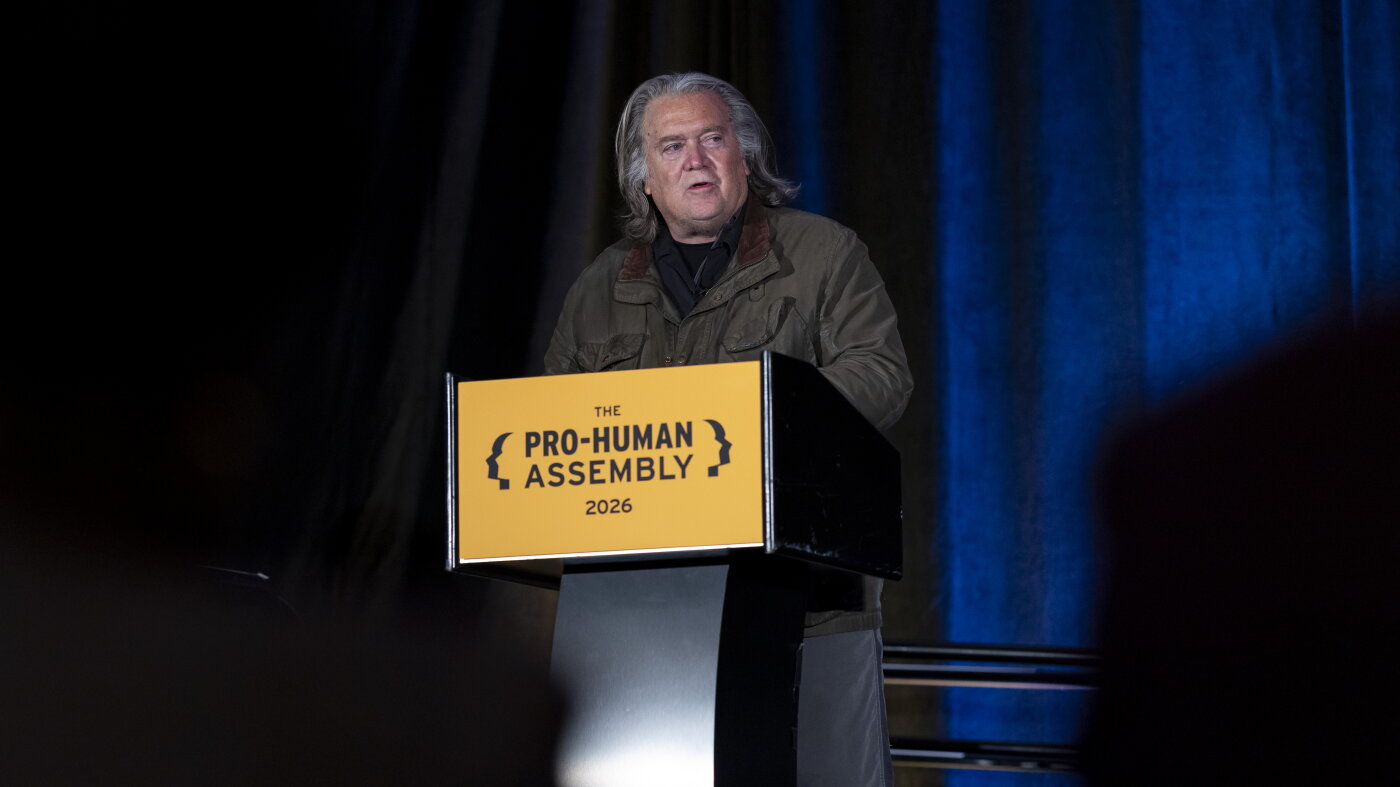
Former White House chief strategist Steve Bannon expressed support for regulating artificial intelligence (AI) during a public appearance on Tuesday, September 15, 2026. Bannon called for a slowdown in AI development to allow the government time to establish a regulatory framework. This position differs from that of President Donald Trump, who recently stated that the only necessary "guardrail" for the technology is a "smart president."
The debate in Washington has intensified as technology executives and researchers raise concerns about the capabilities of new AI systems. In early September 2026, researcher Jacob Coxon resigned from the AI firm Anthropic, citing concerns about increasingly powerful models. Subsequently, Anthropic CEO Dario Amodei, OpenAI CEO Sam Altman, and xAI's Elon Musk have all supported slowing the development of more advanced AI models. President Trump has rejected these calls, arguing that a slowdown would allow China to gain a competitive advantage.
Bannon proposed that the U.S. government take immediate executive action followed by congressional legislation to create a regulatory apparatus, which he compared to the Atomic Energy Commission. To address concerns about international competition, Bannon suggested that Washington should cut off the Chinese Communist Party's access to U.S. technology and expel Chinese nationals currently employed by American AI companies. He argued that these steps would provide the time needed to develop oversight without ceding ground to China.
For the technology sector, these regulations could change how companies manage financial risks and compete. Bannon argued that current proposals for new rules might create a "moat" for large established labs while shifting financial risks onto the public. If a new regulatory body similar to the Atomic Energy Commission were established, AI developers would face federal oversight regarding the safety and deployment of their models. This could result in new compliance costs and longer wait times for product launches, which would eventually be reflected in the pricing or availability of AI tools for general consumers and businesses.
The outcome of this debate will also influence U.S.-China diplomatic and economic relations. Data shows that U.S.-China AI collaboration has occurred more frequently than collaboration between any other two nations since 2018. Implementing a total cutoff of technology sharing would end these partnerships and alter the global AI research market. What happens next depends on executive and legislative actions; meanwhile, President Trump is planning to host Chinese President Xi Jinping on September 24, 2026, where technology and trade relations are expected to be discussed.