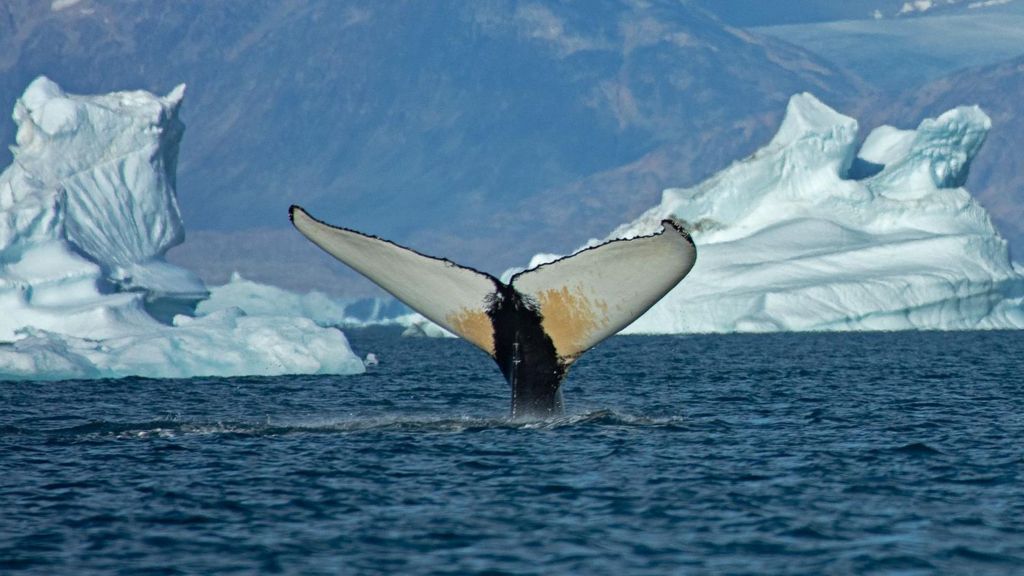
A decades-long study published in the journal Frontiers in Marine Science has found that humpback, minke, and fin whales are moving into East Greenland waters as sea ice retreats. Researchers led by Prof. Mads Peter Heide-Jørgensen of the Greenland Institute of Natural Resources report that these large marine mammals, previously absent from the region due to ice cover, are now conducting seasonal feeding activities in the warming subarctic waters.
Historically, these coastal waters were inaccessible to baleen whales because of thick sea ice. Scientists attribute the current influx to rising sea temperatures and the resulting availability of fish and krill. By combining data from ship-based surveys, aerial surveys conducted in 2015 and 2024, satellite tracking of 15 whales, and testimony from Inuit hunters, the research team documented what they described as a "major ecological regime shift."
The scale of the arrival is significant, with ship-based surveys recording zero humpback sightings until 2006. By 2024, researchers estimated that approximately 4,000 humpback whales, 6,000 fin whales, and 6,000 minke whales visited the Greenland Sea during the summer. These animals are estimated to consume at least 800,000 tonnes of fish and krill during a single summer season.
On a per-species level, the population of fin and minke whales in these waters has reached 6,000 each, creating new competition for resources that did not exist two decades ago. Individual animals are now able to access feeding grounds that were once blocked by ice, a change that researchers noted is among the most radical observed in the subarctic. However, experts noted it is not yet clear if the total global population of these whales is increasing or if they are simply moving from other areas, such as West Greenland.
The shift establishes a precedent for how climate-driven habitat changes can benefit generalist species while placing specialist species, such as the ice-dependent narwhal, under new pressure. The study indicates that the presence of these whales will likely continue as long as sea temperatures remain elevated and ice remains absent during summer months. Further research will be required to monitor how this influx affects regional fish stocks and whether the displacement of narwhals and belugas leads to long-term population declines for those Arctic species.