The Plain Record

Neutral daily news — clear headlines, complete facts.

Supreme Court

Supreme Court Authorizes President to Remove Most Independent Agency Heads at Will

The Supreme Court ruled in Trump v. Slaughter that the president may fire most independent agency leaders at will, overturning a 1935 precedent.

Background: How the Supreme Court takes a case

Published October 23, 2026 at 9:30 AM EDT

The short answer

The Supreme Court ruled in Trump v. Slaughter that the president may fire most independent agency leaders at will, overturning a 1935 precedent. In the summer of 2026, the U.S. Supreme Court issued a ruling in Trump v. Slaughter that authorized the president to unilaterally remove officers leading nearly all federal independent agencies.

Supreme Court Authorizes President to Remove Most Independent Agency Heads at Will

The Facts

Who
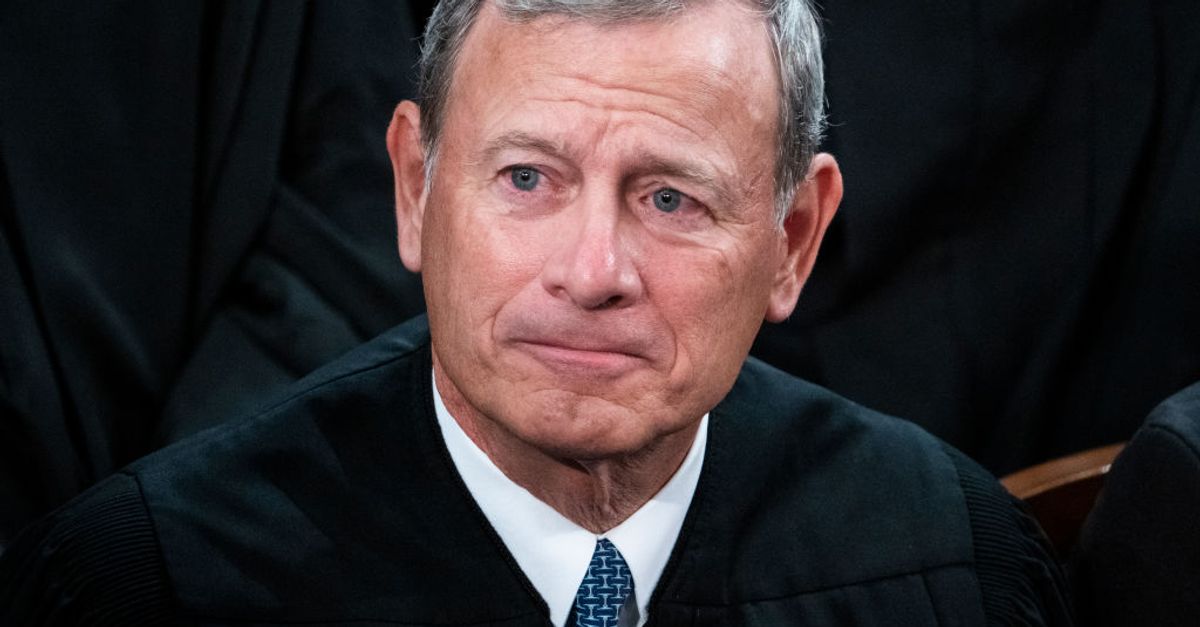
Chief Justice John Roberts, President Donald Trump, and FTC Commissioner Rebecca Slaughter.
What
Supreme Court ruling on presidential removal power and independent agencies.
When
Friday, October 23, 2026
Where
Washington, D.C.
Why
The ruling expands presidential authority by allowing the removal of most independent agency heads at will, overturning long-standing legal protections for those officials.

In the summer of 2026, the U.S. Supreme Court issued a ruling in Trump v. Slaughter that authorized the president to unilaterally remove officers leading nearly all federal independent agencies. Writing for the majority, Chief Justice John Roberts concluded that because these agencies exercise executive power, their leaders must be removable at will by the president to ensure constitutional accountability. The decision effectively overruled the 1935 precedent Humphrey’s Executor, which had protected such officials from being fired without specific cause.

The ruling followed a March 2025 action by President Donald Trump, who fired two Democratic commissioners of the Federal Trade Commission (FTC). One of the removed officials, Rebecca Slaughter, filed suit, leading to the Supreme Court case. The Trump administration argued for the reversal of Humphrey’s Executor, a case that originated from the same agency decades earlier.

Chief Justice Roberts’ opinion described the 1926 case Myers v. United States as \"seminal,\" asserting that the executive power includes the authority to oversee officers through removal. He argued that the modern FTC has accumulated rulemaking and enforcement powers that make it part of the president's constitutional role. However, the court also issued a separate ruling in Trump v. Cook on the same day, maintaining a \"good cause\" removal restriction for Federal Reserve governors based on the \"history and tradition\" of independent monetary policy.

The scale of the impact involves the majority of the nation's executive-branch auxiliaries. While the exact number of affected positions was not reported, the ruling covers agencies with \"vast rulemaking, enforcement, and adjudicatory powers.\" For example, the Consumer Financial Protection Bureau (CFPB), which regulates financial products for millions of households, had its single-director structure successfully challenged in the preceding Seila Law case, a precursor to this broader ruling.

The decision sets a precedent that subordinates the \"vast majority of executive agencies to the president’s will,\" according to Rodger Citron. The only noted exception remains the Federal Reserve, where the court upheld removal protections to preserve independence in monetary policy. Following the Slaughter and Cook decisions on October 23, 2026, the new removal standards became effective, though Justice Clarence Thomas has challenged the reasoning behind the Federal Reserve exception, suggesting future litigation may target remaining independent structures.

Timeline of what happened

Key dates and decisions, in the order they occurred.

  1. 1926

    Supreme Court decides Myers v. United States

  2. 1935

    Supreme Court decides Humphrey’s Executor v. United States

  3. 1983

    John Roberts writes memo regarding independent agencies

  4. 2010

    Supreme Court decides Free Enterprise Fund case

  5. 2020

    Supreme Court decides Seila Law LLC v. CFPB

  6. March 2025

    President Trump removes two FTC commissioners

  7. October 23, 2026

    Supreme Court decides Trump v. Slaughter and Trump v. Cook

Summaries are written by The Plain Record to state the facts of a story plainly and without political slant. Drafted with AI assistance and checked against the source record before publication. See how we report, or report a correction.

← Back to the front page

Questions readers ask

What happened: Supreme Court Authorizes President to Remove Most Independent Agency Heads at Will?

In the summer of 2026, the U.S. Supreme Court issued a ruling in Trump v. Slaughter that authorized the president to unilaterally remove officers leading nearly all federal independent agencies. Writing for the majority, Chief Justice John Roberts concluded that because these agencies exercise executive power, their leaders must be removable at will by the president to ensure constitutional accountability.

Who is involved?

Chief Justice John Roberts, President Donald Trump, and FTC Commissioner Rebecca Slaughter.

When did this happen?

Friday, October 23, 2026

Where did this happen?

Washington, D.C.

Why does this matter?

The ruling expands presidential authority by allowing the removal of most independent agency heads at will, overturning long-standing legal protections for those officials.