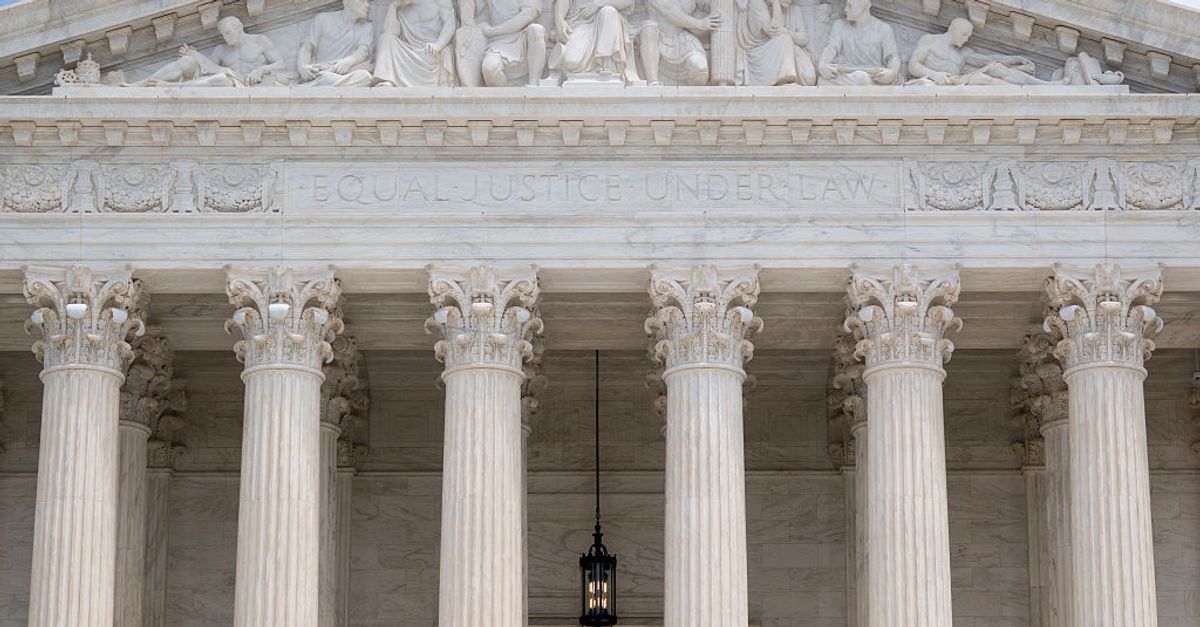
The Supreme Court on Wednesday declined to pause a lower court order that prevents the Federal Bureau of Prisons (BOP) from implementing a new healthcare policy for transgender inmates. The brief, unsigned order leaves in place a prohibition against a policy that would have restricted access to hormone therapy and "social accommodations" like makeup, wigs, and padding. Justices Samuel Alito and Clarence Thomas noted they would have granted the government’s request to freeze the lower court's decision, though they provided no explanation for their dissent.
The dispute stems from a policy the BOP adopted in February 2026, which followed an executive order signed by President Donald Trump in January 2025. The executive order directed the attorney general to ensure no federal funds are used for medical procedures or drugs intended to conform an inmate's appearance to the opposite sex. The BOP stated it developed its specific February 2026 policy independently, citing "the latest scientific information" and characterizing the standards of the World Professional Association for Transgender Health as "unreliable."
Three transgender inmates filed a class-action lawsuit challenging the policy, leading Senior U.S. District Judge Royce Lamberth to block its implementation on August 26. The U.S. Court of Appeals for the District of Columbia Circuit subsequently declined to freeze Lamberth’s order, prompting U.S. Solicitor General D. John Sauer to appeal to the Supreme Court on September 28. Sauer argued the district court had substituted its own judgment for that of prison administrators and failed to grant the agency proper deference.
The legal outcome preserves the current availability of hormone therapy and items such as wigs and padding for these inmates while the underlying litigation continues. The BOP had argued the restrictions were necessary because providing gender-transition surgeries could lead to inmate resentment and potential attacks, whereas the inmates argued the agency failed to provide a "reasoned explanation" for the policy change as required by federal administrative law. The cost of these treatments is borne by the federal government, though the specific dollar amount was not reported.
The Supreme Court’s decision does not resolve the final legality of the BOP policy but ensures it remains blocked during the ongoing legal challenge. The court did not provide reasoning for its delay in acting or for the final order itself. The next steps involve further proceedings in the federal court system to determine whether the policy violates administrative laws or constitutional standards, though specific future court dates were not reported.