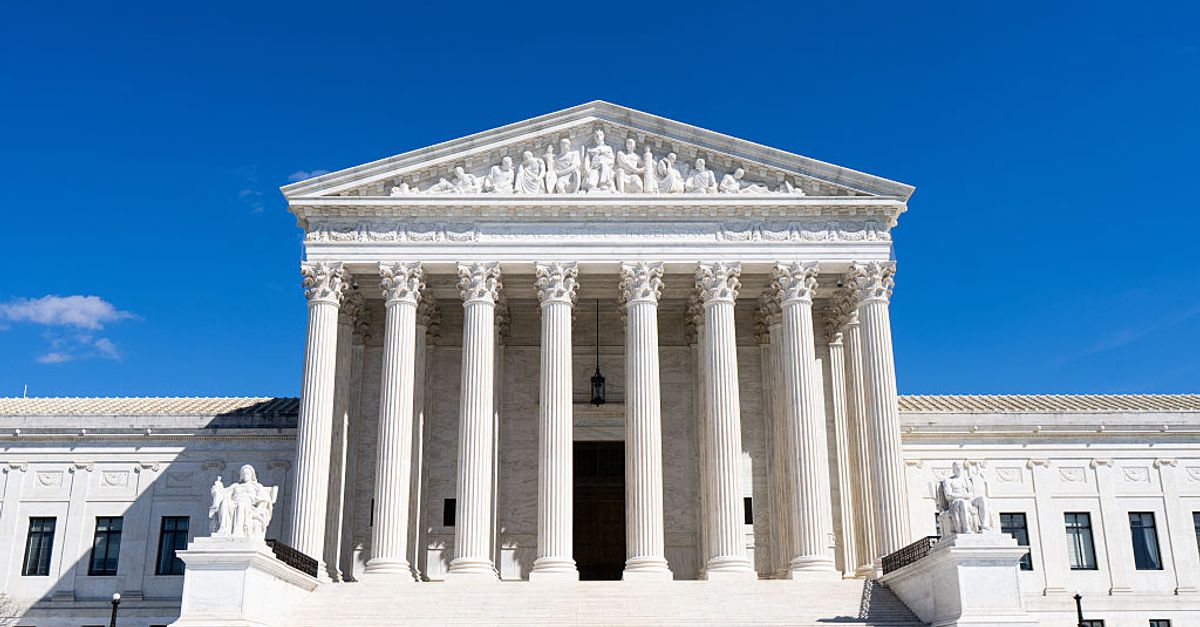
The Supreme Court on Tuesday declined to restore a Biden-era regulation that granted immigration judges the authority to suspend certain deportation proceedings. In a brief, unsigned order with no noted dissents, the court turned down a request from three cities and a legal services group to pause a lower court agreement between Texas and the U.S. Department of Justice that had thrown out the rule.
The dispute centers on a practice known as "administrative closure," which was formally adopted as a regulation by the Executive Office for Immigration Review (EOIR) in 2024. The rule allowed judges to pause cases for migrants seeking humanitarian protections, such as asylum, or other forms of legal status. Texas sued in June 2026, alleging the rule lacked legal authority and allowed individuals to remain in the country indefinitely. Within hours of the filing, the Department of Justice and Texas reached a consent agreement to throw out the rule, which Chief U.S. District Judge Reed O’Connor approved the same day.
The challengers—Baltimore, Maryland; New Haven, Connecticut; Columbus, Ohio; and Centro Legal de la Raza—sought to intervene in the case after the federal government and Texas declined to defend the regulation. They argued the consent agreement was the result of "egregious collusion" intended to bypass public rulemaking laws. However, Judge O'Connor and later the U.S. Court of Appeals for the 5th Circuit rejected their requests, ruling that the cities lacked the legal standing to join the litigation.
This decision affects immigrants currently in removal proceedings, particularly crime victims, witnesses, and neglected juveniles who previously relied on administrative closure to pause their deportation while seeking legal status from separate agencies like U.S. Citizenship and Immigration Services. While the sources do not provide the exact number of people currently impacted, Texas alleged in court filings that the practice was "dramatically expanded" during the Biden administration. For these individuals, the absence of this rule means immigration judges may no longer have the discretion to hold cases in abeyance, potentially leading to deportation orders even if the individual has a pending application for humanitarian relief.
The cities of Baltimore, Columbus, and New Haven argued that the elimination of the rule would lead to increased costs for their taxpayers due to the deportation of residents. For legal groups like Centro Legal de la Raza, the ruling changes the day-to-day legal strategy for clients, as they can no longer seek pauses in court to wait for outside visa or asylum processing. The Department of Justice maintained that the challengers failed to show immediate legal harm, a position that the Supreme Court left undisturbed by declining to intervene.
Attorneys for the cities argued that allowing this consent judgment to stand creates a pathway for any presidential administration to quickly dismantle regulations by settling with a suing state rather than following the process of repealing a rule through the Administrative Procedure Act. Texas countered that restoring the rule would have renewed fiscal and sovereign injuries to the state. The case now continues in the 5th Circuit, where the challengers are appealing the denial of their right to join the case and defend the rule on its merits.