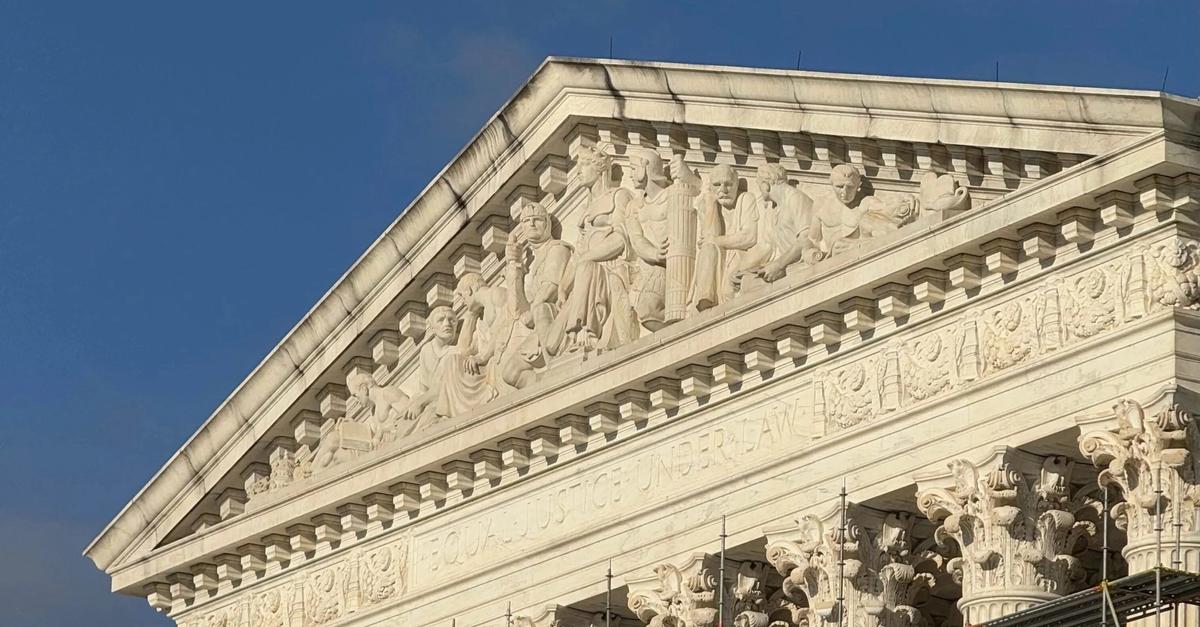
The Supreme Court on Monday denied a request from President Donald Trump to reconsider a $5 million civil verdict in a case brought by journalist E. Jean Carroll. The decision, released in the second of three summer order lists, was issued without an explanation from the justices. The court has not granted a petition for rehearing since 2018.
In separate activity on Monday, lawyers representing Texas families with children in public schools petitioned the Supreme Court to review a 2025 Texas law. The state law requires every public school classroom to display a copy of the Ten Commandments. The U.S. Court of Appeals for the 5th Circuit previously upheld the law, leading the challengers to argue that the ruling disregarded established precedents regarding religious freedom for students and parents.
The court is also managing multiple emergency docket requests from the Trump administration. On Friday, the administration asked the justices to pause a lower-court ruling that halted the construction of a new 90,000-square-foot White House ballroom. Additionally, the administration is seeking to implement an executive order regarding citizenship verification in mail-in voting. While 12 states support the administration's request, a coalition of 23 states and the District of Columbia has urged the court to deny it.
In the White House construction dispute, the court's decision will determine the fate of a multi-million dollar project funded by private donations. If the stay is lifted, construction on the 90,000-square-foot addition could resume immediately, affecting federal preservation rules and the physical structure of the East Wing. This case also tests the limits of executive authority to bypass Congress for large-scale building projects by citing national security concerns, specifically the president's argument that the ballroom is an essential component of an underground military complex.
Regarding election policy, the ruling on the mail-in voting executive order will affect how millions of Americans cast their ballots and how states verify citizenship. A decision in favor of the administration would require states to comply with new federal verification standards, potentially changing the documentation requirements for voters in the upcoming midterm elections. The administration has also suggested it may escalate dozens of legal battles to the Supreme Court to gain access to state voter rolls, which include sensitive data such as the last four digits of Social Security numbers for millions of residents across 30 states. A response to the ballroom construction stay request is due today, while the court has been urged to rule "promptly" on the mail-in voting applications.