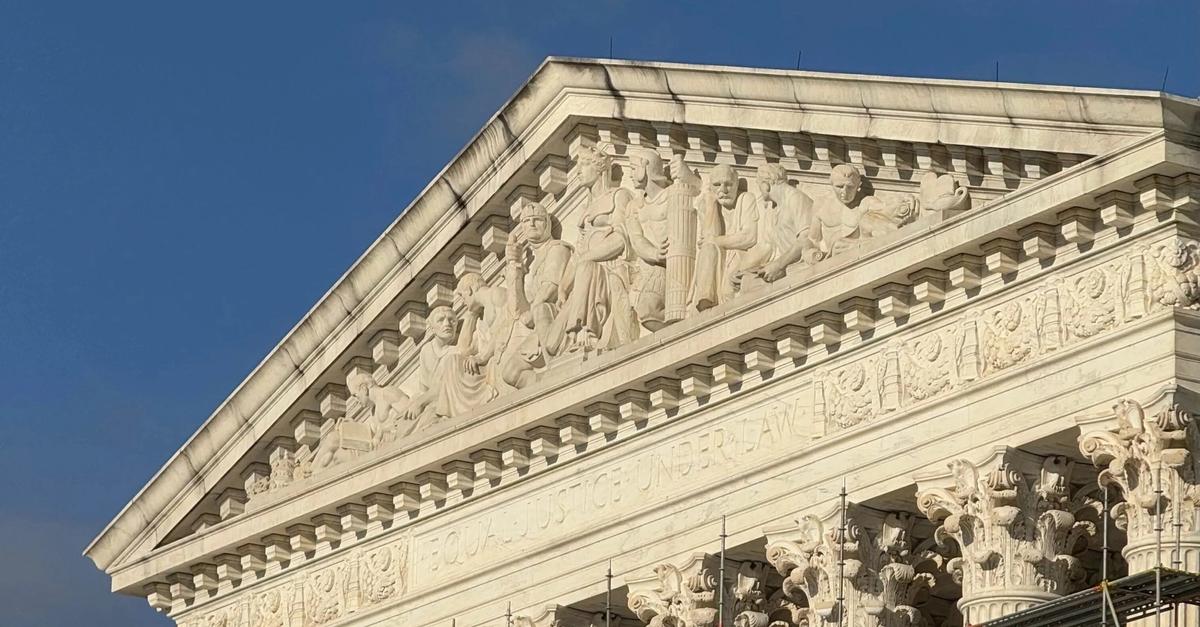
The U.S. Supreme Court heard oral arguments on Monday, November 2, 2026, regarding whether states can use public funds to contract with religious charter schools. The case centers on St. Isidore of Seville Catholic Virtual School, which seeks to become the first taxpayer-funded religious charter school in the United States. During the session, the justices appeared divided over whether the school’s proposed religion-focused curriculum violates the First Amendment's Establishment Clause, which prohibits the government from establishing a religion.
The dispute originated in Oklahoma after the state's former attorney general issued a 2022 opinion stating that laws barring religious institutions from charter programs were likely unconstitutional. Oklahoma officials remain divided on the issue; Governor Kevin Stitt (R) argued that excluding faith-based schools is discriminatory, while other state representatives warned of the legal implications of intertwining church and state. The Supreme Court has previously ruled that public funds can go to religious groups for secular services, such as food banks, but has not yet authorized funding for religious instruction in a public school setting.
Justice Amy Coney Barrett recused herself from the case, leaving eight justices to decide the matter. No official reason was given for her recusal, though reports noted her connection to a law professor who advised the school. Chief Justice John Roberts questioned whether the virtual school should be classified as a public or private entity, noting the argument that public charter schools are creatures of the state. If the court reaches a 4-4 tie, the lower court's ruling—which blocked the state contract for St. Isidore—will remain in place without setting a national precedent.
The decision carries weight for the legal interpretation of the First Amendment and the separation of church and state. A ruling for the school could challenge long-standing precedents that have historically barred the use of public funds for religious indoctrination. The Solicitor General, representing the Trump administration, argued that parts of federal charter school law are unconstitutional. Conversely, representatives for the Oklahoma attorney general warned of "knock-on effects" regarding how other state and federal education laws are applied and whether charter schools will continue to enjoy the bipartisan support they have historically received.
The Supreme Court is also managing other cases involving religion and schools this term. On Tuesday, November 3, 2026, the justices are scheduled to hear *St. Mary Catholic Parish v. Roy*, a challenge to Colorado’s requirement that preschools participating in universal programs must admit all students, including LGBTQ children. A final decision in the St. Isidore case is expected later this term, though a specific date has not been reported. If a tie occurs, the current Oklahoma ruling stands, and the school will not receive its state charter.