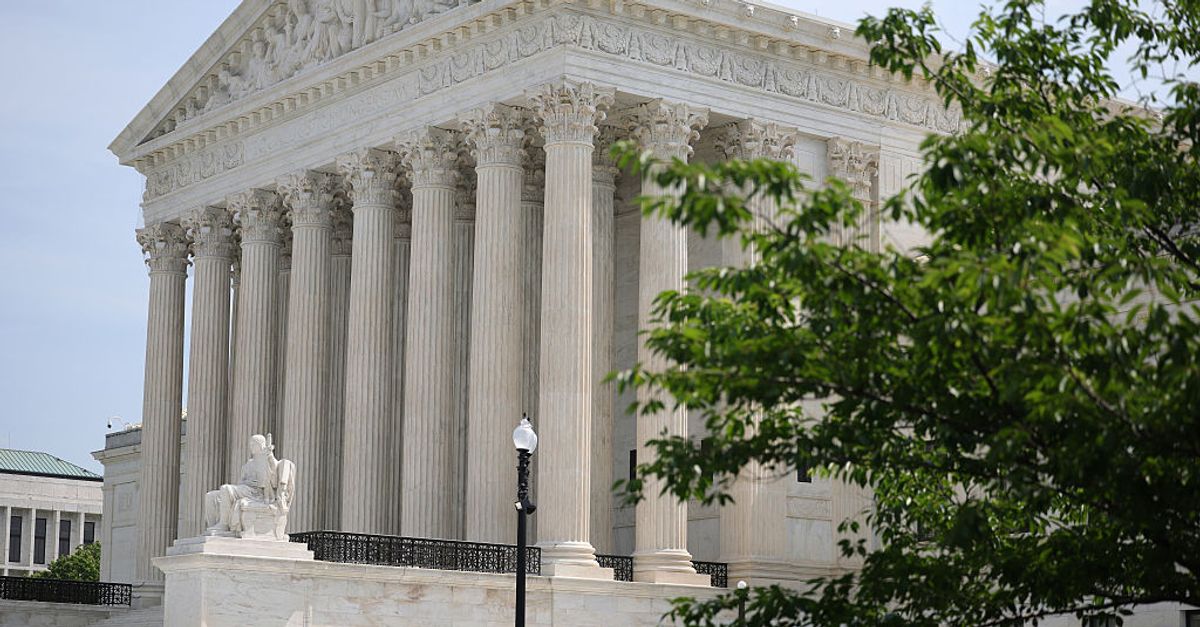
The U.S. Supreme Court on Wednesday, Oct. 7, 2026, heard oral arguments in a case concerning the U.S. Air Force’s practice of detonating hazardous munitions on a beach in northern Guam. The dispute, *Department of the Air Force v. Prutehi Guåhan*, centers on whether the Air Force was required to conduct an environmental review under the National Environmental Policy Act (NEPA) before applying to renew a permit for these operations.
The Air Force has used the Tarague Beach range near Andersen Air Force Base since 1982 to dispose of ammunition, tear gas, and propellants through open detonation. In 2021, the Air Force submitted an application to the Guam Environmental Protection Agency (EPA) to renew its permit under the Resource Conservation and Recovery Act (RCRA). Prutehi Guåhan, a local environmental and cultural protection group, sued in January 2022, alleging the Air Force failed to provide a detailed Environmental Impact Statement as required by NEPA.
During the roughly 75-minute argument, the justices focused on whether the permit application constituted a "final agency action" subject to court review. Sopan Joshi, representing the Air Force, argued that an application is not final agency action but a request for someone else to act. Caroline Flynn, representing Prutehi Guåhan, countered that the decision to continue detonations and submit the application was not tentative and requires early environmental analysis to ensure better planning.
The case affects the residents of Guam, a U.S. territory where more than 80% of the drinking water is supplied by an aquifer that Prutehi Guåhan alleges is threatened by contamination from these detonations. A 2019 report by the National Academies of Sciences, Engineering, and Medicine found that viable alternative technologies exist for nearly all munitions in the military's stockpile and would have less of an impact than open detonation. If the Court rules against the Air Force, the military would be required to take a "hard look" at these alternatives and the potential impact on local health, ocean life, and culturally significant fishing sites before continuing operations.
If the Court instead rules that the permit application is not a final action, it could prevent legal challenges to federal activity until after permits are issued. Justice Amy Coney Barrett and other members of the court expressed concern that labeling a permit application as a "final action" could potentially open a "floodgate" of early-stage lawsuits against federal permitting decisions.
For residents of Guam, who do not have a vote for president, this case represents a rare point of influence over U.S. military operations. The Air Force has not conducted open burning at the site since 2002, but open detonations have continued. A final decision from the Supreme Court is expected sometime in 2027. Until then, the Guam EPA’s preliminary decision neither approving nor denying the permit renewal remains the current status of the application.