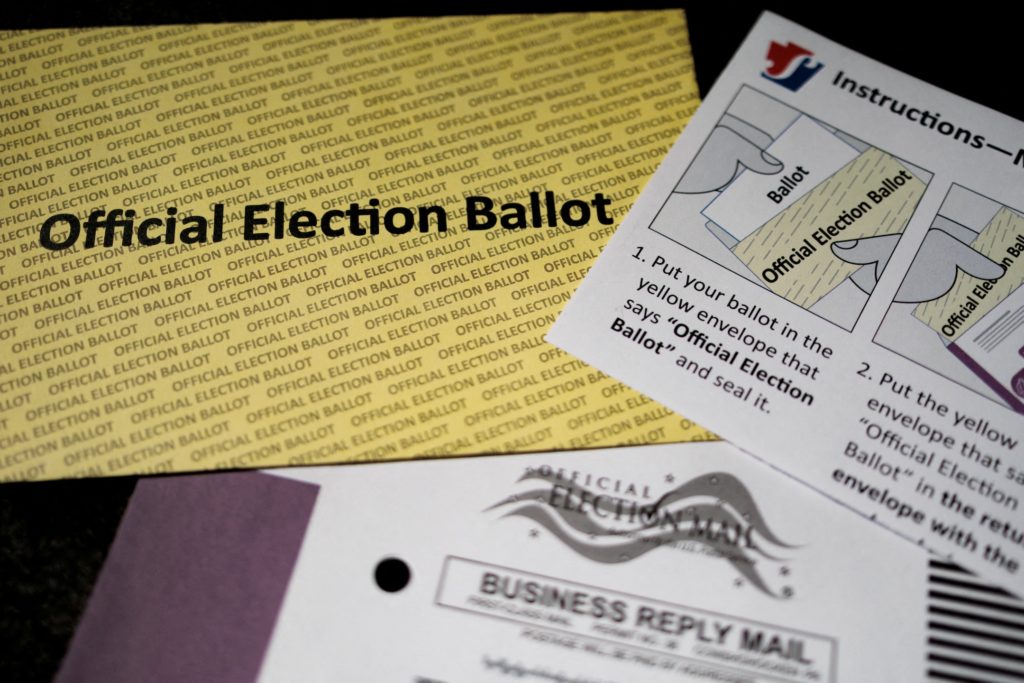
The U.S. Supreme Court issued an emergency order on Monday allowing the Trump administration to continue preparation for restrictions on mail-in voting. The order permits the administration to proceed with an executive order signed in March that tasks the U.S. Postal Service (USPS) with determining which voters should receive mail-in ballots. Opponents of the plan stated the changes could disrupt the election process shortly before states begin mailing ballots for the November midterms.
The court's decision specifically addressed a lawsuit brought by a group of states. Constitutional law professor Steve Vladeck explained that the ruling was based on procedural grounds, finding that the states sued prematurely because the USPS had not yet issued its final rule. That final rule was subsequently released last Friday. A second lawsuit, filed by the League of Women Voters, remains active, and a separate injunction from that case continues to block the executive order from being implemented.
The executive order contains provisions that would prohibit the USPS from delivering ballots to individuals not included on federal lists of eligible voters. It also directs the Department of Homeland Security (DHS) to establish a database of U.S. citizens eligible to vote. Minnesota Secretary of State Steve Simon expressed doubt regarding the feasibility of the plan, describing the proposed DHS database as a "black box" with unknown methodology and questioning if enough time remains to build the necessary infrastructure before the election.
The scale of the impact involves the entire national mail-in voting infrastructure for the 2026 midterm elections. In states like Minnesota, absentee and mail-in voting is scheduled to begin as early as September 18, which is less than a month away. If the administration succeeds in lifting the remaining injunction, the DHS and USPS would be required to stand up a new federal database and verification system to cross-reference against state records. Secretary Simon noted that it is currently unclear how many registered voters might be excluded from federal lists or how many dollars and man-hours would be required to reconcile these data sets within the 70 days remaining before the general election.
The knock-on effects could include administrative delays at the USPS and potential confusion for local election boards who must coordinate with federal agencies. Professor Vladeck cited the Purcell principle, a legal doctrine suggesting that courts should avoid changing election rules close to an election to prevent voter and administrator confusion. If the case returns to the Supreme Court, the justices will need to decide if the executive branch has the authority to unilaterally intervene in state-managed voting procedures. A final determination on whether these rules will go into effect for the current cycle is expected as early as the end of next week.