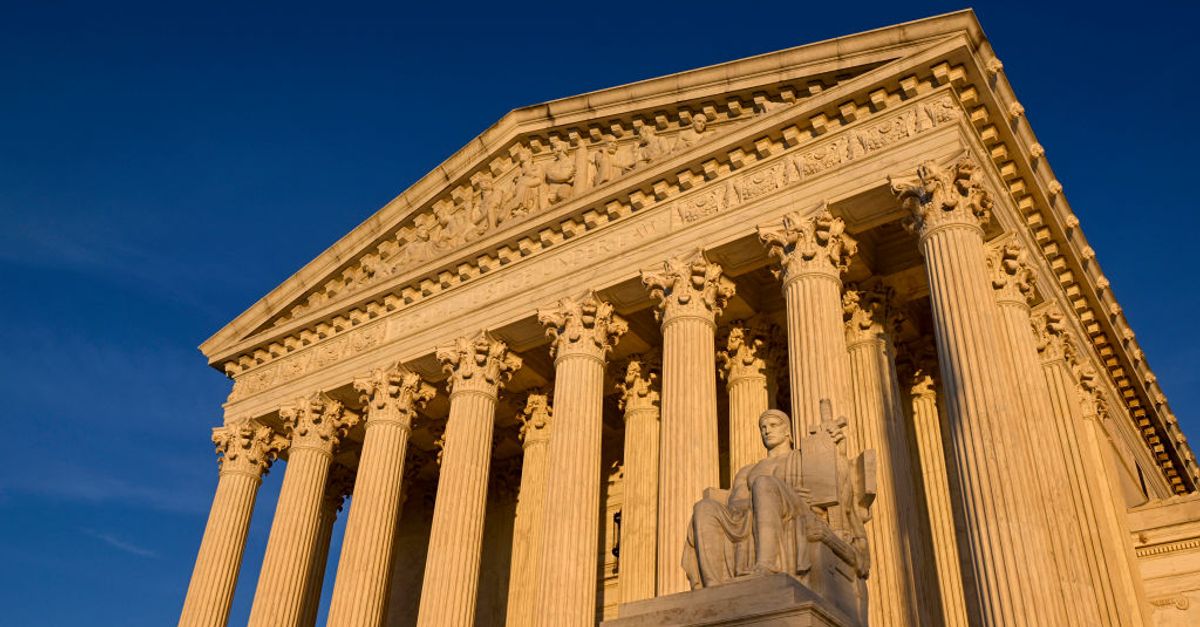
The Supreme Court ruled 6-3 in June that federal courts may not create new causes of action for violations of international norms under the Alien Tort Statute (ATS). The decision in Cisco Systems, Inc. v. Doe I also held that the Torture Victim Protection Act (TVPA) of 1991 does not provide for "aiding and abetting" liability. Writing for the majority, Justice Amy Coney Barrett stated that the power to create such causes of action belongs to Congress rather than the judiciary.
The Alien Tort Statute, originally part of the Judiciary Act of 1789, grants federal district courts jurisdiction over civil actions by aliens for torts committed in violation of the law of nations or U.S. treaties. For decades, the law had been interpreted by courts to allow foreign nationals to seek damages for human rights abuses. In the 2004 case Sosa v. Alvarez-Machain, the Supreme Court previously held that the ATS allowed for a limited category of claims based on widely accepted international norms.
In the Cisco case, practitioners of the Falun Gong religious movement sued Cisco Systems, Inc. and its executives. The plaintiffs alleged that the company developed surveillance technology that enabled the Chinese government to identify and apprehend them, leading to torture, forced labor, and extrajudicial killing. The plaintiffs sought to hold the American corporation liable for aiding and abetting these alleged violations of international law under both the ATS and the TVPA.
Justice Barrett's majority opinion explained that ATS cases often implicate foreign policy, a field primarily managed by the executive and legislative branches. Regarding the TVPA, the court found that because the statute's text does not explicitly mention aiding and abetting liability, such liability cannot be inferred. In a dissent, Justice Sonia Sotomayor argued that the ruling effectively overrules the Sosa precedent and closes courthouse doors to nearly all future litigants seeking redress for international law violations under the ATS.
The scale of this decision impacts any non-U.S. citizen attempting to sue U.S.-based corporations or individuals for complicity in foreign government abuses. While the source does not provide a specific dollar amount or a total count of pending cases, it notes that the decision effectively bars "aiding and abetting" claims under the TVPA, which previously allowed suits against those who assisted in torture. For a plaintiff, this means that even if a U.S. company provided technical tools specifically used to facilitate human rights abuses, that company cannot be sued for damages in federal court under these specific statutes unless Congress passes new legislation.
The concrete day-to-day change will be felt by legal teams and human rights organizations, who will now find it difficult or impossible to file suit against American companies for their roles in foreign persecution. This sets a precedent that shields corporations from liability in U.S. courts for wrongdoing occurring in other countries, provided they are not the primary actors defined by the narrow terms of the TVPA. Future policy will now depend on whether Congress chooses to amend the TVPA to include aiding and abetting language or passes new laws to clarify the scope of the ATS. As of the ruling, the "door is closed" to new causes of action created by the courts.