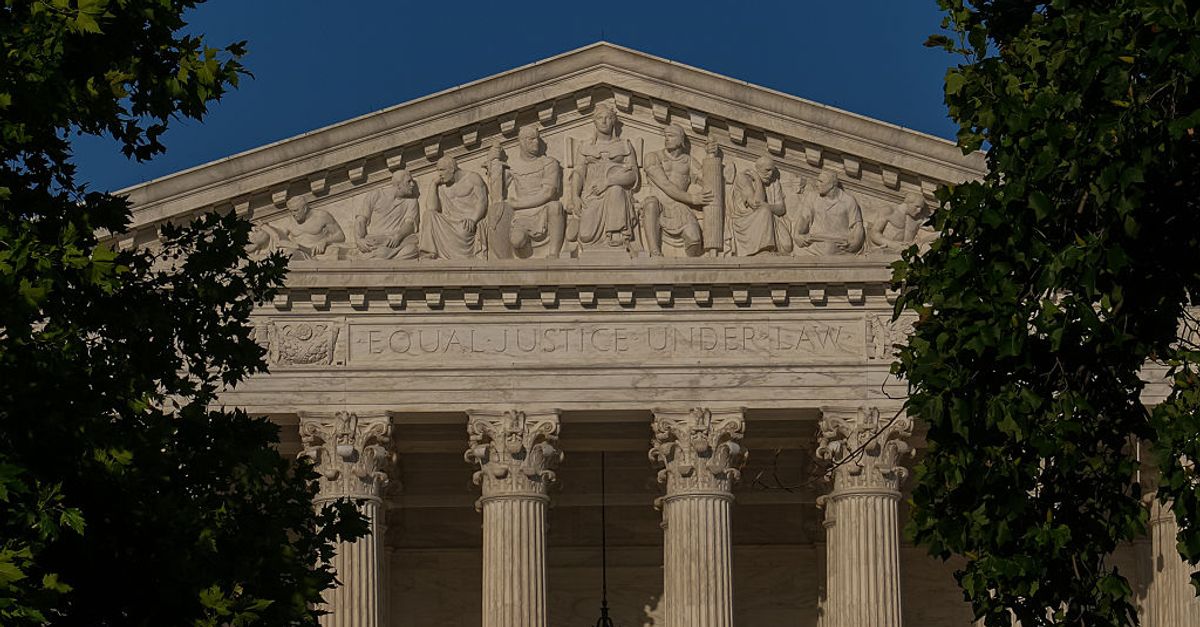
The Supreme Court on Wednesday, Oct. 14, 2026, issued a five-page, unsigned opinion that allows political parties and joint fundraising committees to continue receiving favorable broadcast advertising rates. The decision pauses a lower court ruling that had ordered the Federal Communications Commission (FCC) to act by Oct. 9 on a challenge to these rates brought by four Democratic candidates. Justices Sonia Sotomayor and Ketanji Brown Jackson indicated they would have denied the request to pause the ruling, though they did not provide an explanation.
The dispute stems from a March 2024 "public notice" issued by the FCC’s Media Bureau, which stated that political parties and joint fundraising committees are entitled to the same discounted rates that federal law guarantees to individual candidates. In April, Sen. Jon Ossoff (D-GA), former Sen. Sherrod Brown (D-OH), former Gov. Roy Cooper (D-NC), and Rep. Kristen McDonald Rivet (D-MI) petitioned the full FCC to review this notice, arguing it contradicted federal law. When the FCC did not act, the candidates filed suit in federal court.
In early June, a divided panel of the U.S. Court of Appeals for the 4th Circuit agreed with the candidates, ruling that federal law limits preferential rates to a "candidate" for personal use. After an initial stay by the Supreme Court in September, the 4th Circuit issued a new order on Wednesday, Oct. 7, directing the FCC to resolve the candidates' petition by noon on Friday, Oct. 9. U.S. Solicitor General D. John Sauer and Republican committees then asked the Supreme Court to intervene, arguing the lower court lacked authority to force the agency to "short-circuit" its deliberations.
For candidates and voters, the decision means the FCC has no obligation to rule on the legality of these rates on any particular timetable before the November 2026 election. A person monitoring campaign advertising would notice that party-funded commercials can continue to be purchased at the same lower rates as those funded directly by candidates’ own campaigns. The Supreme Court held that the FCC has the discretion to set its own procedures and schedule for resolving applications rather than following a court-ordered 48-hour deadline.
The Supreme Court’s action addressed the separation of powers, with the majority stating that the lower court’s attempt to force an agency decision within five months of filing violated this principle. The court reasoned that forcing an expedited timeline would cause "irreparable harm" by requiring the FCC to triage its ongoing deliberation process. The case will now continue through the appeals process, but with the lower court's order stayed, no further immediate action is required from the FCC before the midterms. The Republican groups’ separate request for a stay was dismissed as moot following the grant of the Trump administration’s application.