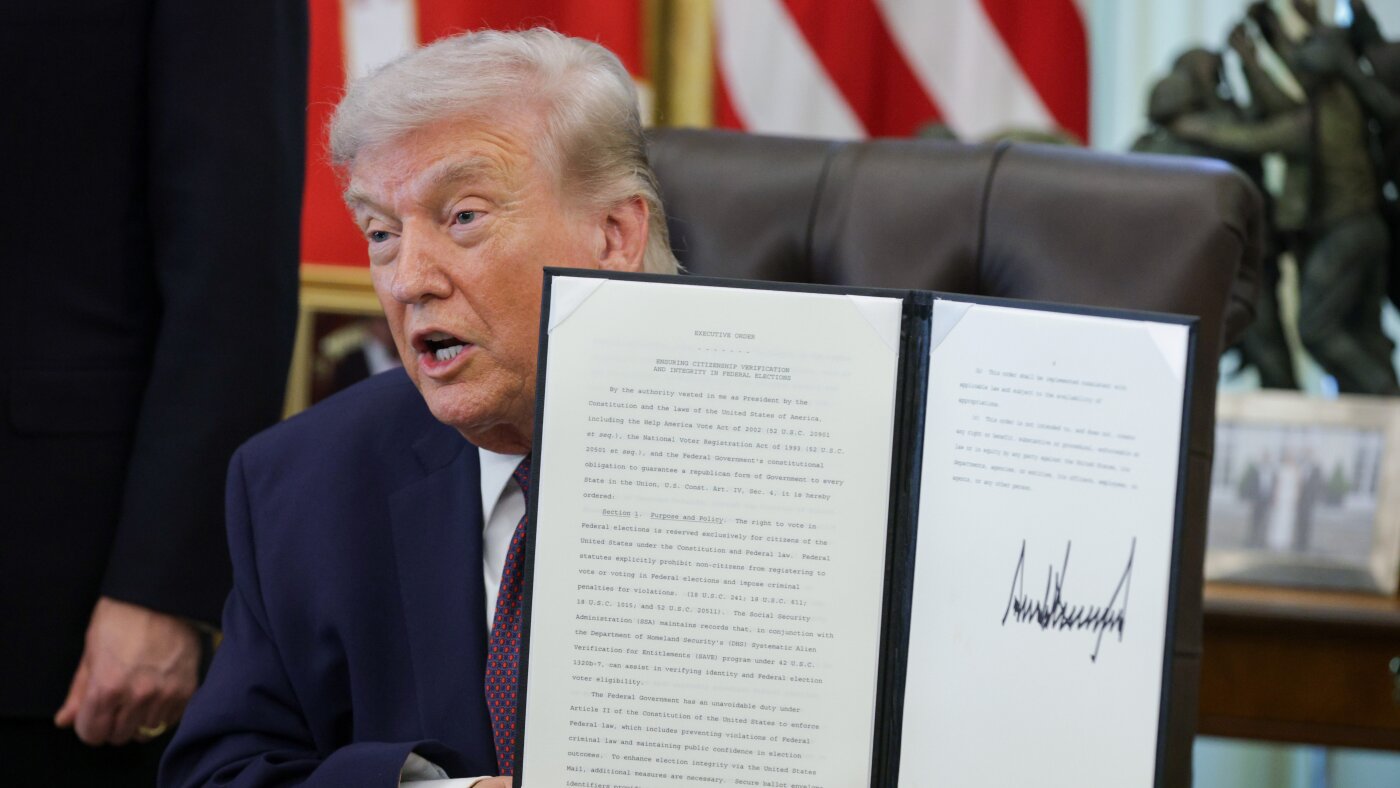
The U.S. Supreme Court on Monday paused a lower court ruling that had blocked portions of President Trump's executive order aimed at restricting mail-in voting for the upcoming midterm elections. The Court’s decision allows the administration to move forward with certain directives in 23 states and Washington, D.C., while legal challenges proceed. However, a separate nationwide injunction remains in place, preventing the U.S. Postal Service (USPS) from implementing the order's requirements.
The legal dispute stems from a March executive order in which President Trump directed federal agencies to implement new verification procedures for mail-in ballots. The administration stated the order was intended to prevent illegal voting by non-citizens, though research cited in the report describes such occurrences as rare. In June, U.S. District Judge Indira Talwani blocked the order in two dozen jurisdictions, ruling that the president exceeded constitutional authority because Congress and state legislatures are responsible for setting election rules.
Under the executive order, the Department of Homeland Security (DHS) is tasked with creating state-level lists of adult U.S. citizens. The Postal Service is directed to obtain lists of eligible mail-in voters and is instructed to deliver ballots only to individuals appearing on those lists. Additionally, the order requires election officials to use specific barcodes on all mail ballot envelopes. The USPS has already issued a final rule regarding federal ballot mail to comply with these directives.
The scale of the impact involves millions of potential mail-in voters across nearly half of the U.S. states. If implemented, voters would notice a change in how ballots are delivered, as the USPS would cross-reference delivery addresses against citizenship and eligibility lists provided by DHS and state governments. U.S. Solicitor General D. John Sauer noted in court filings that for these changes to be effective for the 2026 election, implementation would have needed to begin by mid-August, as many states begin absentee voting several weeks before Election Day.
The ruling sets a temporary precedent allowing the executive branch to continue its efforts to regulate mail-in ballot delivery while the judiciary weighs constitutional questions regarding election authority. The next steps involve ongoing litigation from Democratic groups and voting rights organizations. With the midterm elections approaching, the administration has acknowledged a "shrinking window" to resolve these legal challenges in time to change mail-in procedures for the current cycle.