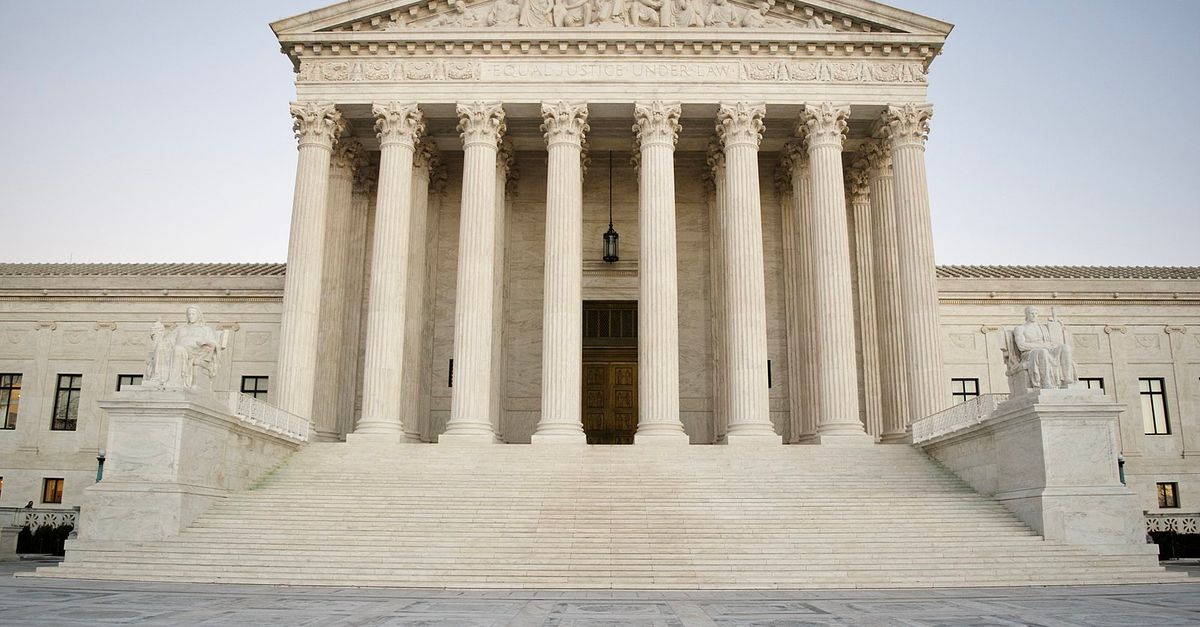
The U.S. Supreme Court will return to conference next week and take the bench on Oct. 5 for the start of the 2026-27 term. A central component of the court's case selection process is the "rule of four," a century-old custom where at least four of the nine justices must vote in favor to hear a case, even if a majority does not support doing so. The practice governs which petitions for certiorari—requests for the court to be "more fully informed" on a lower court's ruling—are added to the docket for oral argument.
The rule emerged as an informal practice in the early 19th century and became more formalized during the passage of the Judiciary Act of 1925, also known as the "Judges' Bill." During congressional hearings for that legislation, justices including Willis Van Devanter and Louis Brandeis testified that the court followed a policy of granting review if four or fewer justices requested it. This testimony was intended to reassure Congress that the court would not use its expanded discretion to avoid difficult or important legal issues. The rule is not found in the U.S. Constitution, federal law, or the court's published rules.
The application of the rule has led to several secondary customs, such as the "courtesy fifth vote." While four votes are sufficient to hear a case, five votes are required to grant a stay, which halts a lower court's ruling. To prevent a situation where a case is granted review but the underlying action—such as an execution—proceeds anyway, a justice who opposes hearing the case may provide a fifth vote to stay the action. This occurred in 2016 when Chief Justice John Roberts provided a fifth vote for a stay of execution and Justice Stephen Breyer provided a fifth vote to delay an order involving a transgender student.
The court also manages procedural hurdles through the "dismissed as improvidently granted" (DIG) process. If the court later finds a case is moot or unsuitable for review, it can dismiss it. According to an uncodified practice, it generally takes six votes to dismiss a case that was originally granted by four justices, ensuring a simple majority cannot immediately overturn the minority's decision to hear the case. Additionally, justices sometimes use "defensive denials," voting against a petition they find important if they believe the final ruling would result in a legal outcome they oppose.
The scale of this practice is most visible in its application to emergency stays. In 1990, the absence of a "courtesy fifth vote" resulted in the execution of Texas inmate James Edward Smith. Although four justices (William Brennan, Thurgood Marshall, Harry Blackmun, and John Paul Stevens) voted to hear his case regarding mental competence, the lack of a fifth vote for a stay meant the execution proceeded, rendering the case moot. For litigants, this means the difference between a stay of legal proceedings and the immediate enforcement of lower court orders, which can involve significant financial costs or, in capital cases, the loss of life.
The rule also establishes a precedent for how the judicial branch maintains internal collegiality and manages its workload. While Justice Stevens questioned the rule in a 1983 law review article, arguing it forced the court to take unnecessary cases, the practice has remained unchanged. By requiring only four votes, the court allows a minority to set the national legal agenda on issues like transgender rights or federal backlogs. The next set of decisions regarding which petitions will be granted for the upcoming term will occur following the justices' conference next week.