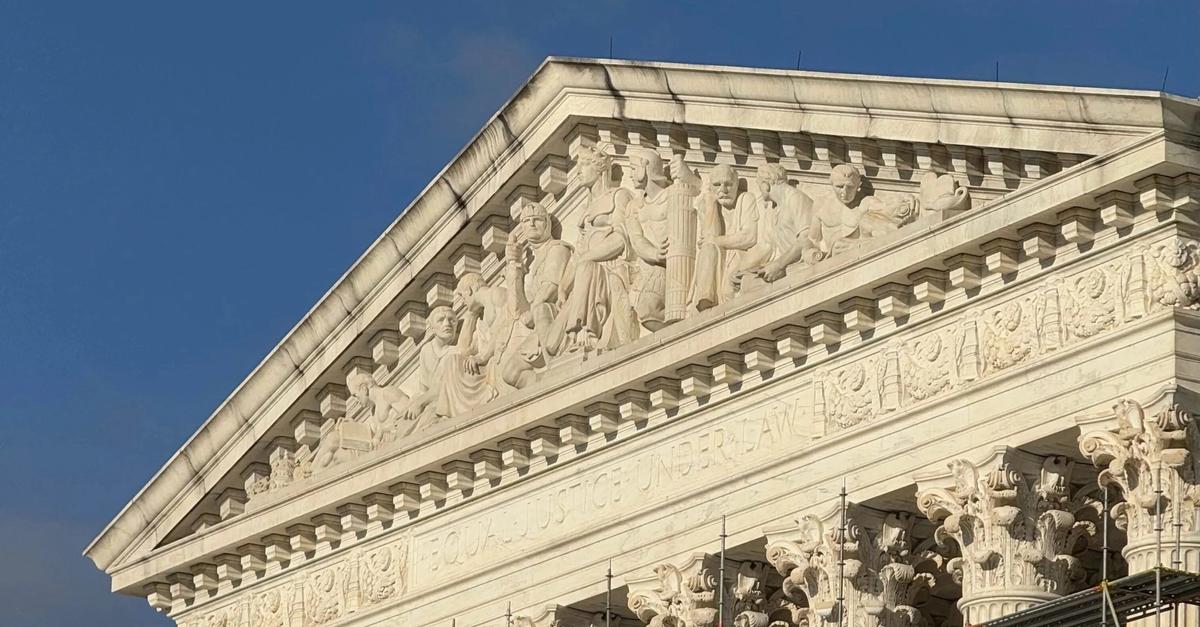
The Supreme Court is currently processing several high-profile emergency applications during its summer recess, including requests from the Trump administration regarding mail-in voting restrictions and the construction of a White House ballroom. On Friday, U.S. Solicitor General D. John Sauer asked the justices to stay a lower-court ruling that had halted the ballroom project, describing the district court's decision as "extraordinary and unlawful." Meanwhile, the court is expected to release its second summer order list this morning at 9:30 a.m. EDT.
The activity on the emergency docket—often referred to as the "shadow docket"—comes as various legal disputes reach the high court. On July 27, the administration sought clearance for an executive order concerning citizenship verification for mail-in voting. This request was supported by 12 states but challenged by a coalition of 23 states and the District of Columbia. The administration filed a supplemental brief last Wednesday urging the court to issue a prompt decision on the matter.
In addition to these federal policy disputes, the court has recently received emergency applications concerning a contempt case involving Apple, a scheduled execution, and a legal effort to prevent the euthanasia of a dog. These filings follow a term that included rulings on presidential power, campaign finance, and the Voting Rights Act. In response to these recent terms, some members of Congress, including Sen. Sheldon Whitehouse (D-RI), have proposed legislation to increase the number of justices, implement 18-year term limits, or establish an enforceable ethics code.
Beyond the emergency docket, federal appeals courts have issued several rulings impacting Trump administration policies. The U.S. Court of Appeals for the 5th Circuit recently dismissed a case regarding the use of the Alien Enemies Act to deport alleged gang members because the specific plaintiffs had already been removed under other legal authorities. Separately, the 1st Circuit ruled 2-1 against a mandatory detention policy for noncitizens residing in the U.S., joining six other appeals courts in opposition to the administration's position.
The ballroom construction dispute centers on federal building projects and the authority of district courts to halt executive branch initiatives. If the Supreme Court grants the stay requested by the Solicitor General, construction on the White House grounds will resume immediately. This case serves as a test of the "extraordinary" nature of district court injunctions against federal projects. Furthermore, the outcome of the mandatory detention appeals, where a 7-2 split now exists among federal circuits, will eventually clarify the legal rights of noncitizens living in the U.S. who face potential detention without bond hearings.
What happens next depends on the court's schedule for the remainder of the summer. The justices will release an order list this morning, and the administration has requested a prompt decision on the mail-in voting application. Additionally, the court has opened its online lottery system for public seating at the October and November oral argument sessions. Applications for the lottery close four weeks before each scheduled argument, with the court notifying selected attendees three weeks prior to the session. The 2026-27 term will also feature arguments in Wassily v. Blanche, a case concerning the residency rights of asylum seekers.