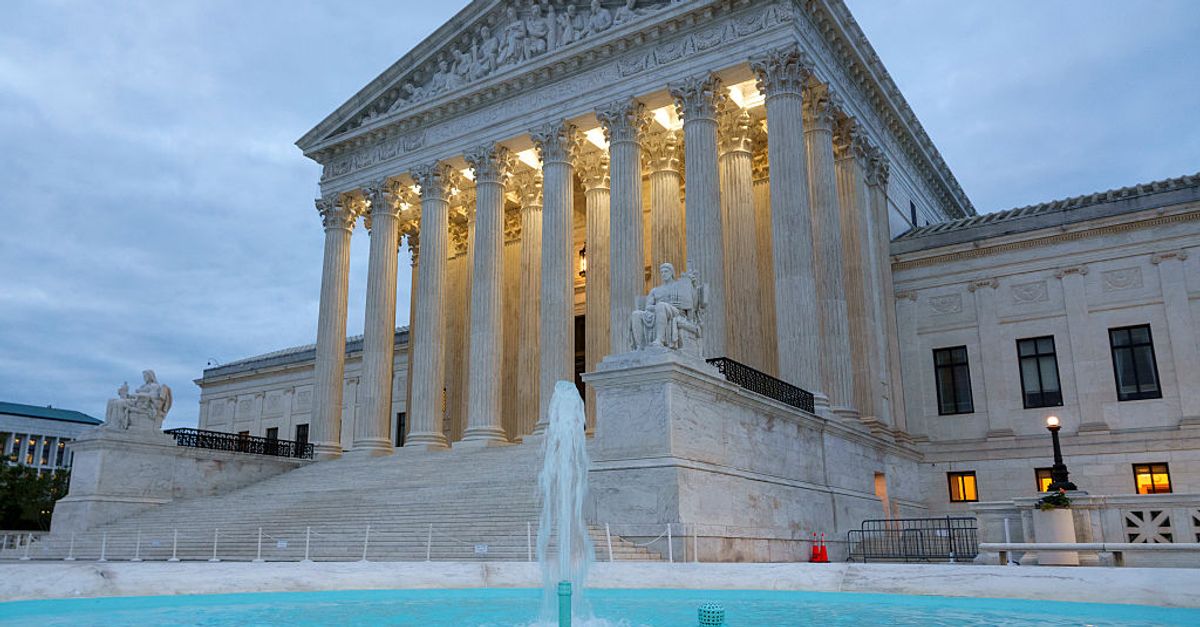
The U.S. Supreme Court on Monday declined a request from President Donald Trump to reconsider its earlier decision not to hear his appeal of a civil lawsuit brought by journalist E. Jean Carroll. The justices issued the decision as part of a scheduled summer order list, maintaining the lower court's ruling that resulted in a $5 million verdict against Trump. As is standard practice for the court, no explanation was provided for the denial of the petition for rehearing.
The original lawsuit, filed by Carroll in 2022, alleged that Trump sexually assaulted her in a department store dressing room in 1996 and later defamed her in 2022 after she spoke publicly about the event. A jury awarded Carroll $5 million, a decision that was subsequently upheld by the U.S. Court of Appeals for the 2nd Circuit. Trump then petitioned the Supreme Court, arguing that the trial improperly included testimony from other women alleging assault and a 2005 video recording of Trump making comments about women.
In his request for rehearing filed on July 8, Trump’s attorneys argued that the case involved statements he made while serving as president. They contended that a separate, pending petition regarding an $83 million award in a different Carroll lawsuit would address whether such statements are protected official acts. Carroll’s legal team had urged the court to reject the appeal, stating that the evidence in question did not affect the outcome because the overall case against Trump was strong.
The scale of the litigation remains significant, involving a separate $83 million award that is still under petition for review. For the broader legal system and federal officials, the case touches on the scope of presidential immunity and whether statements made during a presidency constitute "protected official acts." While the court declined to reconsider the $5 million case, the outcome of the second petition for review, expected to be considered this fall, could set a precedent for how evidence involving a president's official or private speech is treated in civil courtrooms.
The court’s refusal to grant a rehearing follows a long-standing trend, as the Supreme Court has not granted such a petition since 2018. The immediate effect is the exhaustion of Trump's primary appellate options for this specific verdict. Moving forward, the court is scheduled to issue its final summer order list on September 4, 2026, before returning for its full term in late September, where it will weigh whether to hear the challenge to the $83 million defamation award. In a separate action on Monday, the court also declined a request from Verizon Communications to modify a ruling regarding Federal Communications Commission sanctions, further clearing the court's summer docket.