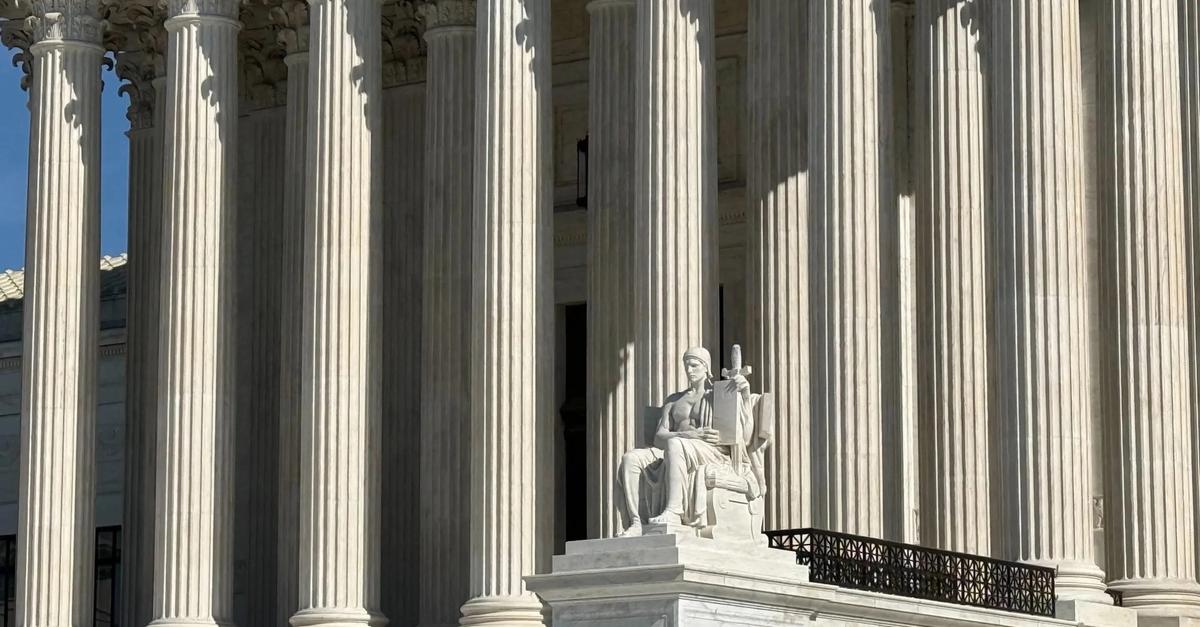
The Supreme Court ruled in Chatrie v. United States that law enforcement must obtain a warrant to search digital location history data, extending Fourth Amendment protections to information collected via "geofence" requests. The decision builds upon the 2018 ruling in Carpenter v. United States, which required warrants for accessing cell-site location information (CSLI) spanning seven days or more. In this new ruling, the court found that even short-term, precise location data collected by private companies warrants constitutional protection.
The case centered on a law enforcement technique where police set a virtual perimeter, or geofence, and request data from companies like Google to identify all cell phones present in that area at a specific time. In Chatrie, police sought "location history" data, which is more precise than tower-based CSLI and is generated through user opt-in services. The government argued that users voluntarily share this data with third parties, but the court ruled that using common cell phone features does not constitute a voluntary waiver of privacy.
While the court established the warrant requirement, it sent a secondary question back to the U.S. Court of Appeals for the 4th Circuit. That court must now determine if the "three-step dance" process used by Google and police—where anonymized data is provided and then narrowed down to specific identities—is constitutionally reasonable. Justice Ketanji Brown Jackson authored a concurrence questioning whether this process meets the Fourth Amendment requirement for "particularity," which mandates that police specify exactly who or what they are searching for.
The scale of this impact involves hundreds of millions of devices. While the source does not provide a specific dollar amount, the technical change is immediate for tech companies and law enforcement agencies. Google has already adjusted its practices, storing location history locally on user devices so it can no longer respond to these specific geofence requests. However, other companies that store data centrally will now be required to demand a warrant before releasing similar information. For the average user, this means their movements through restaurants, private homes, and public spaces cannot be searched en masse by police looking for a suspect without a judge first approving a specific warrant.
The ruling sets a significant precedent that could eventually extend to other digital footprints, such as AI chat logs, fitness tracker data, or automatic license plate reader (ALPR) databases. While the court did not explicitly rule on those technologies, legal experts suggest the logic used in Chatrie—focusing on how revelatory and retrospective the data is—will be the foundation for future challenges. The next immediate step is the 4th Circuit’s review of the "particularity" of geofence warrants; if that court finds the three-step process unconstitutional, it could effectively end the use of reverse searches as an investigative tool nationwide.