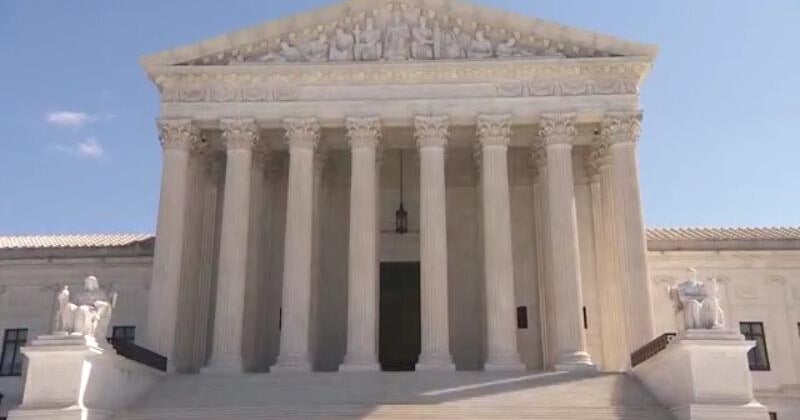
The U.S. Supreme Court on Friday issued an order halting a lower court decision that had prevented political party committees from accessing discounted broadcast advertising rates. The decision restores guidance from the Federal Communications Commission (FCC) that allows parties and joint fundraising committees to pay the "lowest unit charge" when coordinating ads with candidates. The ruling comes as both parties prepare for midterm elections, where the cost of television airtime frequently increases due to high demand.
The legal dispute centers on the Communications Act, which requires broadcasters to offer "legally qualified candidates" the lowest rate charged to any advertiser during the 60 days preceding a general election. In March, the FCC issued a public notice stating that this discount also applies to political parties and joint fundraising committees when they coordinate spending with a candidate. Four Democratic candidates—Sen. Jon Ossoff (D-GA), Rep. Kristen McDonald Rivet (D-MI), and Senate candidates Sherrod Brown (D-OH) and Roy Cooper (D-NC)—challenged this, arguing that the law only specifies candidates, not parties.
In August, a divided panel of the U.S. Court of Appeals for the 4th Circuit ruled 2-1 in favor of the Democratic candidates, setting aside the FCC guidance. The majority held that the law is clear in limiting the discount to candidates. However, the Supreme Court's unsigned order stayed that decision, noting that the appeals court likely lacked jurisdiction because the FCC had not yet issued a final order on the matter. The high court also stated that party committees would suffer irreparable harm if forced to pay higher rates during the final weeks of the campaign. Justice Ketanji Brown Jackson dissented.
This decision directly affects the spending power of national political party committees and joint fundraising committees by lowering their primary operating costs during the final two months of the election cycle. While the ruling applies to both parties, it has specific implications for the National Republican Congressional Committee (NRCC) and the National Republican Senatorial Committee (NRSC), which reported budgeting "tens of millions of dollars" based on these lower rates. The NRCC alone has reserved $10.8 million for television ads across 23 House races this month. Without the discount, these groups would have faced higher costs; for context, data from the 2024 presidential election showed a super PAC paying $4,500 for a 30-second spot that cost a candidate campaign only $3,790.
Democratic candidates who brought the suit argued that extending the discount to parties would "dilute" their access to limited television inventory, forcing them to raise more money to compete for airtime. Conversely, the ruling allows parties with large cash reserves—such as the Republican National Committee, which reported $130 million in its war chest—to subsidize coordinated campaigns. A person watching television in a battleground state will likely see a higher volume of party-funded advertisements than would have been possible under the 4th Circuit's restrictions.
The Supreme Court's action reinforces a June decision that struck down limits on coordinated spending between parties and candidates. By allowing these parties to also use the candidate ad rate, the court has lowered the financial barrier for parties to act in direct concert with their candidates. The immediate effect began on Friday, which marked the start of the 60-day window for the lowest unit charge. While the Supreme Court has restored the FCC guidance for the current election, the underlying legal challenge regarding the FCC's authority to interpret the Communications Act in this manner remains ongoing.