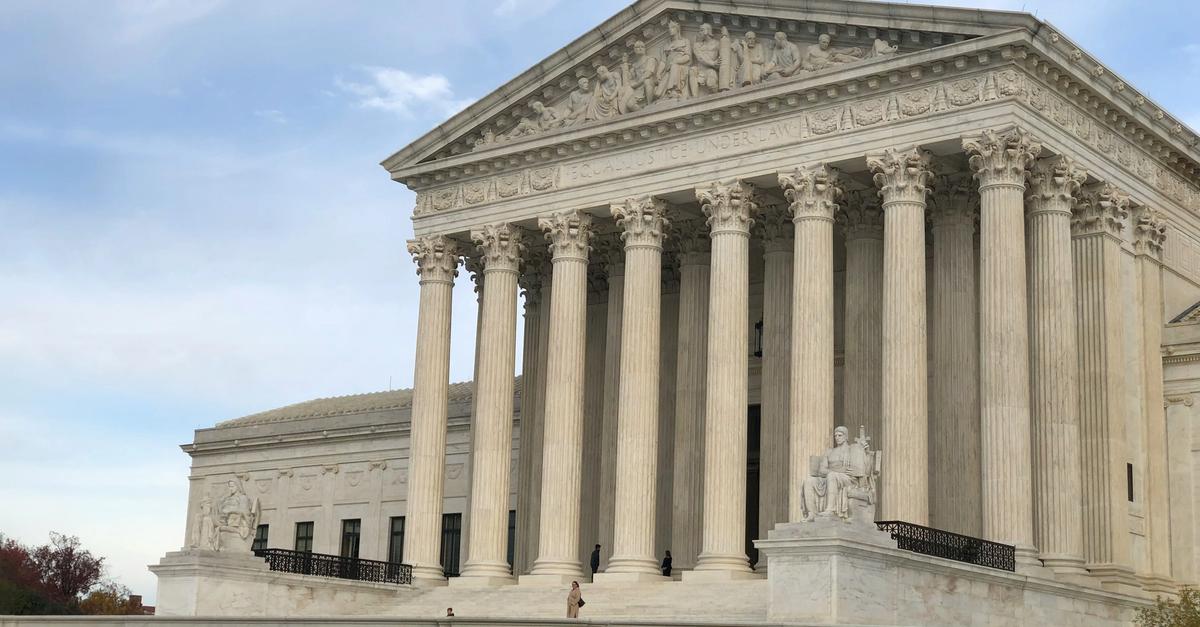
The Supreme Court has recently issued summary reversals of federal appeals court decisions involving state prisoner petitions, highlighting ongoing legal debates over the interpretation of federal law. Under the Antiterrorism and Effective Death Penalty Act of 1996 (AEDPA), federal courts must defer to state court rulings unless the decision was "contrary to, or involved an unreasonable application of, clearly established Federal law, as determined by the Supreme Court of the United States."
This standard was central to two 2026 cases where the Supreme Court overturned lower court grants of relief. In January, the Court reversed a decision by the U.S. Court of Appeals for the 4th Circuit in *Klein v. Martin*, stating the ruling was inconsistent with AEDPA's required deference. In June, the Court summarily reversed the U.S. Court of Appeals for the 2nd Circuit in *McCarthy v. Hernandez*, reiterating that lower courts must adhere to the "modest role" prescribed by the 1996 law.
Legal analysts and judges have noted that the Supreme Court has issued seemingly conflicting instructions on how specifically its precedents must be applied. In the 2022 case *Brown v. Davenport*, the Court cautioned that holdings speaking at a "high level of generality" cannot be the basis for relief. However, in the later case *Andrew v. White*, the Court stated that general legal principles can constitute clearly established law if they are holdings of the Court.
The scale of this issue is defined by the limited number of cases the Supreme Court decides annually, which restricts the universe of "clearly established" law. Because only Supreme Court holdings count for AEDPA review—and not the rulings of the 13 federal circuit courts—prisoners in all 50 states face a narrower path to relief than those in other types of civil rights litigation, such as qualified immunity cases where circuit law can sometimes apply. The specific number of prisoners affected per year was not reported, but the Court noted its own caseload continues to dwindle, further limiting new precedents.
For the legal system, the lack of a clear definition for "clearly established" creates a risk for federal judges. If a judge grants relief by applying a general principle, they face the possibility of a summary reversal. Conversely, defining precedent too narrowly may result in a prisoner remaining in custody despite a potential constitutional error. The next steps in this legal area depend on whether the Supreme Court chooses to issue a detailed opinion reconciling its recent rulings or continues to use summary reversals to enforce deference to state courts. No specific future court dates for this clarification were reported.