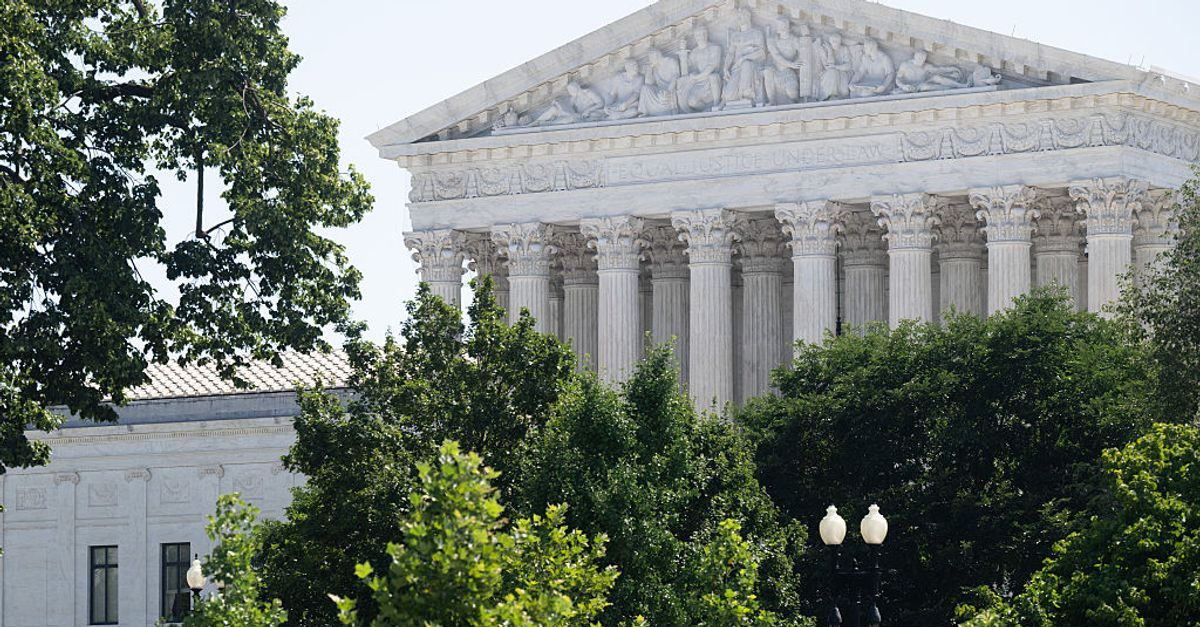
The U.S. Supreme Court ruled in *Trump v. Barbara* that an executive order attempting to end birthright citizenship for children of undocumented immigrants and temporary residents is unconstitutional. Chief Justice John Roberts authored the 5-4 majority opinion, determining that Executive Order 14160 violated the Citizenship Clause of the 14th Amendment. The ruling maintains the legal standard that children born on U.S. soil are citizens regardless of their parents' immigration status.
The case centered on an order issued by the executive branch to limit the scope of the 14th Amendment's citizenship protections. The majority opinion was joined by Justices Sonia Sotomayor, Elena Kagan, Ketanji Brown Jackson, and Amy Coney Barrett. The court relied on the 1898 precedent *United States v. Wong Kim Ark*, which established narrow exceptions to birthright citizenship.
Justice Brett Kavanaugh filed a partial dissent, arguing the executive order violated federal statute 8 U.S.C. § 1401 rather than the Constitution. He contended that while *Wong Kim Ark* was decided incorrectly, Congress had codified its rules into law in 1940 and 1952. Justices Clarence Thomas, Samuel Alito, and Neil Gorsuch dissented separately, stating they would have upheld the executive order in full.
The decision also impacts the limits of executive power and congressional authority. Because the majority struck down the order on constitutional grounds, the executive branch cannot use administrative actions to change citizenship rules. Furthermore, the ruling suggests that any legislative attempt to end birthright citizenship would face a constitutional challenge. However, the narrow 5-4 margin and Justice Kavanaugh’s statutory focus led some members of Congress to explore legislation that mirrors the executive order, testing whether a statutory change could bypass the court's constitutional reasoning.
The ruling avoids a complex legal scenario known as a 4-1-4 split, which occurs when no single opinion gains a five-justice majority. Under the *Marks v. United States* rule, such splits often leave lower courts confused about which legal standard is binding. In this case, the clear majority provides a stable precedent for immigration officials and families. The House of Representatives has already begun exploring a "Birthright Claim Act" in response to the opinions issued by the dissenting justices. No specific date for future legislative votes or effective dates for new bills was reported.