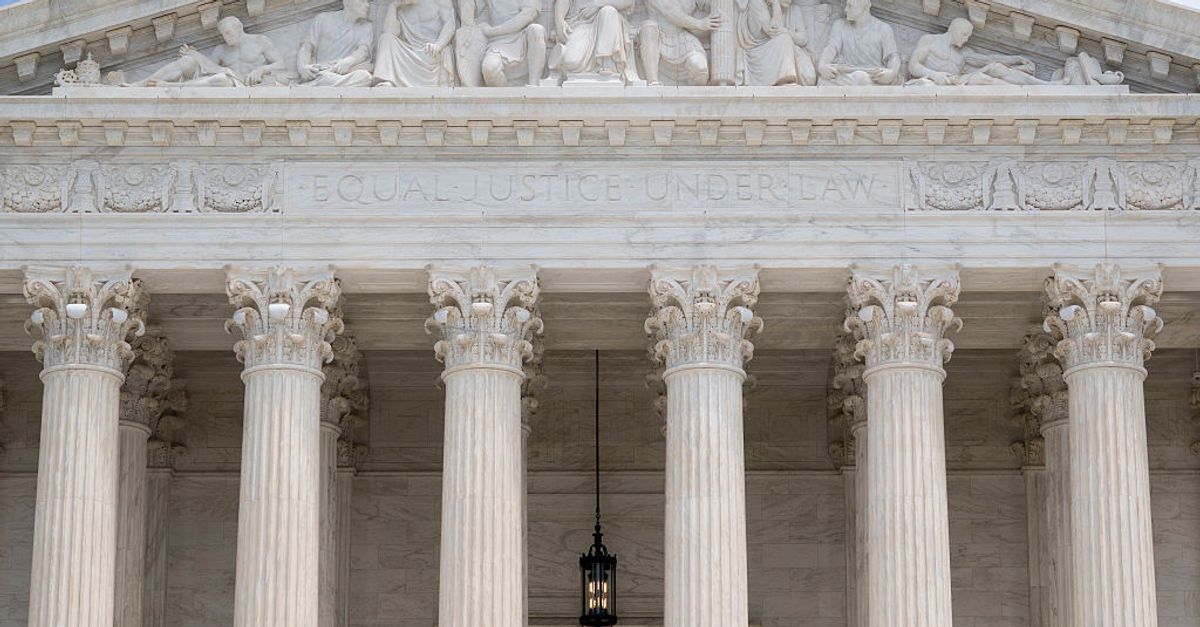
The U.S. Supreme Court released its oral argument calendar for November 2026 on Tuesday, scheduling seven hours of arguments across seven cases. The session, which runs from Nov. 2 to Nov. 10, will cover legal disputes involving religious exemptions for state-funded programs, federal prisoner litigation rights, and the authority of the Department of Labor.
One featured case, St. Mary Catholic Parish v. Roy, involves a challenge by a Catholic preschool against its exclusion from Colorado’s universal preschool program. The preschool argues that the state’s requirement to admit all students, including LGBTQ children, constitutes religious discrimination. A federal appeals court previously ruled against the school, citing the 1990 Supreme Court precedent Employment Division v. Smith, which held that neutral, generally applicable laws do not violate the First Amendment.
In another significant case, Nielsen v. Watanabe, the court will address whether a federal inmate can sue prison officials for damages following a denial of medical treatment for a fractured bone. The inmate, Kekai Watanabe, seeks to apply the 1971 Bivens v. Six Unknown Federal Narcotics Agents precedent, which allows private individuals to sue federal agents for constitutional violations. The federal government argues the lawsuit should not proceed, noting the court’s recent reluctance to expand such claims.
For federal inmates and employees, Nielsen v. Watanabe will clarify the scale of legal accountability for government officials. If the court rules in favor of the government, it would further limit the ability of individuals to seek financial damages for constitutional violations through Bivens claims, a legal pathway that has been narrowed by the court in recent decades. The decision will determine whether Mr. Watanabe and others in similar circumstances have a judicial remedy for alleged medical neglect within the federal prison system.
Beyond these two cases, the November session will impact labor regulations for seasonal farm workers and property rights in energy infrastructure. The court will determine if the Department of Labor can hold hearings to fine employers who violate H-2A visa terms, affecting thousands of seasonal agricultural jobs and the businesses that utilize them. Additionally, the Hoffmann v. WBI Energy Transmission case will set standards for "just compensation" when private energy companies use eminent domain to build natural gas pipelines. These decisions are expected following the arguments scheduled between Nov. 2 and Nov. 10, 2026.