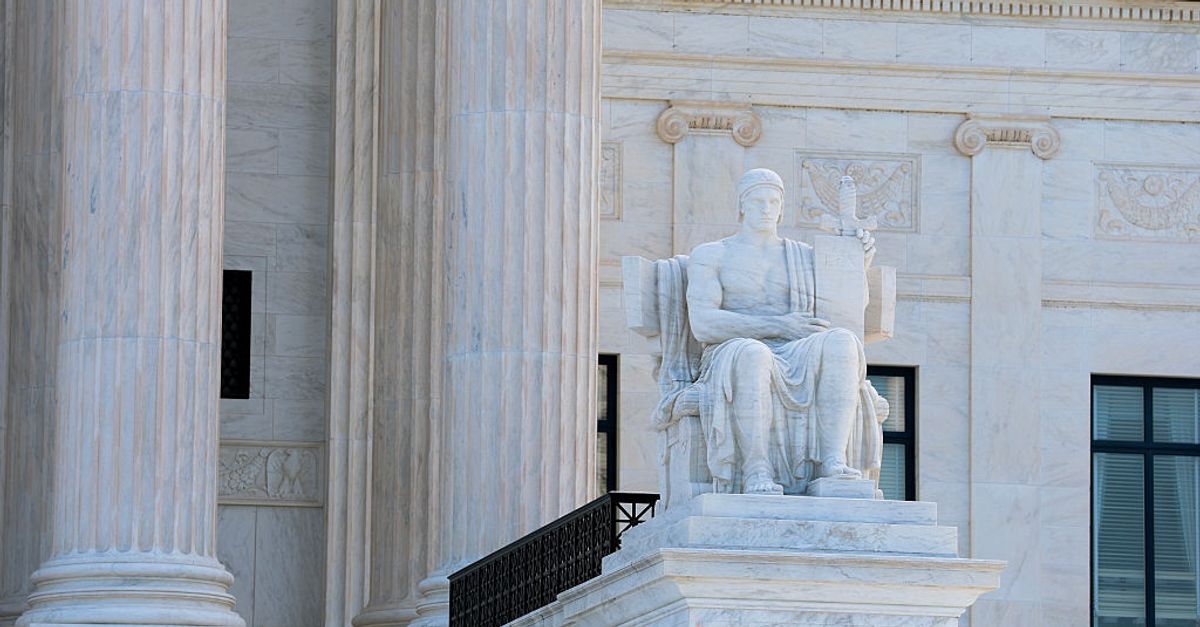
The U.S. Supreme Court issued a stay order in the case of *Department of Homeland Security v. D.V.D.*, allowing the Trump administration to proceed with a policy of deporting certain undocumented individuals to third countries without a hearing. The order, issued as the 2026-27 term began, affects a February 2025 Department of Homeland Security (DHS) policy that mandates immediate removal to a third country for individuals deemed to have no valid fear of torture based on non-individualized diplomatic assurances.
The litigation involves a class action representing undocumented individuals, including named plaintiffs D.V.D., O.C.G., and M.M., who allege the policy violates federal statutes and due process. Lower courts, including the U.S. District Court for the District of Massachusetts and the U.S. Court of Appeals for the 1st Circuit, had previously ruled that DHS must provide notice of the destination country and a meaningful opportunity for individuals to demonstrate a fear of persecution. The Supreme Court's stay paused those lower court requirements, with the justices granting certiorari to hear the merits of the case.
Central to the dispute are 8 U.S.C. section 1231 and the Foreign Affairs Reform and Restructuring Act (FARRA), which establish the U.S. policy against the involuntary return of persons to countries where they face a danger of torture. While these statutes do not explicitly mandate notice or a hearing, lower courts held such protections were implied to avoid constitutional conflicts under the Fifth Amendment. The government argued it would likely succeed on the merits, a position the Supreme Court accepted without providing a detailed substantive explanation in its stay order.
A person subject to this policy will notice a change in their legal rights: they will no longer receive prior notice of which third country they are being sent to, nor a formal opportunity to present evidence of specific threats in that country before being placed on a removal flight. This shifts the burden of protection away from individualized judicial or administrative review and toward broad diplomatic agreements between nations. The effects concern the principle of non-refoulement—the international law doctrine prohibiting the return of refugees to places where their lives are threatened—and how U.S. courts interpret the intersection of domestic statutes like FARRA with international treaties like the Convention Against Torture.
The case sets a precedent for how the Supreme Court handles emergency applications involving immigration enforcement and the degree to which it will consider customary international law in statutory interpretation. The next step is a full hearing on the merits during the 2026-27 Supreme Court term. While the stay is currently in effect, a final decision on whether the DHS policy complies with the Immigration and Nationality Act and the Fifth Amendment will depend on the Court's eventual ruling, the date of which has not yet been announced. Individuals currently in the removal process remain subject to immediate deportation under the administration's guidelines until the litigation is resolved.