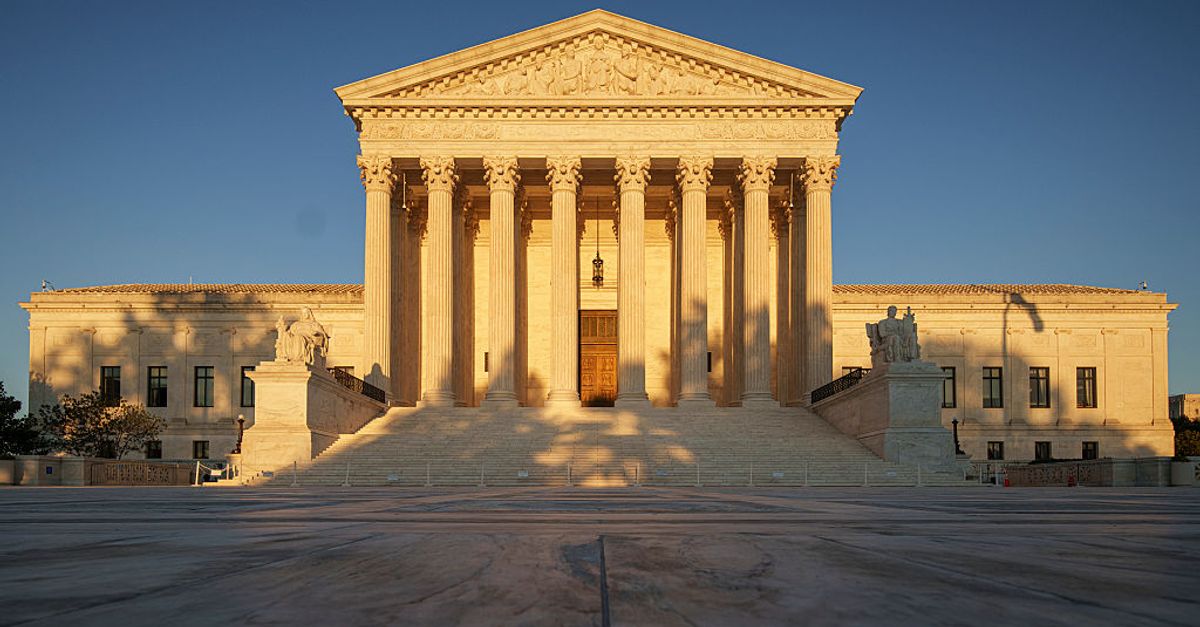
The U.S. Supreme Court is scheduled to hear oral arguments on Nov. 3, 2026, in a case concerning whether religious preschools can be excluded from Colorado’s state-funded universal preschool program for refusing to sign a nondiscrimination agreement. St. Mary Catholic Parish and other plaintiffs argue that the state’s requirement to admit all students, including LGBTQ children and those with LGBTQ parents, violates the First Amendment. The state maintains that all participating schools, public or private, must adhere to the same equal-opportunity standards to receive public funds.
The dispute stems from Colorado’s program providing up to 15 hours of free preschool per week to eligible families. To participate, schools must sign an agreement to "provide eligible children an equal opportunity to enroll" regardless of factors such as religious affiliation, sexual orientation, and gender identity. While the state allows faith-based schools to prioritize families of their own faith, it does not permit them to refuse service to LGBTQ families. The Archdiocese of Denver and two Catholic parishes filed suit, leading to a ruling against them by the U.S. Court of Appeals for the 10th Circuit.
Attorneys for the preschools contend that the U.S. Supreme Court’s 2022 decision in Carson v. Makin prohibits the state from withholding subsidies based on religious exercise. They further argue the law is not "generally applicable" because the state allows other exceptions, such as preferences for low-income families or children with disabilities. Colorado officials counter that these preferences do not constitute discrimination but rather fulfill the program’s goal of supporting vulnerable populations. The state argues that its nondiscrimination rules are neutral and apply to every participant regardless of religious status.
The ruling will affect religious educational institutions, LGBTQ families, and taxpayers across Colorado and potentially the United States. In Colorado, the universal preschool program involves hundreds of private and public providers. The specific plaintiffs in the case include the Archdiocese of Denver, two Catholic parishes (St. Mary Catholic Virtue School and Wellspring Catholic Academy), and two parents. One parent plaintiff, Lisa Sheley, testified that participating in the program would have saved her family approximately $4,700 per year in tuition for one child.
The scale of the impact is tied to the amount of public money flowing to private religious schools through state-funded preschool and voucher programs. Legal experts, such as Preston Green of the University of Connecticut, suggest a ruling for the preschools could lead to a precedent where religious institutions receive public funding without being subject to standard government regulations. Conversely, advocates for the preschools, including The Becket Fund for Religious Liberty, argue that current state policies force religious families to choose between their faith and receiving a financial benefit available to other citizens.
A decision in favor of the preschools would likely mean that states cannot use nondiscrimination requirements as a condition for religious schools to access public funds. If the court sides with Colorado, it would affirm that states may require all recipients of public subsidies to follow uniform admission policies. A final decision from the Supreme Court is expected following the Nov. 3 oral arguments. The outcome will clarify the boundaries between the First Amendment’s Free Exercise Clause and state-level equal opportunity mandates.