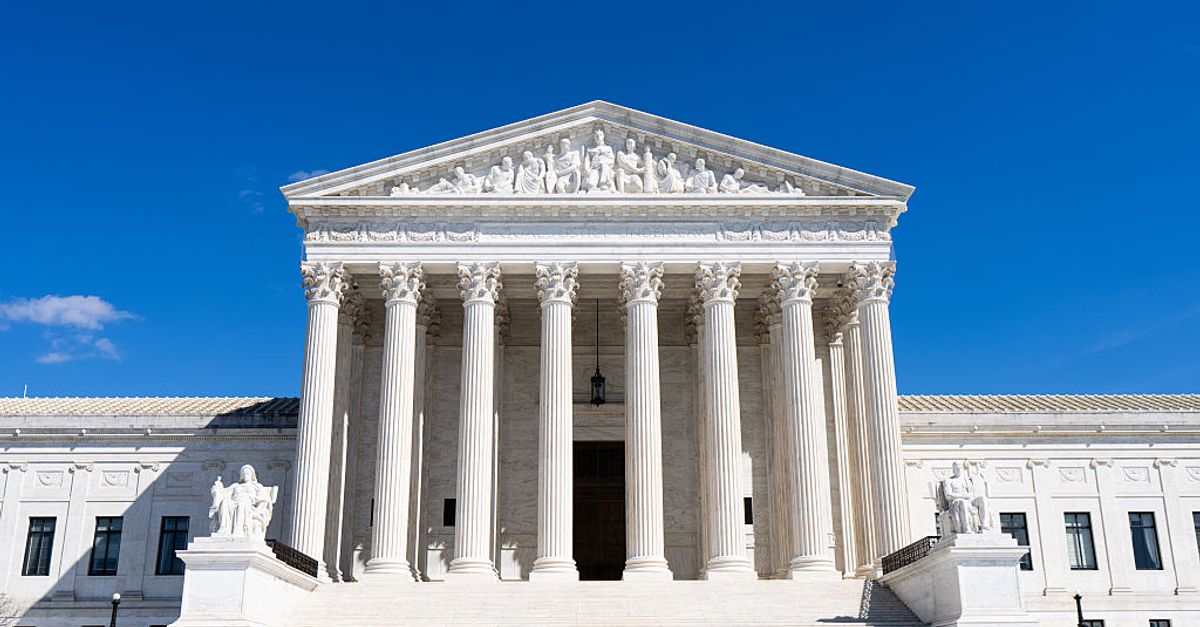
The U.S. Supreme Court is scheduled to hear oral arguments Monday in *Johnson v. United States Congress*, a case that addresses whether federal district courts have the jurisdiction to hear constitutional challenges to veterans' benefits laws. The justices will review a 1974 precedent, *Johnson v. Robison*, to determine if it remains applicable following the 1988 enactment of the Veterans’ Judicial Review Act (VJRA).
The dispute originated with Floyd Johnson, a U.S. Army veteran who served from 1983 to 1985. In 2013, Johnson received a 40-year prison sentence for state felonies in Florida. While incarcerated, he was diagnosed with service-related post-traumatic stress disorder and was initially approved for disability benefits at a 70 percent rate, later increased to 80 percent. However, the Department of Veterans Affairs (VA) subsequently reduced his benefits to a 10 percent rating, citing a federal law that caps disability payments for veterans incarcerated for more than 60 days.
Johnson filed a federal lawsuit in Florida, arguing the benefits cap violates the Fifth Amendment and the Constitution’s bill of attainder clause, which prohibits laws that punish specific groups without a trial. A federal district court dismissed the case in 2022. The U.S. Court of Appeals for the 11th Circuit affirmed the dismissal in August 2025, ruling that the VJRA mandates an exclusive review process: first through a VA board, then the Court of Appeals for Veterans Claims, and finally the U.S. Court of Appeals for the Federal Circuit.
The ruling will affect veterans seeking to challenge the constitutionality of benefits laws, specifically those currently or formerly incarcerated. According to the reported facts, Johnson saw his service-related disability rating drop from 80 percent to 10 percent due to his 40-year prison sentence and a federal law that caps payments after 60 days of imprisonment. The Supreme Court's decision will determine whether veterans like Johnson can file such constitutional claims in local federal district courts or if they must follow the specific administrative and appellate path through the Veterans Court and the Federal Circuit.
The scale of the impact involves a disagreement among federal appellate courts. While the 11th Circuit ruled that district courts lack jurisdiction, it noted that other "sister circuits" have reached the opposite conclusion, allowing district courts to hear facial constitutional challenges. U.S. Solicitor General D. John Sauer argued that the VJRA's existing review scheme is sufficient, stating the "potential gap" for judicial review no longer exists. Conversely, Johnson's legal team argued that the Board of Veterans’ Appeals lacks the authority to decide constitutional challenges, meaning a veteran’s rights could be restricted if district court access is barred.
A decision in the case is expected by early July at the latest. The ruling will clarify whether the 1988 VJRA superseded the 1974 *Robison* decision, which previously allowed district courts to hear constitutional claims regarding VA benefits. If the court sides with the government, veterans will be required to resolve constitutional disputes through the specialized VA appeals process rather than the broader federal district court system. The court will hear the case as the second argument on Monday, October 5, 2026.