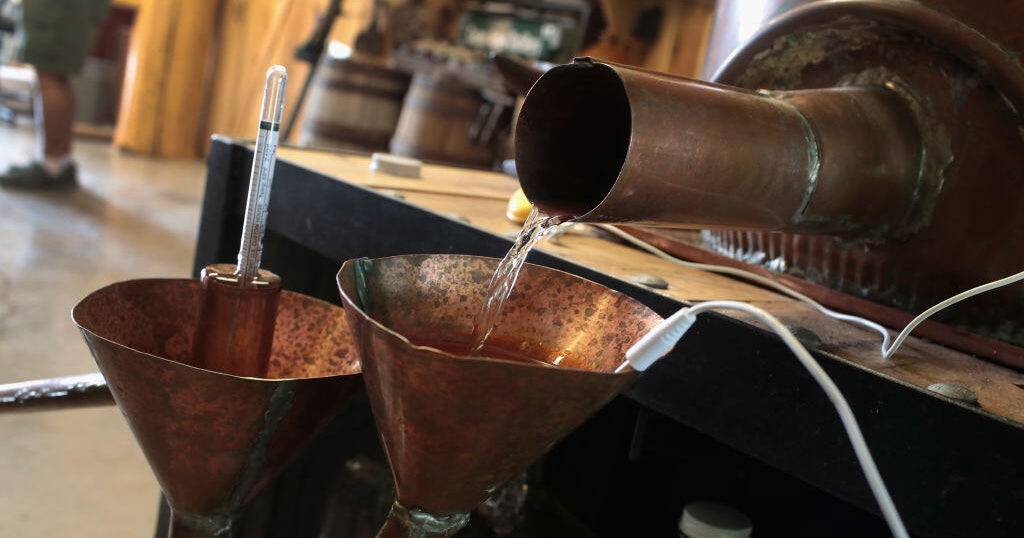
The U.S. Supreme Court on Monday, October 19, 2026, agreed to hear a challenge to a federal law that prohibits the distillation of liquor in private homes. The case, *Department of Justice v. McNutt*, will determine the constitutionality of a nearly 160-year-old ban that carries criminal penalties for those who produce spirits for personal use in their dwellings or connected structures.
The law in question was enacted in 1868 during the Reconstruction era. At that time, Congress sought to address what a House report described as rampant tax evasion by commercial distillers, reporting that "at least seven-eights" of spirits were going untaxed. Lawmakers determined that a ban on home distilling was necessary because spirits produced in private homes could be more easily concealed from government inspectors and tax collectors.
Members of the Texas-based Hobby Distillers Association and John Ream, a brewpub owner from Ohio, brought separate legal challenges against the ban. They argue that the prohibition exceeds the powers granted to Congress under the Taxation and Necessary and Proper Clauses of the Constitution. While a panel from the 6th U.S. Circuit Court of Appeals upheld the ban, the 5th U.S. Circuit Court of Appeals ruled it unconstitutional, stating the law criminalizes conduct not subject to tax and could set a precedent for the government to ban other at-home activities to prevent hypothetical tax evasion.
Solicitor General D. John Sauer argued in the government's appeal that the 5th Circuit decision is "erroneous." The Justice Department maintains that location restrictions are essential for the effective collection of federal excise taxes, noting that the government's authority to regulate and tax distilled spirits is as old as Congress itself. Lawyers for the challengers contend that if the ban stands, there would be "no limit" to federal power to criminalize local conduct, such as cooking or gardening, if the government claimed it might conceal taxable activity.
The scale of the impact involves the potential legalization of a currently criminalized activity for residents across all 50 states. While the exact number of people who would begin home distilling is not reported, the Hobby Distillers Association represents a organized group of hobbyists seeking this legal right. For these individuals, a ruling in their favor would mean they could legally purchase and operate distilling equipment at home without the risk of losing their property or facing years of incarceration. Conversely, a ruling for the government would maintain the current prohibition and the associated risk of felony prosecution for home production.
The ruling will clarify the limits of the Taxation and Necessary and Proper Clauses of the Constitution. It sets a precedent for whether Congress can regulate or ban private, non-commercial activities inside the home solely because those activities could potentially be used to hide taxable behavior. A decision against the government could lead to challenges of other federal location-based restrictions, while a decision for the government would affirm its power to regulate private conduct to protect tax revenue. The Supreme Court is expected to hear oral arguments in 2027, with a final decision likely released by late June or early July of that year.