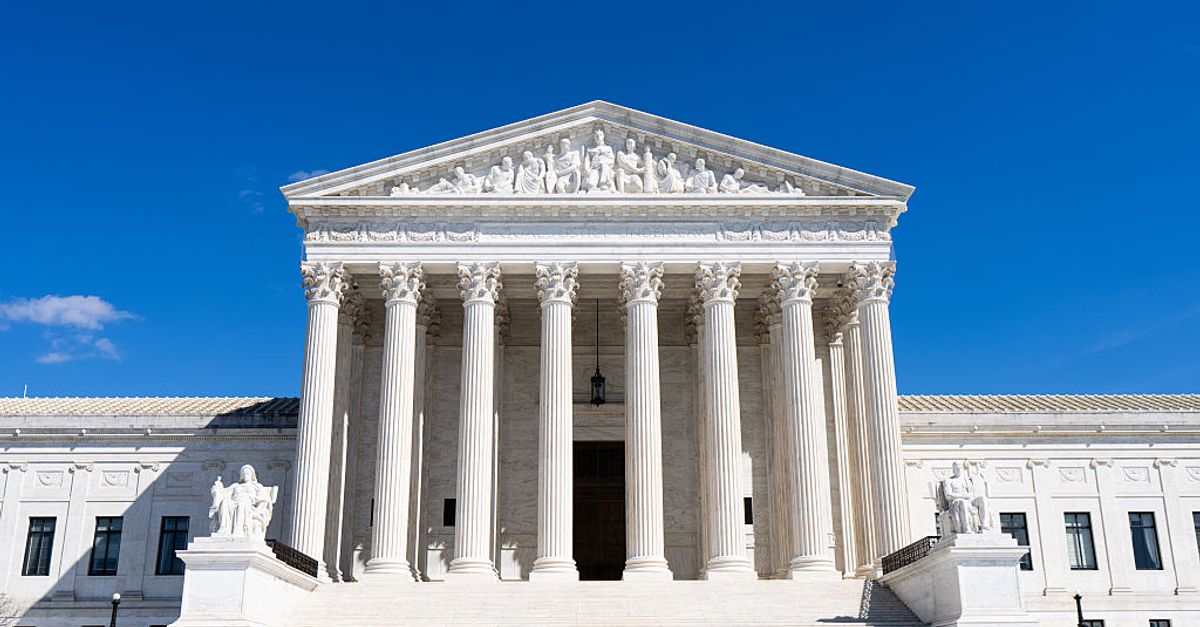
The Supreme Court of the United States is scheduled to hear oral arguments on Tuesday, Oct. 13, 2026, in Beaird v. United States, a case that examines the degree of deference federal courts must give to the U.S. Sentencing Commission’s commentary when interpreting sentencing guidelines. The case involves Kendrick Jarrell Beaird, who pleaded guilty to being a felon in possession of a firearm. The outcome will determine whether courts should continue to treat the Commission’s interpretive notes as authoritative or if newer, more restrictive standards for agency deference should apply.
The U.S. Sentencing Commission was established by the Sentencing Reform Act of 1984 as an independent agency within the judicial branch. It is tasked with creating guidelines to reduce sentencing disparities and promote fairness. In the 1993 case Stinson v. United States, the Supreme Court ruled that the Commission's commentary is authoritative unless it violates the Constitution, a federal statute, or is plainly inconsistent with the guidelines. However, a 2019 Supreme Court decision, Kisor v. Wilkie, limited judicial deference to executive agencies' interpretations of their own regulations, requiring that a regulation be "genuinely ambiguous" before a court defers to the agency's view.
In Beaird’s case, his sentence was increased based on a guideline for offenses involving a "semiautomatic firearm that is capable of accepting a large capacity magazine." While the guideline text does not define "large capacity magazine," the commentary defines it as a magazine holding more than 15 rounds. Beaird’s firearm held 17 rounds. Beaird argues that courts should afford no deference to such commentary. The government contends that the Stinson standard properly understood is consistent with Kisor but supports a remand because it believes the lower court extended deference too far without applying Kisor’s limitations.
The scale of this ruling involves the federal criminal justice system, which handles tens of thousands of cases annually. A shift in how commentary is applied could change the calculated sentencing range presented to a judge. While the Supreme Court ruled in United States v. Booker (2005) that the guidelines are advisory rather than mandatory, district judges are still required to calculate and consider the guideline range before imposing a sentence.
The decision could also set a significant precedent for how other judicial and executive branch agencies interpret their own rules. A ruling against the Commission might force it to revise its processes, potentially moving all definitions directly into the guidelines themselves. This would involve a more formal process of submitting changes to Congress for review. The Supreme Court's ruling will clarify the tension between the "rule of lenity"—which favors defendants when laws are ambiguous—and the practice of deferring to agency expertise. A final decision is expected by the end of the court's term.