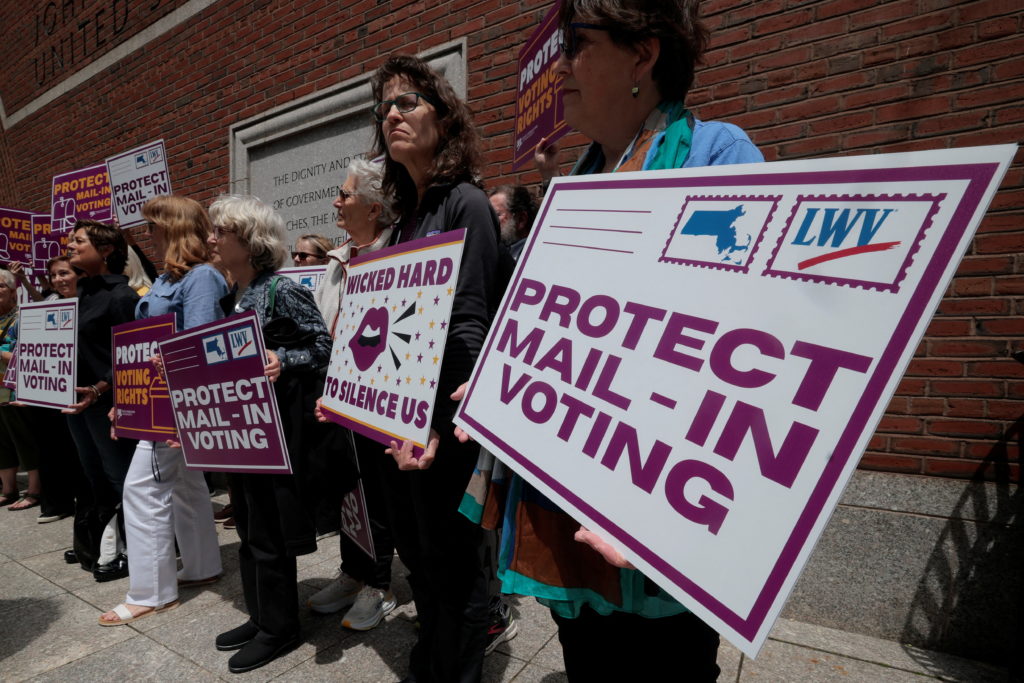
The U.S. Supreme Court on Monday issued an order that allows a legal challenge to President Donald Trump’s restrictions on mail-in voting to proceed, while vacating a lower court's freeze on the policy. The Court did not rule on the legality of the president's order but instead stated that the initial challenge brought by Democratic-run states in June was premature. This decision effectively restarts the legal proceedings just as states begin preparing to send out ballots for the November midterm elections.
The executive order at the center of the dispute seeks to implement new U.S. Postal Service (USPS) regulations, which were published on Friday night. These rules require mail-in ballots to use specific envelope formatting and mandate that states use an electronic system to identify mail-in voters to the USPS. If states do not comply with these requirements, the Postal Service would not send their mail ballots. The administration filed a motion late Monday to remove a second remaining injunction that currently bars the USPS from implementing these changes.
Election officials and legal experts reported that the timeline for compliance is extremely tight. Military and overseas ballots are scheduled for distribution in North Carolina on Sept. 4, while California’s Yolo County is set to begin mailing ballots in 11 days. Jesse Salinas, registrar for Yolo County, stated that his office has already printed envelopes and that the capacity to revise procedures at this stage is not evident. Tammy Patrick of the Elections Center noted that no state currently conducts elections using the specific methods mandated by the new postal rule.
On a per-household basis, voters who rely on the mail to participate in federal elections could see their primary method of voting disrupted within the next week to 11 days. While the Supreme Court has not yet declared the mandate constitutional, the removal of the stay allows the administration to move forward with enforcement unless new lawsuits, which are currently being weighed by opponents, result in further injunctions. The knock-on effects could include widespread administrative strain on local election offices, many of which lack full-time staff to manage sudden, large-scale changes to ballot logistics and voter roll integration.
Legal experts such as Rick Hasen and David Becker suggested that further litigation is likely to prevent the order from being fully implemented by November, though the immediate effect is a period of procedural instability. The President has stated that the order is necessary to address concerns regarding mail voting, though he has previously cast mail ballots himself. The next steps involve court responses to the administration's Monday motion and potential new filings from states seeking to block the Tuesday effective date of the new Postal Service regulations.