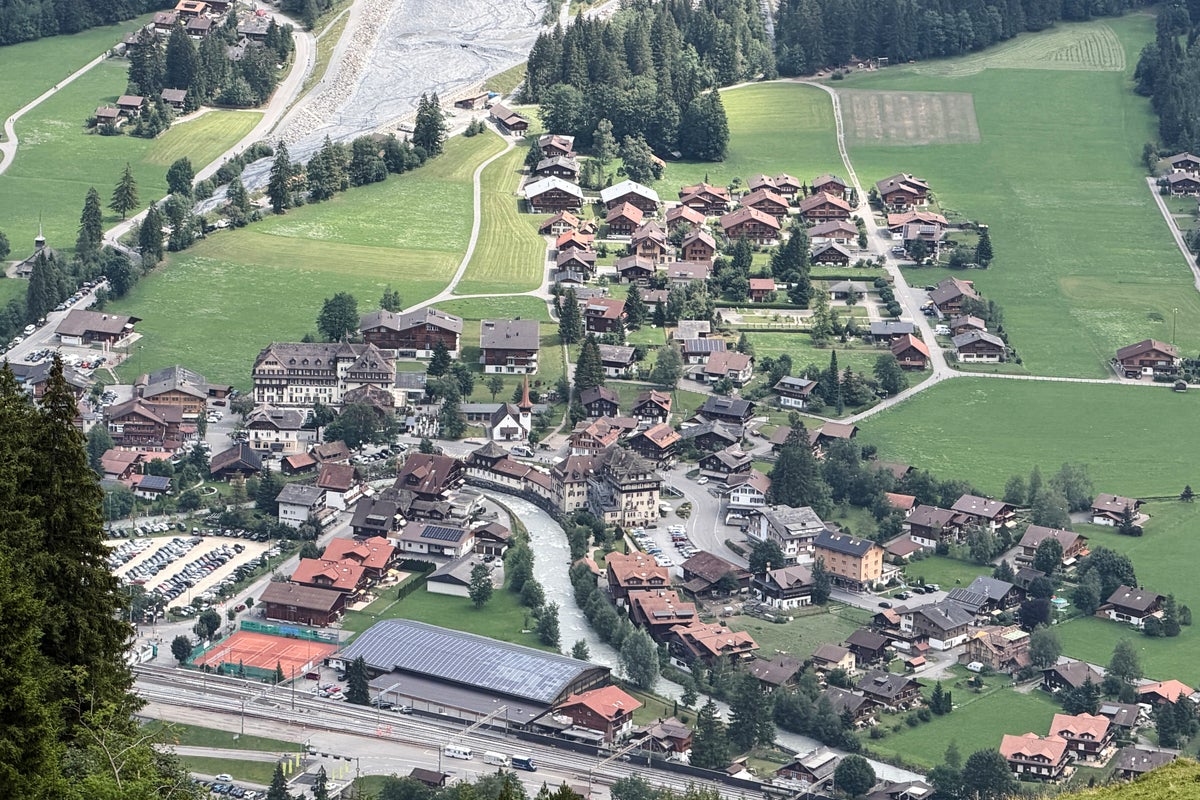
Authorities in the Swiss village of Kandersteg are monitoring an unstable mountain rock formation that threatens to trigger a landslide in the valley below. The formation, known as Spitze Stei, is part of an Alpine landscape increasingly affected by thawing permafrost and glacier dynamics, which experts link to rising global temperatures.
The current situation follows a major natural disaster in May 2025 in the nearby Loetschental valley. In that event, a mass of rock and ice fell from a glacier, covering the village of Blatten in mud. Blatten had been evacuated as a precaution before the collapse, and aerial views from October 2025 showed the village remained partly flooded five months later.
Experts estimate that approximately 15 to 20 million cubic meters of rock are unstable at Spitze Stei. While a total collapse would cause a significant disaster, geological experts state the rock is more likely to break down in smaller, gradual increments. Local residents, including Brigitte Jüni and Rudolf Isler, reported that the town is under constant monitoring and that evacuation plans have been prepared.
Markus Stoffel, a professor at the University of Geneva, explained that ice within mountain debris acts as a "cement" for slopes. According to Stoffel, as this ice melts due to higher temperatures, mountain sides become increasingly unstable. Nathan Solothurnmann of Greenpeace Switzerland noted that the rising frequency of such events may eventually force the abandonment of certain villages if the cost of protective infrastructure becomes too high.
The scale of the danger is illustrated by the 2025 destruction of nearby Blatten. In that instance, an entire village was coated in mud and rendered largely uninhabitable for months, requiring complete evacuation. For those living in Alpine regions, these environmental changes represent a concrete shift in property safety and legal residency rights. As experts like Solothurnmann suggest, the long-term impact could include the permanent decommissioning of infrastructure and the loss of private property if government authorities determine that protective measures are no longer financially viable.
This situation sets a precedent for how Alpine communities manage the risks associated with thawing permafrost and receding glaciers. While Kandersteg residents currently report feeling calm due to existing precautions, the knock-on effects include increased spending on geological surveillance and disaster planning. The outcome in Kandersteg will likely influence future Swiss policy regarding which mountain valleys remain open for habitation. No specific date for a potential collapse is known, as geological movements depend on nature, but the mountain remains under 24-hour observation by authorities.