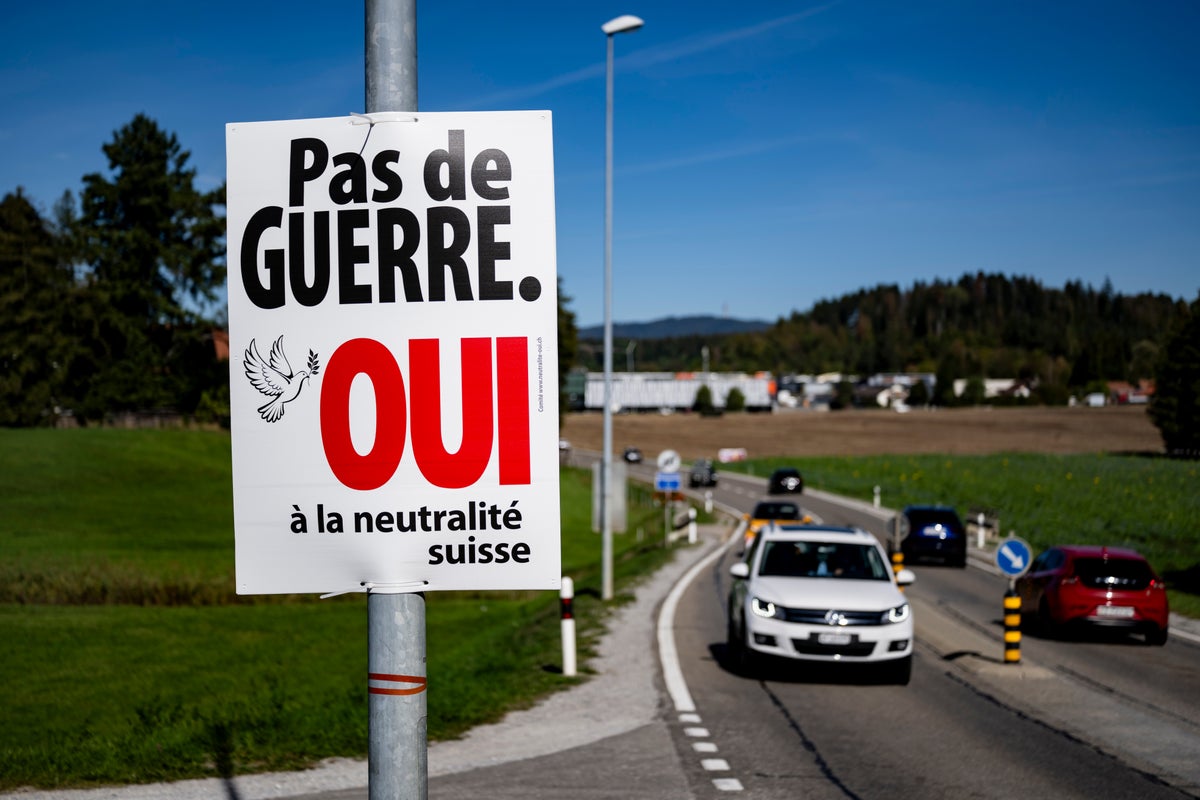
Swiss voters on Sunday rejected a referendum proposal that would have established stricter constitutional requirements for the country's neutrality. Official final results released by the government showed that 70.1% of voters turned down the measure, with majorities in all 26 of the country's regions voting against the initiative.
The proposal was spearheaded by the Swiss People’s Party (SVP) and the Pro Switzerland organization. Supporters argued that the federal government had drawn too close to NATO and the European Union (EU), specifically citing the decision to mirror EU sanctions against Russia following the conflict in Ukraine. Opponents, including the Swiss government and parliament, argued the measure was too dogmatic and would limit the country's ability to defend its interests during periods of geopolitical tension.
Had it been approved, the mandate would have prohibited Switzerland from joining international punitive measures unless they were mandated by the United Nations (UN). Because Russia holds a veto as a permanent member of the UN Security Council, it could block such resolutions. Additionally, the initiative would have banned military partnerships, such as Switzerland’s 30-year cooperation with NATO, except in instances where the country was under direct threat.
Swiss neutrality has been a constitutional principle since the mid-19th century and internationally recognized since 1815. While the country is not a member of any military alliance, it has participated in economic sanctions and maintained partnerships that supporters of the initiative claimed threatened national independence. Foreign Minister Ignazio Cassis stated during the campaign that neutrality does not mean "indifference" to violations of international rules.
The rejection of this proposal maintains the federal government’s current authority to levy economic sanctions and engage in military cooperation. For Swiss citizens, the vote preserves the status quo regarding the country's international standing, meaning the government can continue to mirror EU sanctions, such as those currently affecting trade and finance with Russia. The scale of the rejection—70.1% of the electorate—indicates a broad preference for maintaining the government's "leeway" in foreign policy rather than adopting the strict non-engagement rules proposed by the SVP.
A "yes" vote would have prevented the country from participating in most international sanction regimes, as any single permanent member of the UN Security Council could veto a mandate. By rejecting the measure, voters have ensured that the government retains the flexibility to respond to regional conflicts through economic measures without being restricted to UN-only mandates.
The outcome also means the government remains free to continue its 30-year history of cooperation with NATO, a partnership that critics of the initiative argued was necessary for national security. Proponents of the measure, such as Ruth Bolomey, 65, sought stricter neutrality for security reasons, while opponents like Jihad Azkoul, 78, expressed concern about losing the protection of neighbors if Switzerland were attacked. Following the vote, Norbert Lins of the European Parliament noted that the result removes potential obstacles to future joint responses to international challenges. The ballot formed part of Sunday’s latest referendums on local and national matters under the country's direct democracy system.