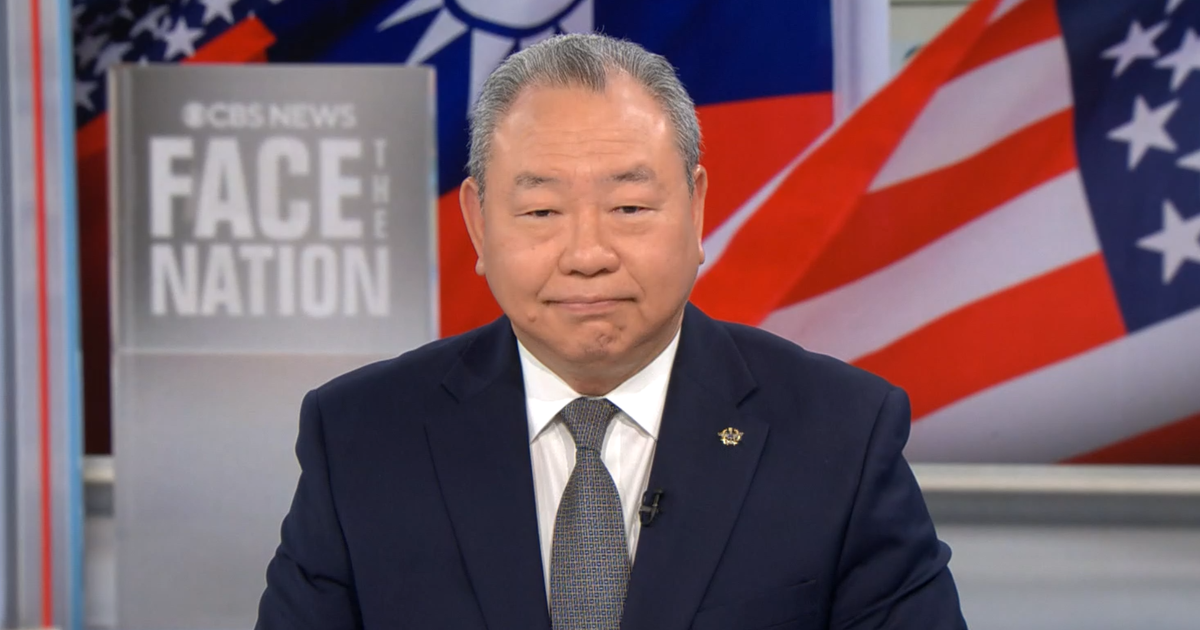
Alexander Yui, Taiwan’s representative to the United States, stated in an interview aired September 27, 2026, that the U.S. has not changed its position toward Taiwan following recent meetings between U.S. and Chinese leadership. Yui reported that while Taiwan was discussed during a meeting between President Donald Trump and Chinese General Secretary Xi Jinping, it was not the primary topic and did not appear in the resulting official statements from either side.
The interview followed a period of diplomatic activity, including a May visit to Beijing by President Trump and more recent meetings during the United Nations General Assembly (UNGA) in New York. Yui noted that Secretary of State Marco Rubio met with foreign ministers from Japan and South Korea during the UNGA to affirm support for stability in the Taiwan Strait and to oppose coercion or changes to the status quo.
Yui addressed historical characterizations of World War II made by Chinese leadership, arguing that the Chinese Communist Party (CCP) was not the governing body fighting alongside the U.S. at that time. He presented a "blood chit" used by the American "Flying Tigers" pilots, which featured the Republic of China flag, to illustrate the historical cooperation between the U.S. and the government now in Taiwan. Yui stated the CCP regime did not exist until 1949 and characterized the People's Republic of China as the current aggressor in the region.
At the center of the diplomatic tension is a $14 billion U.S. weapons package intended for Taiwan that has not yet been delivered. Republican Senators including Thom Tillis, Lisa Murkowski, Mitch McConnell, and John Cornyn have questioned why the Trump administration has not released this equipment. Additionally, more than $1 billion in further aid remains pending. For Taiwan’s 23 million residents, the delivery of these systems is tied to the concept of "peace through strength," which Yui argued is necessary to deter a potential Chinese invasion.
While U.S. intelligence assessments suggest Chinese leaders do not currently plan an invasion by 2027, Beijing continues to set conditions for unification. A former U.S. lawmaker, Mike Gallagher, characterized Taiwan as a "single point of failure" for critical technology. The timing of the weapons deliveries remains uncertain, though Yui stated Taiwan is increasing its own defense budget to facilitate these purchases. No specific date for the delivery of the $14 billion package or the additional $1 billion in aid was reported.