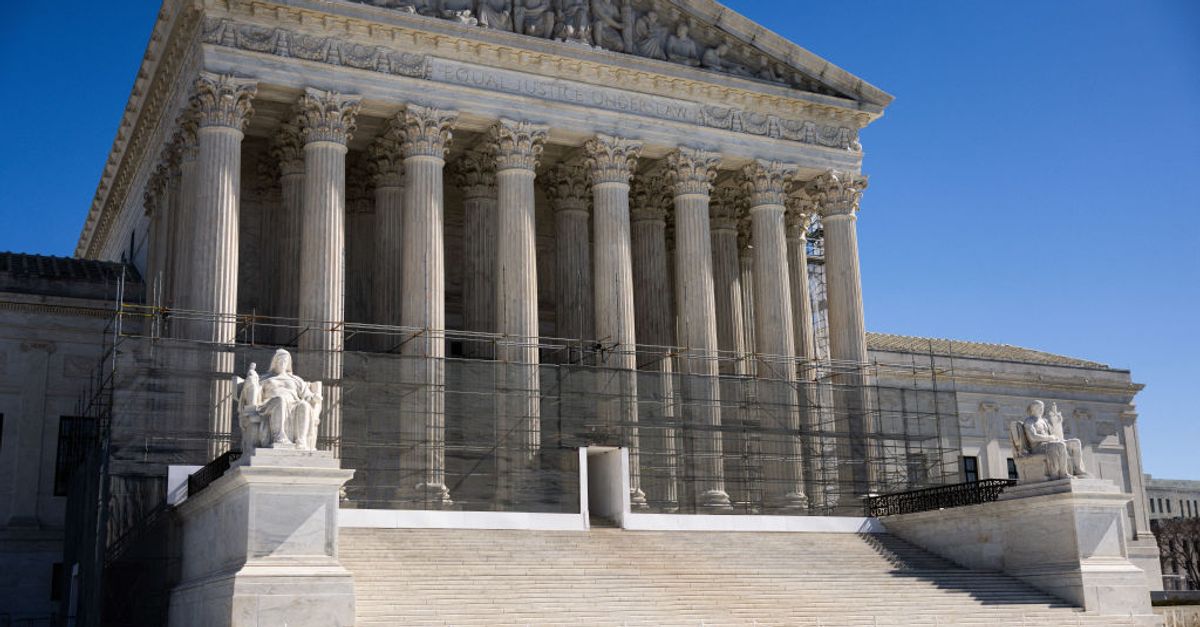
The U.S. Supreme Court’s interpretation of the Eighth Amendment, which prohibits "cruel and unusual punishments," was recently highlighted following an unsuccessful execution attempt in Tennessee. On September 30, 2026, the state attempted to execute Christa Pike, the only woman on Tennessee's death row, but she survived after being injected with two lethal doses of pentobarbital.
Pike, who was sentenced to death for the 1995 murder of Colleen Slemmer, suffered injuries during the procedure, including arm burns, and was treated at a Nashville hospital. The event prompted public discussion among commentators regarding whether a second execution attempt would violate constitutional protections. Existing Supreme Court precedent has previously allowed a second execution attempt following a mechanical failure during an electrocution.
The Eighth Amendment, enacted in 1791, serves as a restraint on government authority to impose criminal penalties. While the Constitution does not provide specific context for what constitutes "cruel and unusual," the Supreme Court has established evolving standards through various rulings. These standards address the proportionality of sentences, the age of offenders, custodial violence, and the conditions of confinement, such as prison overcrowding or "deliberate indifference" to medical needs.
This legal framework affects individuals currently on death row in the United States, as well as incarcerated individuals who are subject to standards regarding prison conditions and medical care. For the incarcerated, these rulings determine rights such as the requirement for "adequate medical care" established in *Brown v. Plata* and protections against "malicious and sadistic" force by correctional officers. For example, in *Hope v. Pelzer*, the Court ruled that being handcuffed to a hitching post for seven hours without bathroom breaks exceeded constitutional limits.
The scale of these protections also extends to juveniles in the justice system. Under the *Graham* and *Miller* rulings, the Court has prohibited life sentences without parole for juvenile offenders, mandating they receive a "realistic opportunity to obtain release." Additionally, the 2024 ruling in *City of Grants Pass v. Johnson* clarified that the Eighth Amendment primarily concerns the "methods or modes" of punishment. That decision allows municipalities to criminally sanction conduct, such as public sleeping, even if tied to a status like homelessness.
Future legal challenges will likely focus on whether a state violates the Eighth Amendment if it ignores warnings that an execution method may fail. While the Supreme Court has historically focused on whether a punishment is "cruel" (designed to add terror or pain) or "unusual" (not commonly employed), the Pike case raises unresolved questions about repeated execution attempts. There are currently no scheduled court dates or deadlines reported for a second attempt at Pike's execution.