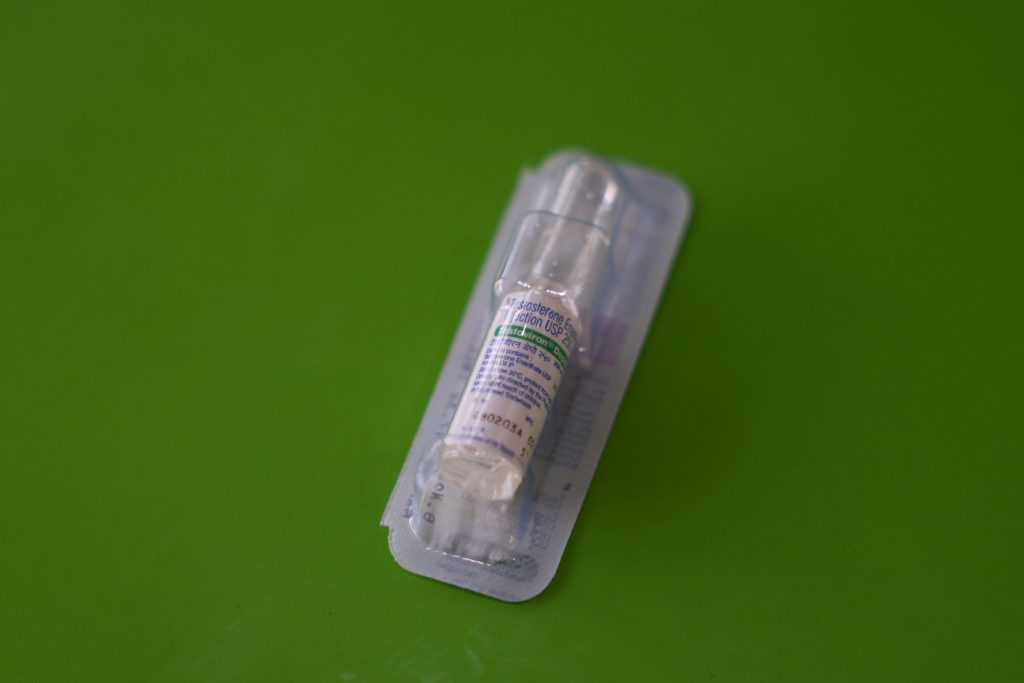
Starting with this year's annual health assessments, every active-duty and reserve service member aged 30 and older will have their testosterone measured, and those found deficient will be offered testosterone replacement therapy at the Defense Department's expense. Service members under 30 may opt in voluntarily. Defense Secretary Pete Hegseth, who announced the program in a July 15 video calling for a "High-T Department of War," said treatment will remain the individual's choice and that the goal is "restoring and optimizing your natural capabilities," not "artificial enhancement." A statement the same day from chief Pentagon spokesman Sean Parnell confirmed the screening itself is mandatory for the covered age groups.
The policy is straightforward to describe and much harder to interpret medically. Endocrinologists, urologists and primary care clinicians who treat low testosterone say the diagnosis is not a number on a lab slip. It is a number confirmed twice, drawn at the right hour of the morning, interpreted alongside symptoms, and checked against the reasons a man's level might be temporarily depressed. Screen a large, mostly healthy population without those guardrails and the predictable result is that some men who do not have a hormone disorder will be told they do — and some of them will start a therapy that suppresses the body's own testosterone production, sometimes permanently.
What testosterone actually does
Testosterone is the primary male sex hormone, produced mainly in the testes under instruction from the pituitary gland and hypothalamus. That feedback loop — brain signals down, testes produce, hormone levels signal back up — is the reason external testosterone has such far-reaching effects. Beyond sexual function and sperm production, testosterone supports muscle mass and strength, bone density, red blood cell production, fat distribution, mood and energy. Those are the same domains military leaders point to when they describe readiness, which is part of why the hormone has become a policy subject at all.
Levels also fall naturally with age. Between roughly 30 and 40, men's testosterone begins to decline by about 1 to 2 percent per year. A 45-year-old with a lower level than he had at 25 is, in most cases, a 45-year-old — not a patient. That distinction matters enormously for a screening program keyed to age 30 and above, because the age band selected is precisely the band in which normal, non-pathological decline begins.
How low is "low"? The number is not one number
For adult men, the Endocrine Society describes a normal range of roughly 300 to 1,000 nanograms per deciliter of total testosterone. A large 2017 study of more than 9,000 men in the United States and Europe produced a similar reference range of 264 to 916 ng/dL. A 2017 paper in Baylor University Medical Center Proceedings put the working diagnostic benchmark at repeated levels somewhere below about 280 to 320 ng/dL.
The word doing the work in that sentence is "repeated." Testosterone fluctuates constantly — across the day, across weeks, and in response to illness, poor sleep, alcohol, acute stress, opioid use, obesity, thyroid disease and overtraining, all of which are common in an operational military population. Levels peak in the morning, which is why guidelines call for at least two separate morning blood draws on different days before a diagnosis is made. Harvard Health has reported that among men with borderline-low results, a repeat test comes back in the normal range about 30 percent of the time.
Total testosterone also does not tell the whole story. Most circulating testosterone is bound to sex hormone-binding globulin and albumin and is not biologically available. Conditions that shift binding protein levels — obesity and insulin resistance lower SHBG; aging raises it — can push a total testosterone reading up or down without the tissue-level picture changing accordingly, which is why clinicians often order free or bioavailable testosterone before concluding anything.
So the honest answer to "what is a low number" is that it varies by person: by age, by time of day, by the assay the lab uses, by binding protein status, by acute health, and — decisively — by whether the man has symptoms of deficiency at all. The clinical definition of male hypogonadism requires both consistently low levels and symptoms: reduced libido, erectile dysfunction, low sperm count or infertility, breast enlargement or tenderness, persistent fatigue, and loss of muscle mass.
"It is a challenge to definitively base treatment off of a number," Katie Horner, a physician assistant at Internal Medicine and Family Physicians in Omaha, Nebraska, told PolitiFact. "I always say, treat the patient, not the lab value."
What the experts say about treating men who feel fine
Dr. Ravi Iyengar, an endocrinologist at UC San Diego Health, said the best candidates for therapy are people with lab-confirmed low testosterone and genuine deficiency symptoms. "But our first goal as endocrinologists is always to help your body produce its own testosterone if possible, as there are significant implications to taking outside (exogenous) hormones," he said.
That sequencing — find and fix the cause first — is standard practice, and it is the step most likely to be skipped in a mass screening. Weight loss, treating sleep apnea, correcting thyroid disease, reducing alcohol, tapering opioids and restoring sleep all raise testosterone in men whose levels were depressed by those conditions rather than by a failure of the testes or pituitary. Prescribing testosterone in those cases treats the reading and leaves the underlying problem in place.
For men who do have a deficiency, replacement therapy has real benefits. It can improve the symptoms that brought them in: "It can restore energy, protect bone density, support healthy metabolic function, and improve libido and sexual health," Iyengar said. Testosterone is delivered as injections, gels, creams, patches, pellets or oral formulations, on schedules ranging from twice daily to every few weeks.
The risks of raising testosterone that did not need raising
The most consequential risk is the one that follows directly from the hormone's feedback loop. "When you take outside testosterone, your body stops making its own," Iyengar said. The brain reads the incoming hormone as sufficient, stops signaling the testes, and the testes stop working. Coming off therapy can therefore be difficult or, in some men, impossible without lasting side effects.
Because sperm production depends on very high testosterone concentrations generated inside the testes — not on circulating hormone from a gel or an injection — external testosterone suppresses sperm counts, sometimes to zero, and shrinks the testicles. For a force whose covered age threshold sits squarely within prime reproductive years, that is not a minor footnote; men who may want children later are a substantial share of the population being screened.
Other documented risks include increased red blood cell production, which thickens the blood and raises the risk of clots and stroke, and requires ongoing hematocrit monitoring; worsening of existing obstructive sleep apnea; acne and oily skin; stimulation of prostate growth; and breast tenderness or enlargement. Mood changes and irritability are reported. None of these are reasons to withhold treatment from a man who genuinely needs it. All of them are reasons not to start it in a man who does not.
For women in uniform, the picture is different again. Women's testosterone levels are far lower — commonly cited ranges run from about 15 to 46 ng/dL, with some references extending to 70 — and standard assays are poor at measuring accurately at those concentrations, so diagnosis rests heavily on symptoms. There is no FDA-approved testosterone product for women; anything prescribed is off-label at adjusted doses, and side effects include acne, excess facial and body hair, and voice changes.
What the Defense Department has not said
Much of the operational detail remains unpublished. The department declined to answer many specific questions from PolitiFact, including how results will be confirmed, whether two morning draws will be required before a diagnosis, what threshold will define deficiency, who will supervise prescribing and follow-up monitoring, whether fertility counseling will be offered before therapy begins, and how the policy applies to women and to service members already receiving hormone therapy. Those answers determine whether the program functions as ordinary preventive medicine or as something closer to population-wide case-finding for a condition defined by symptoms.
The stakes are concrete rather than theoretical. A man who starts replacement therapy at 32 for a number rather than a diagnosis may be on it for life, may lose fertility during the years he most wants it, and will need indefinite monitoring of his blood counts and prostate. Reversing course is not always possible. Against that, the benefit for a man who was never deficient is, by definition, close to zero.
There is also an opportunity-cost question that clinicians raise repeatedly. Low testosterone in fit-aged men is frequently a downstream marker of something else — untreated sleep apnea, weight gain, chronic sleep deprivation, alcohol use, chronic pain and opioid therapy. Those conditions damage readiness directly and are treatable. A program that ends at a prescription pad has, in those cases, addressed the signal and left the cause running. The medical value of this policy will depend almost entirely on details the Pentagon has not yet released: how deficiency is confirmed, what is ruled out first, and how carefully the difference between a low number and a real disorder is preserved.