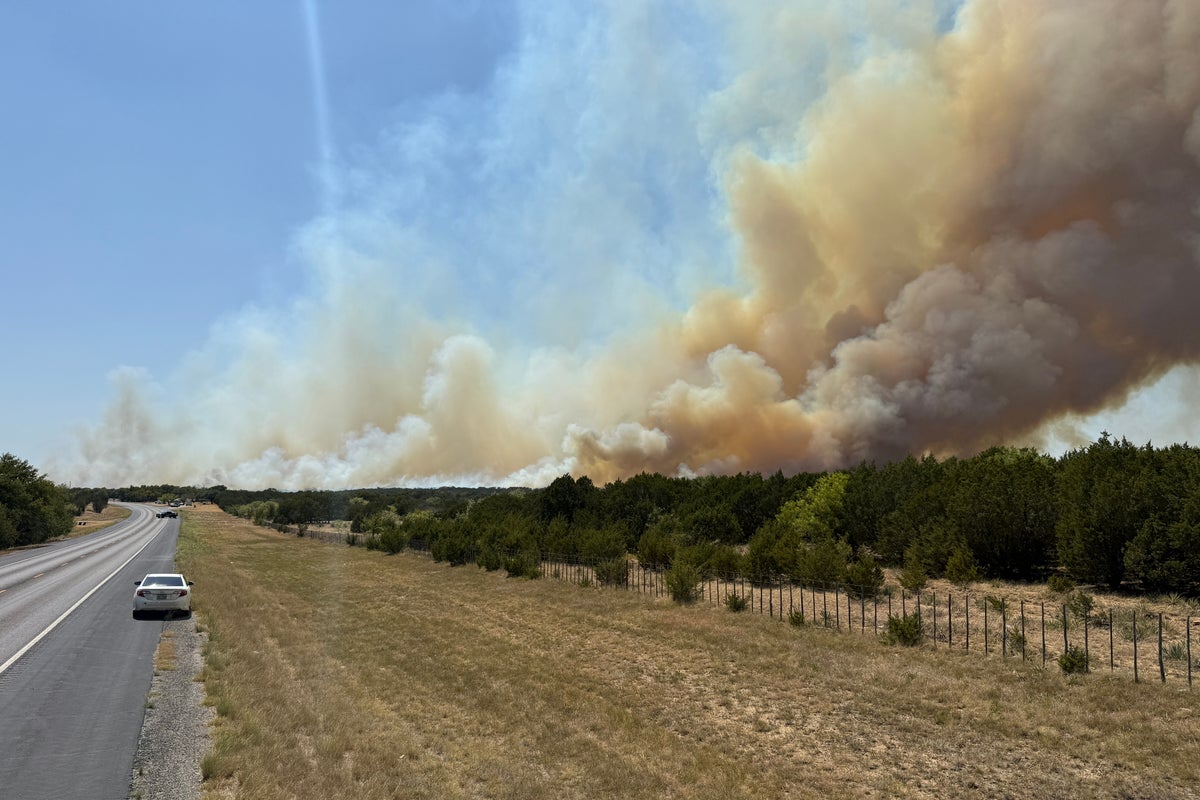
Authorities issued evacuation orders on Tuesday as the Ross Fire expanded across ranchland in north-central Texas, burning more than 78 square miles. The fire, which began Monday afternoon, is located approximately 60 miles west of Fort Worth and remains only slightly contained. Local officials in Palo Pinto County confirmed that at least five structures have been destroyed as the blaze moves through the lightly populated area.
The fire spread across two counties, leading local school districts to either delay or cancel classes on Tuesday. Amy Meyer, a spokesperson for the Palo Pinto County emergency services district, stated that extremely dry conditions contributed to the fire's rapid growth within a few hours. In response, local authorities established evacuation centers, while area ranchers and a livestock commission provided barn space for displaced animals.
In Nevada, firefighters reported progress on the Hawk Fire, which started Saturday near Reno and has burned approximately 23 square miles. As of Monday, that blaze was 27% contained. While the fire destroyed more than 30 homes and injured seven people—including three first responders—evacuation orders were downgraded for thousands of residents. The National Interagency Fire Center reported a total of 12 new large fires on Sunday alone, amid a year that has seen more than 50,000 wildfires nationwide.
For the average household in these regions, the fires cause immediate disruptions to work and education schedules, alongside the potential for permanent loss of housing and personal assets. Residents in evacuation zones must rely on emergency centers and community-provided shelters for themselves and their animals. The persistent dry conditions across the South and West mean that those living in fire-prone areas may face ongoing risks to their utility services, air quality, and insurance stability as the 50,000 wildfires recorded this year represent a 10-year high for this period.
The high frequency of large fires—including 12 new blazes reported in a single day—places significant strain on state and federal firefighting resources. As the Ross Fire was expected to grow further on Tuesday due to rising temperatures, emergency services must prioritize containment in areas where structures are at risk. In Nevada, where the Hawk Fire was attributed to human activity, legal or investigative actions may follow to determine specific liability. Future policy and budgeting for the National Interagency Fire Center may be influenced by the record-setting number of fires logged across the country so far this year.