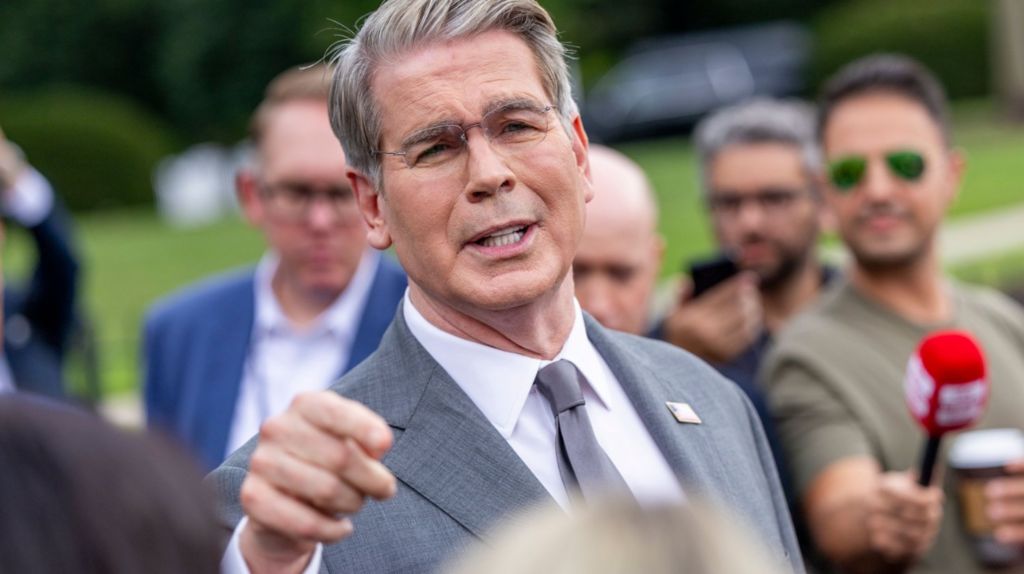
U.S. Treasury Secretary Scott Bessent on Thursday called for international allies to support a plan to isolate the Iranian economy. Speaking to CNBC, Bessent stated that countries would need to decide whether to cooperate with Washington's efforts or face consequences. The announcement follows a statement from President Donald Trump on Truth Social, in which he warned that nations providing an "economic lifeline" to Iran would face significant economic repercussions.
The proposed strategy follows a period of military and economic tension between the U.S. and Iran. Earlier this year, the U.S. and Israel conducted an attack on Iran, which was followed by a U.S. blockade of Iranian ports. In April, the U.S. launched "Operation Economic Fury," a joint effort by the Treasury and the Pentagon to degrade Iran’s military capabilities by cutting off revenue streams through sanctions on foreign banks and firms. Although a Memorandum of Understanding signed in June included a schedule to terminate U.S. sanctions, President Trump is now moving toward what he described as a crushing economic operation.
Bessent stated that the U.S. government would use its full enforcement capabilities against any entity that continues to trade with Iran, specifically mentioning the transfer of money or the purchase of oil. He argued that this heightened economic pressure is intended to minimize the necessity of restarting large-scale military conflict. While specific details of the new measures were not provided, Bessent confirmed that a formal press conference is scheduled for August 24 to outline the plan.
The scale of the economic shift involves the potential isolation of a nation where inflation has already reached significant levels. In the 12 months leading to February 2026, the price of basic necessities in Iran rose by an average of 60%, and food prices doubled. For the approximately 88 million residents of Iran, these new measures could further impact the cost of living and the availability of goods. However, some residents in Khuzestan province told the BBC that because the country has lived under sanctions for decades, they believe the economy may be resilient enough to avoid a total collapse.
The policy sets a precedent for how the U.S. manages its alliances, as it explicitly threatens "tremendous economic consequences" for partners that do not comply with Washington's isolation strategy. The move signals a departure from the June Memorandum of Understanding that had outlined a path toward sanctions relief. The next significant step occurs on August 24, when the U.S. government is expected to release the specific regulatory details and enforcement mechanisms that will define this new phase of economic pressure.