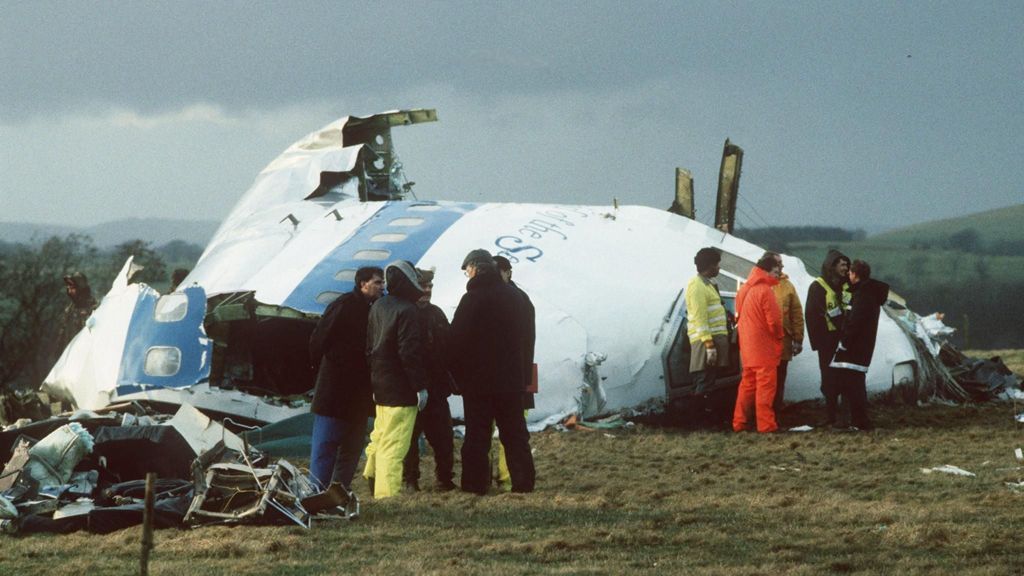
The trial of a Libyan national accused of involvement in the 1988 Lockerbie bombing has been postponed after the discovery of new evidence. Jury selection for Abu Agila Mohammad Kheir Al-Marimi was scheduled to begin Wednesday in Washington, D.C., but the start date has been moved to January next year.
The case involves the destruction of Pan Am Flight 103 over Lockerbie, Scotland, on December 21, 1988. The explosion killed 259 people on the aircraft and 11 people on the ground. Al-Marimi is accused of building the bomb, a charge he has denied. He has been in U.S. custody since December 2022.
Lawyers for Al-Marimi stated that "newly discovered evidence," which was previously unknown to both the defense and U.S. government prosecutors, emerged on Friday, August 21. The defense team informed the court that they are constitutionally and ethically obligated to investigate this development. Trial judge Dabney Friedrich approved the delay, setting aside the previous schedule that had been established after months of pre-trial litigation.
This marks the third postponement of the trial. A May 2025 date was first moved due to the complexity of the case and the defendant's health, followed by an April date that was delayed to allow for more defense preparation. The prosecution's case relies heavily on an alleged confession Al-Marimi made in a Libyan detention facility in 2012, which the defendant claims was made under duress. Judge Friedrich previously ruled that the statement is admissible as evidence.
The scale of the case is reflected in its nearly four-decade duration and the international coordination required for the prosecution. The trial involves a defendant in his 70s whose health has already been cited as a factor in previous delays. For the legal systems of the U.S. and Scotland, the proceedings represent a continued effort to prosecute individuals linked to an event that resulted in 270 fatalities. The sudden emergence of new evidence three days before jury selection highlights the ongoing complexity of investigating an incident that occurred in 1988.
The concrete impact for those following the case is a shift in the legal timeline. Instead of witnessing the start of the trial this Wednesday, stakeholders must now wait until January for the commencement of jury selection. This shift may also impact the availability and preparation of witnesses, including the Scottish witnesses who were expected to be among the first to testify. The next step in the legal process is the investigation of the new evidence by the defense, followed by the rescheduled start date in January next year.