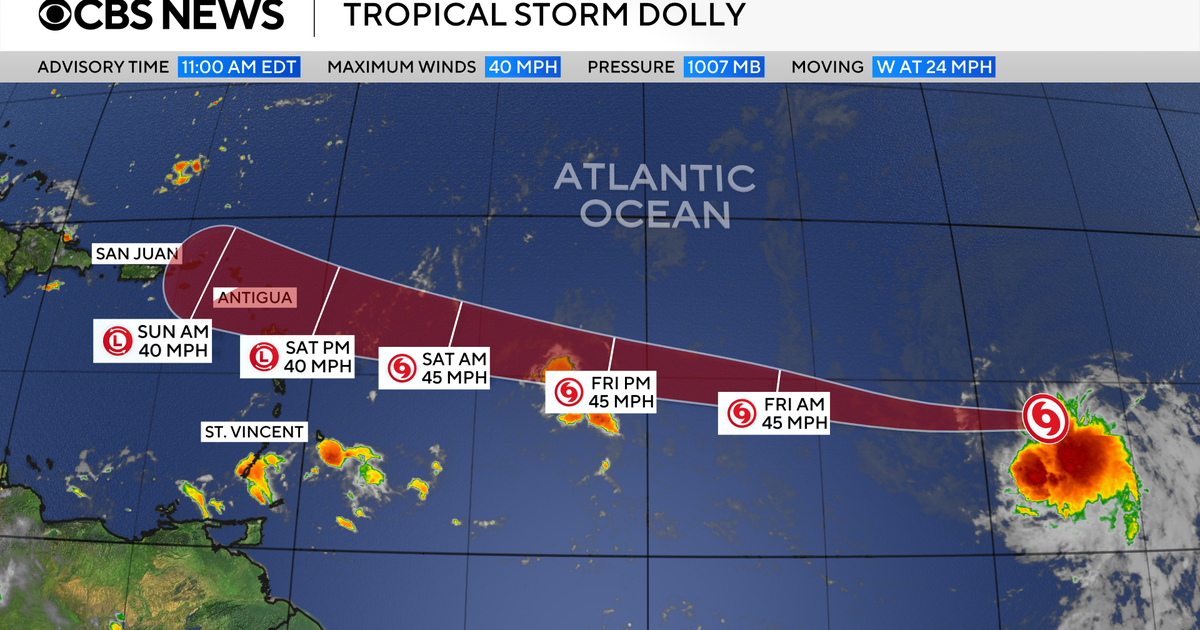
Tropical Storm Dolly formed in the Atlantic Ocean on Thursday, marking the fourth named storm of the 2026 Atlantic hurricane season. The National Hurricane Center reported the storm developed just before 11 a.m. Eastern time while located far out at sea.
The storm formed during a season that meteorologists described as quieter than usual. This lower level of activity was attributed to a deepening El Niño in the Pacific Ocean. Dolly follows Arthur, Bertha, and Cristobal as the fourth system to receive a name from the World Meteorological Organization's alphabetical list, which is prepared six years in advance.
At the time of its formation, Dolly recorded maximum sustained winds of 40 mph, the minimum threshold for tropical storm classification. The system was located approximately 1,555 miles east of the Leeward Islands, moving rapidly across the central Atlantic. Forecasters indicated that the storm's intensity would likely remain stable for the first 48 hours.
The scale of the impact involves a weather system currently spanning the central Atlantic with 40 mph winds, moving toward landmasses over a four-day window. Individuals in the affected areas may notice increased rainfall and potential flood warnings starting Saturday in the Leeward Islands and extending through Monday for those in Puerto Rico and Hispaniola. While the storm is expected to "degenerate" before reaching land, the risk of flash flooding remains the primary concern for local emergency management and residents.
The formation of Dolly serves as a reminder of the ongoing Atlantic hurricane season, which runs from June through the end of November. The timing of the storm coincided with the recent death of country music singer Dolly Parton at age 80, though the name was selected years prior according to standard meteorological protocols. The next steps involve monitoring the system's progress toward the Leeward Islands, with the hurricane center providing updates as the system approaches its projected Saturday arrival.