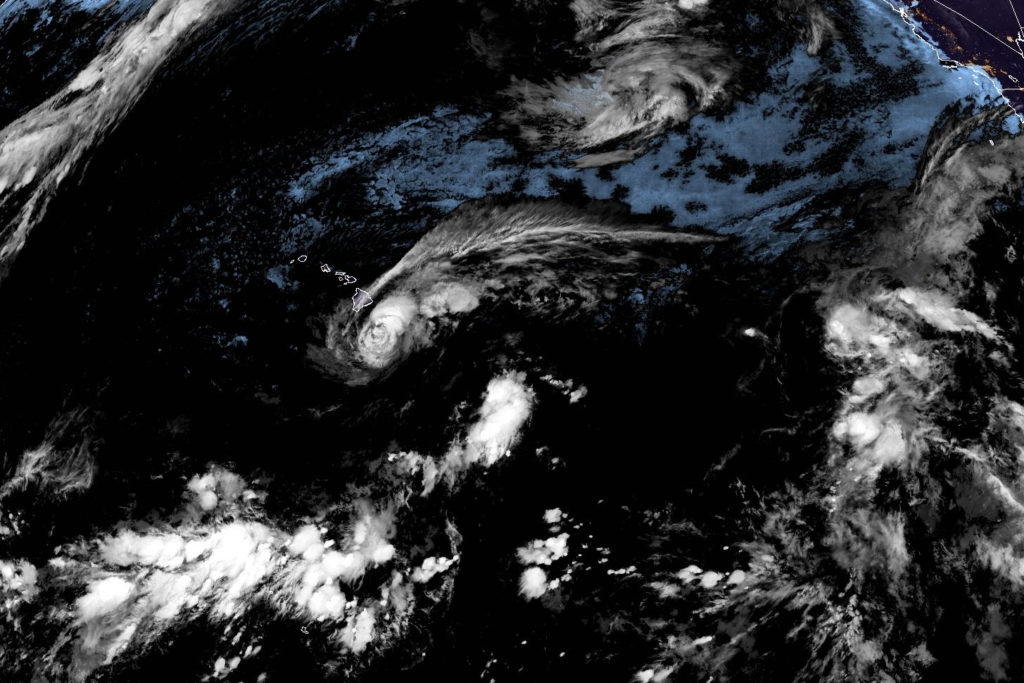
Tropical Storm Lala moved across the Hawaiian Islands on Sunday, bringing heavy rain and high winds after weakening from a hurricane. While the storm's eyewall did not make landfall, it passed close enough to cause flash flooding, power outages, and property damage across several islands. Authorities launched search-and-rescue operations on the Big Island after reports that occupied homes were swept away by rising water.
The storm follows previous severe weather in March and April that had already impacted some communities. Hawaii Governor Josh Green confirmed that at least one person died in a vehicle accident on the Big Island on Saturday. As of Sunday morning, Honolulu was experiencing the core of the storm's impact as the weather system moved westward through the island chain.
Emergency responses in Honolulu included 58 reports of downed trees, 39 damaged roofs, and 12 downed power lines by 2 a.m. local time Sunday. On the Big Island, Mauna Kea recorded wind gusts exceeding 100 mph, while some high-altitude areas received up to 35 inches of rain. In the coastal community of Na'alehu, the Punalu'u Bake Shop sustained what managers described as catastrophic damage from three feet of mud and rushing water.
The scale of the rainfall—reaching nearly three feet in some areas—creates a secondary risk of mudslides and debris flows for the approximately 210,000 residents of the Big Island, particularly those living in improvised housing on steep slopes. Individuals will notice significant disruptions to daily travel as boulders and debris block roads, and officials have advised residents to remain indoors until hazards are cleared. Ranchers were also forced to adjust operations, moving cattle to open pastures to avoid potential structure collapses from high winds.
The heavy rain and 65 mph sustained winds are expected to continue lashing the islands through Monday, with the National Hurricane Center predicting the storm could regain hurricane strength by Tuesday or Wednesday as it moves further west into the Pacific. This event sets a precedent for increased state preparation, as residents noted improved communication and proactive maintenance, such as tree trimming and stream clearing, compared to previous disasters. Emergency shelters remain open across the islands as the state monitors the western movement of the storm toward Kauai and Niihau.