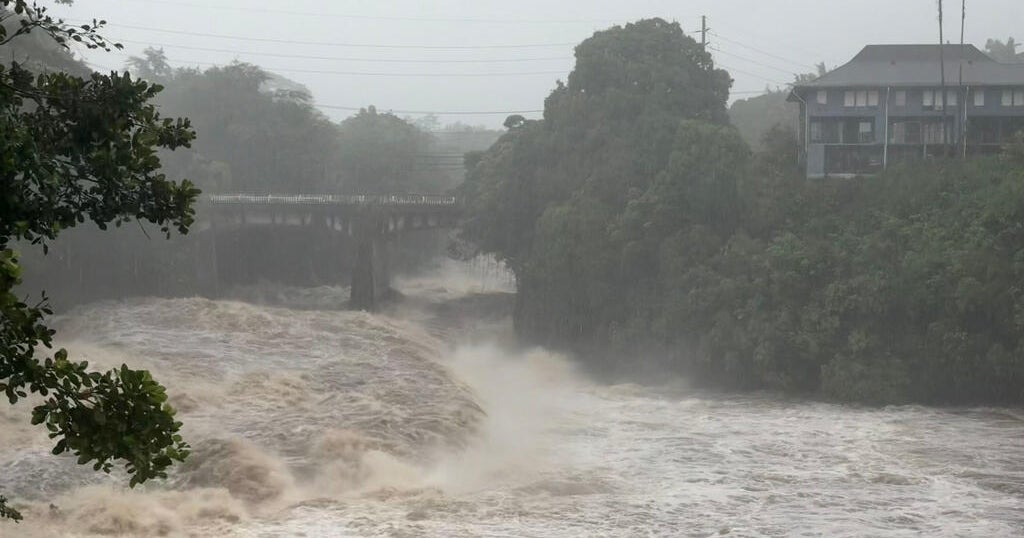
Tropical Storm Lala continued to produce high winds and heavy rainfall across the Hawaiian Islands on Sunday after passing the Big Island as a hurricane. The National Hurricane Center reported that the storm's eyewall brushed the southern portion of the Big Island on Saturday, causing flash floods that moved homes and prompted search and rescue operations. While the system weakened to a tropical storm as it moved west, forecasters expect it could regain hurricane strength by midweek.
The storm's passage resulted in significant infrastructure damage and travel disruptions. More than 222,000 homes lost electricity across the state, and authorities closed Hilo International Airport and Ellison Onizuka Kona International Airport. Hawaiian Airlines canceled 52 flights on Sunday following approximately 190 pauses or cancellations on Saturday. Hawaii Gov. Josh Green reported one death in a car accident at the southernmost point of the Big Island, though officials stated there have not yet been any confirmed storm-related fatalities.
Emergency response efforts involved the Hawaii National Guard, which deployed 180 members to assist with the aftermath. In the Kau District, flash flooding swept two homes away in Naalehu on Saturday evening, leading to the rescue of an elderly woman. Hawaii County Mayor Kimo Alameda confirmed that search missions were active in coastal communities near the island's southern tip, where rushing water, boulders, and debris hindered access to areas where occupied homes were swept off their foundations.
On a household level, residents in high-risk areas face life-threatening conditions and property loss. In parts of the Big Island, rainfall totals reached 32 inches, leading to flash floods that physically removed homes from their foundations in communities like Na'alehu and Wai'ohinu. Residents in these areas will notice immediate changes to their physical safety and housing security, as well as significant debris and boulders blocking local roads. The National Hurricane Center warned of additional rainfall between 4 and 8 inches for the Big Island and Maui, which may lead to further mudslides and coastal erosion, potentially impacting property values and insurance claims for homeowners in steep or coastal terrain.
The storm also sets a precedent for emergency management in the state, as a hurricane has not made direct landfall in Hawaii since 1992. The deployment of 180 National Guard members and the coordinated search and rescue efforts involving the Coast Guard and Civil Defense represent a large-scale mobilization of state and federal resources. As Tropical Storm Lala moves west, tropical storm warnings remain in effect for Maui, Kauai, and Oahu. Forecasters expect the storm to weaken through Monday before potentially regaining hurricane strength later in the week, meaning residents across the island chain must remain prepared for continued weather-related disruptions to utilities and travel.