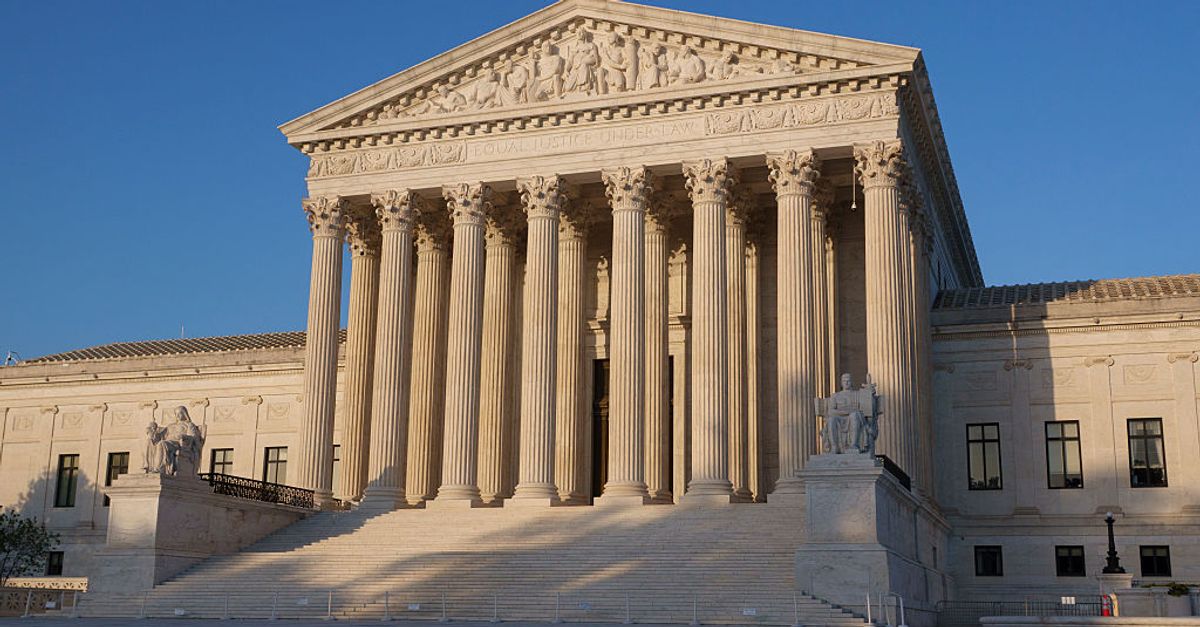
The Trump administration and the state of Texas urged the U.S. Supreme Court on Thursday, Oct. 22, to maintain a consent agreement that abolished a federal regulation allowing immigration judges to pause certain deportation proceedings. U.S. Solicitor General D. John Sauer and Texas officials filed briefs arguing against a request from three cities and an immigrant legal services group to stay a lower court's ruling. The challengers argue the agreement was reached through collusion to bypass federal rulemaking requirements.
The dispute centers on a 2024 regulation from the Executive Office for Immigration Review (EOIR) regarding "administrative closure." This procedure allows immigration judges to suspend deportation cases for individuals seeking other forms of legal relief, such as asylum, or for crime victims and witnesses cooperating with law enforcement. Texas filed a lawsuit in June 2026 in the U.S. District Court for the Northern District of Texas, claiming the EOIR exceeded its authority in adopting the rule.
On the same day the lawsuit was filed, the Department of Justice (DOJ) and Texas jointly moved for a final judgment. Chief U.S. District Judge Reed O’Connor granted the request, invalidating the rule nationwide and barring the EOIR from adopting similar rules in the future. Baltimore, Maryland; New Haven, Connecticut; and Columbus, Ohio, along with Centro Legal de la Raza, attempted to intervene to defend the rule but were denied by O’Connor and later the U.S. Court of Appeals for the 5th Circuit.
The outcome affects immigrants currently in deportation proceedings who are eligible for legal status as neglected children, asylum seekers, or victims of human trafficking and violent crime. According to the applicants, the 2024 regulation provided a mechanism to pause these proceedings while their applications for status were processed by U.S. Citizenship and Immigration Services. Without this rule, these individuals face the potential for deportation before their underlying legal claims are resolved.
The scale of the impact involves the three named cities—Baltimore, New Haven, and Columbus—which argue the rule's elimination will lead to the deportation of resident taxpayers. While the specific number of affected individuals was not reported, New Haven Mayor Justin Elicker noted that his police department certified 36 U visas for crime victims in the past year. Texas and the Trump administration argue the financial impact on cities is too "indirect" to grant them standing, noting that for a city to lose tax revenue, a specific chain of events must occur, including the re-calendaring of a case, a final removal order, and the execution of that order by the Department of Homeland Security.
The legal precedent centers on whether an administration can use a consent judgment—an agreement between parties approved by a judge—to repeal a federal regulation without the public notice and comment periods typically required by the Administrative Procedure Act. The challengers argue this method allows agencies to avoid defending regulations they disfavor. Following the filings on Oct. 22, the Supreme Court will determine whether to pause the district court's judgment while the challengers appeal the denial of their intervention. No specific date for a Supreme Court ruling has been set.