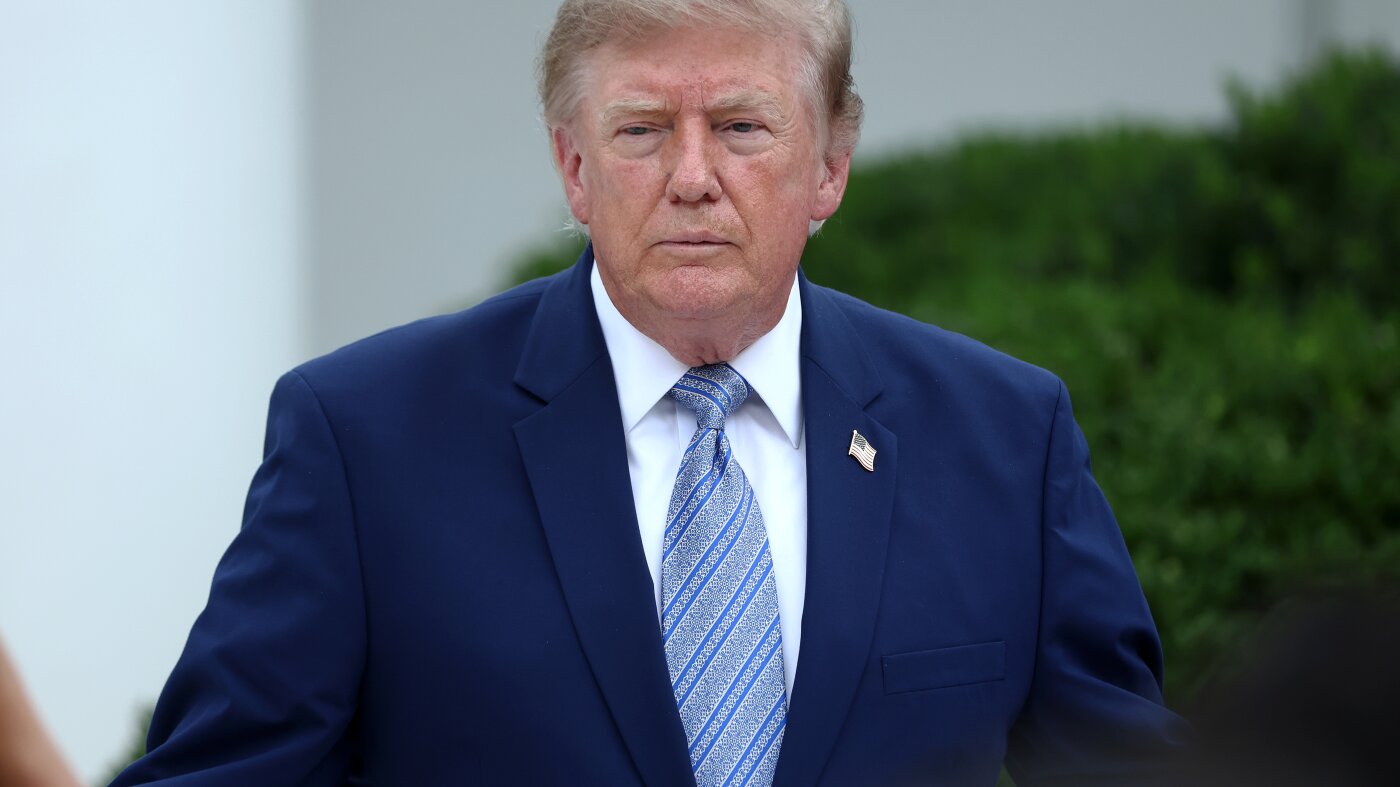
The Trump administration announced plans to increase economic pressure on Iran to encourage negotiations regarding the Strait of Hormuz. President Trump referred to the initiative as an "economic D-Day," while Treasury Secretary Scott Bessent stated that specific new measures would be detailed on Monday.
This escalation follows previous U.S. sanctions that limited Iran's international trade with Western nations. According to Sina Toossi of the Center for International Policy, the Iranian government has signaled a willingness to endure economic hardship, while seeking the unfreezing of tens of billions of dollars in foreign assets and general sanctions relief.
In a separate matter, the Supreme Court is scheduled to rule on the legality of a ballroom construction project at the White House. The National Trust for Historic Preservation, a nonprofit organization, sued the administration, arguing the project requires congressional approval. The administration maintains the ballroom is a necessary part of an "integrated military complex" featuring bomb shelters, medical facilities, and a drone port.
For U.S. residents, the outcome of the Supreme Court case regarding the White House ballroom involves millions of dollars in construction funds already spent. A halt in construction could result in a logistical impasse, as the site currently functions as both a social space and a military facility. A decision to stop work would leave the unfinished complex in a state of uncertainty, particularly as the speed of potential congressional intervention remains unknown.
These geopolitical and legal developments coincide with volatility in the financial markets, where the U.S. government is projected to spend more than $1 trillion on interest payments this year. Rising debt yields, which reached 20-year highs earlier this week, typically result in higher borrowing costs for consumers. This translates to increased monthly payments on mortgages and car loans for individual households as the Treasury Department manages higher interest rates to attract lenders. Further details on the new Iran sanctions are expected to be released by the Treasury Department on Monday.