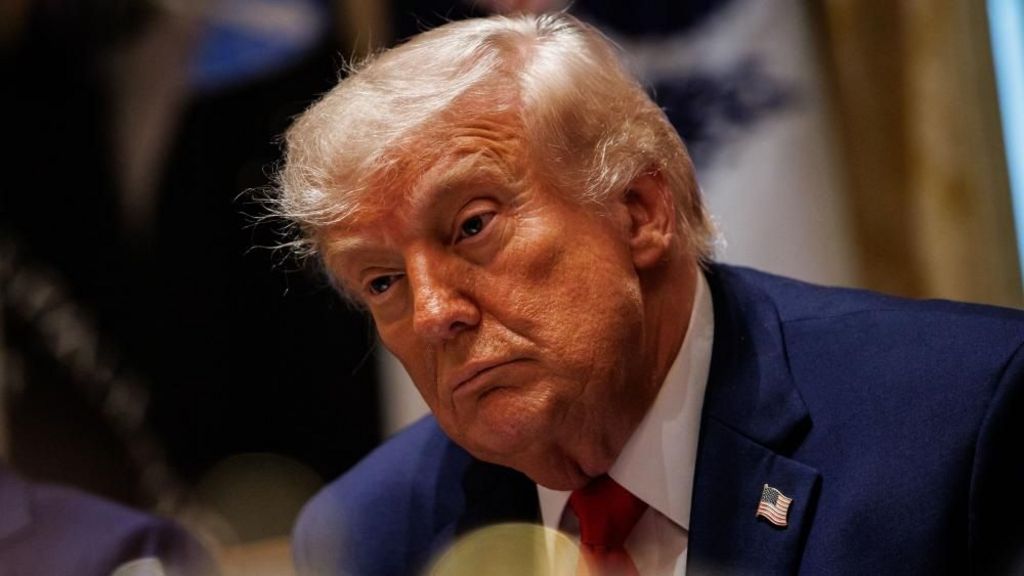
President Donald Trump has announced a plan for an "economic D-Day" policy intended to increase financial pressure on Iran and any nations that maintain trade relations with it. The administration stated that countries continuing to do business with Iran will face significant economic consequences as the U.S. seeks to resolve a military and diplomatic deadlock. Treasury Secretary Scott Bessent is scheduled to provide the specific mechanics of this new pressure campaign during a news conference on August 24.
The announcement follows a period of military standstill and the previous implementation of "Operation Economic Fury," a two-pronged strategy involving Treasury-coordinated sanctions on financial flows and a naval blockade of Iranian ports. The U.S. has maintained various sanctions against Iran since 1979, with intensity increasing after the first Trump administration withdrew from the 2015 Joint Comprehensive Plan of Action (JCPOA), which had limited Iran's nuclear program in exchange for sanctions relief.
In an interview with CNBC, Secretary Bessent stated the U.S. government would use its full force against any entity involved in transferring money, buying Iranian oil, or conducting seaborne transfers for the country. Vice President JD Vance described these measures as a "new phase" of the conflict, calling economic pressure the most effective tool for achieving U.S. objectives. Experts such as Michael Parker, formerly of the Office of Foreign Assets Control (OFAC), noted that the strategy likely targets third-party countries that rely on the U.S. dollar but continue to engage with the Iranian economy.
The shift to secondary sanctions—which penalize third parties for doing business with a sanctioned entity—represents an expansion of the "economic blast radius," according to sanctions experts. For U.S. businesses and global markets, this could lead to increased compliance costs and potential volatility in oil markets if seaborne transfers are successfully blocked. However, analysts like Mohammed Hammouda of the London Stock Exchange point out that Iran has historically used "shadow" vessels and unlisted commercial fronts to circumvent such measures, suggesting that the day-to-day effectiveness may depend on how quickly enforcement teams can identify new evasion tactics.
The knock-on effects depend heavily on the willingness of other nations to prioritize U.S. foreign policy over their own trade interests. Geostrategy expert Imran Bayoumi suggested that large economies like China may not comply, potentially leading to diplomatic friction or a fragmented global trade environment. The immediate next step is the Treasury Department's detailed briefing on August 24, which will clarify the specific legal mechanisms and enforcement dates for these measures. Until that time, the precise scale of the impact on global trade remains unconfirmed.