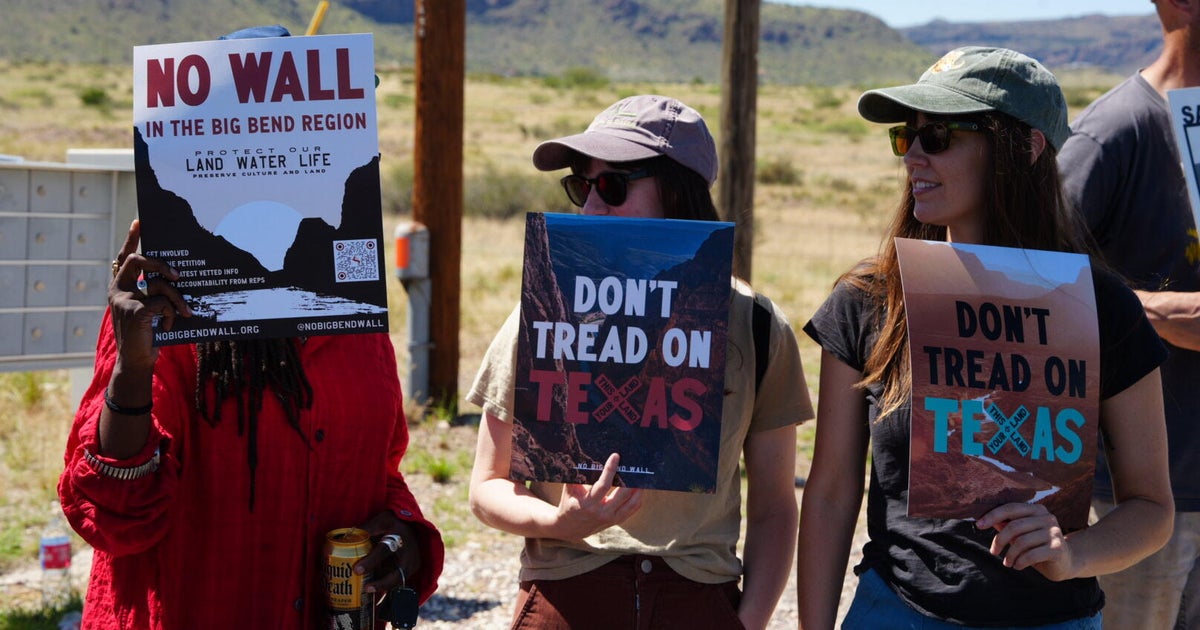
The Trump administration filed an emergency appeal with the Supreme Court on Wednesday, October 21, 2026, requesting that the court lift a lower court injunction that halted border wall construction in West Texas. The request seeks to allow the government to resume building barriers and infrastructure in the Big Bend Sector, which covers 77 Texas counties and more than 500 miles of the U.S.-Mexico border.
The legal dispute follows a series of waivers issued by former DHS Secretary Kristi Noem and her successor, Markwayne Mullin, between February and July. These waivers invoked a 1996 federal immigration law to bypass environmental and historical preservation requirements for construction. An environmental nonprofit, a riverboat guide, and a religious organization filed a lawsuit in April to block the project, leading U.S. District Judge Kathleen Cardone to grant a preliminary injunction on October 2. Cardone ruled that the plaintiffs were likely to succeed in showing the secretaries exceeded their authority by issuing waivers for an area they argued did not meet the legal definition of "high illegal entry."
Solicitor General D. John Sauer argued in the filing that the injunction "significantly frustrates" government efforts to stop illegal immigration and drug smuggling. The government reported that over 89,000 people were apprehended in the Big Bend Sector between 2021 and 2025. Conversely, plaintiffs cited court filings showing the sector accounts for only 0.3% to 2.2% of total border-wide apprehensions, despite covering more than 25% of the border's length.
The scale of the project involves approximately $46 billion in funding allocated by Republicans in Congress last summer for the 2,000-mile southwest border. In the Big Bend Sector specifically, the government plans to build more than 300 miles of walls and roads, including a 30-foot bollard wall from Fort Quitman to Closed Canyon. Residents and visitors to Big Bend National Park would see changes in the form of new patrol roads and detection technology, though U.S. Customs and Border Protection (CBP) has stated the wall itself would not cut through the park's interior.
The legal precedent centers on the "major questions doctrine," with Judge Cardone finding that the executive branch likely overstepped the authority granted by Congress in the 1996 waiver law. If the administration's appeal is successful, it could set a standard for how broadly the Secretary of Homeland Security can waive federal environmental and cultural protection laws. The Supreme Court has not yet set a date for a ruling on the emergency request, which follows Judge Cardone's recent refusal to pause her own injunction while the government appeals.