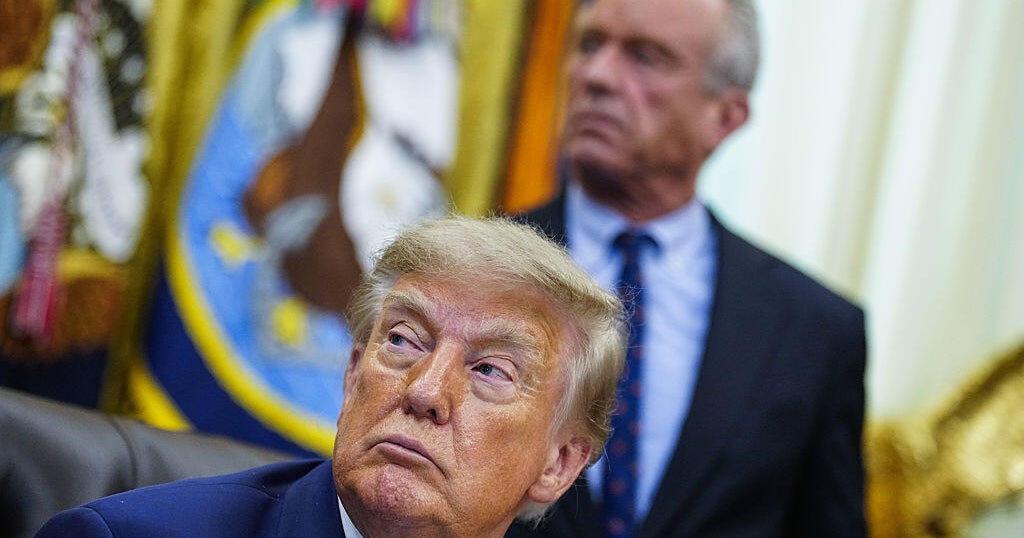
The Trump administration has entered into several voluntary agreements with health and food industry leaders to address drug pricing, food additives, and insurance procedures. These initiatives, spearheaded by Health and Human Services (HHS) Secretary Robert F. Kennedy Jr. and President Donald Trump, rely on industry pledges rather than traditional federal regulations. Supporters of this approach, such as political consultant David Mansdoerfer, argue it prioritizes communication over government mandates, while critics like Leslie Dach of Protect Our Care characterize the deals as publicity-focused efforts that lack enforcement mechanisms.
In April 2025, Secretary Kennedy announced that food makers had pledged to phase out nine petroleum-based synthetic dyes from the food supply and medicines. While Kennedy later stated at a 2026 conference that these dyes had been removed, the Food and Drug Administration (FDA) website indicates the deadline for these voluntary pledges was moved from the end of 2026 to the end of 2027. According to data from December 2025, fewer than 30% of the 27 participating companies had met their promised goals as of mid-2026.
In the insurance sector, HHS and Centers for Medicare & Medicaid Services (CMS) Administrator Mehmet Oz announced in June 2025 that major insurers pledged to reduce prior authorization requirements—a process where treatments must be pre-approved—by January 2026. However, data from the insurer trade group AHIP shows that as of July 2026, medical service authorizations had decreased by roughly 11%. Additionally, a 2025 American Medical Association survey found that only one-third of 1,000 surveyed doctors believed these voluntary pledges would result in meaningful changes.
For the average household, the concrete day-to-day impact remains largely unrealized or delayed. Consumers will notice that most products containing the targeted synthetic dyes remain on grocery shelves through at least 2027 due to the extended deadlines. Patients seeking medical care may still face prior authorization delays, as the promised 80% reduction in these requirements has reached only an 11% reduction according to industry data. Furthermore, while the administration relaxed labeling rules to allow "no artificial colors" claims for products without petroleum dyes, some natural substitutes may carry their own health risks, such as links to diabetes.
The use of voluntary agreements sets a precedent for bypasssing the traditional federal regulatory process, which typically takes two to three years. While this allows for faster public announcements, the lack of public dashboards or formal documentation makes it difficult for voters to track if companies are adhering to their promises. The next major milestones include the 2026–27 school year, when companies have committed to removing synthetic dyes from school foods, and the final December 2027 deadline for full industry removal of the six primary petroleum-based dyes. Future health policy may be shaped by whether these voluntary models are seen as effective alternatives to legislative mandates.