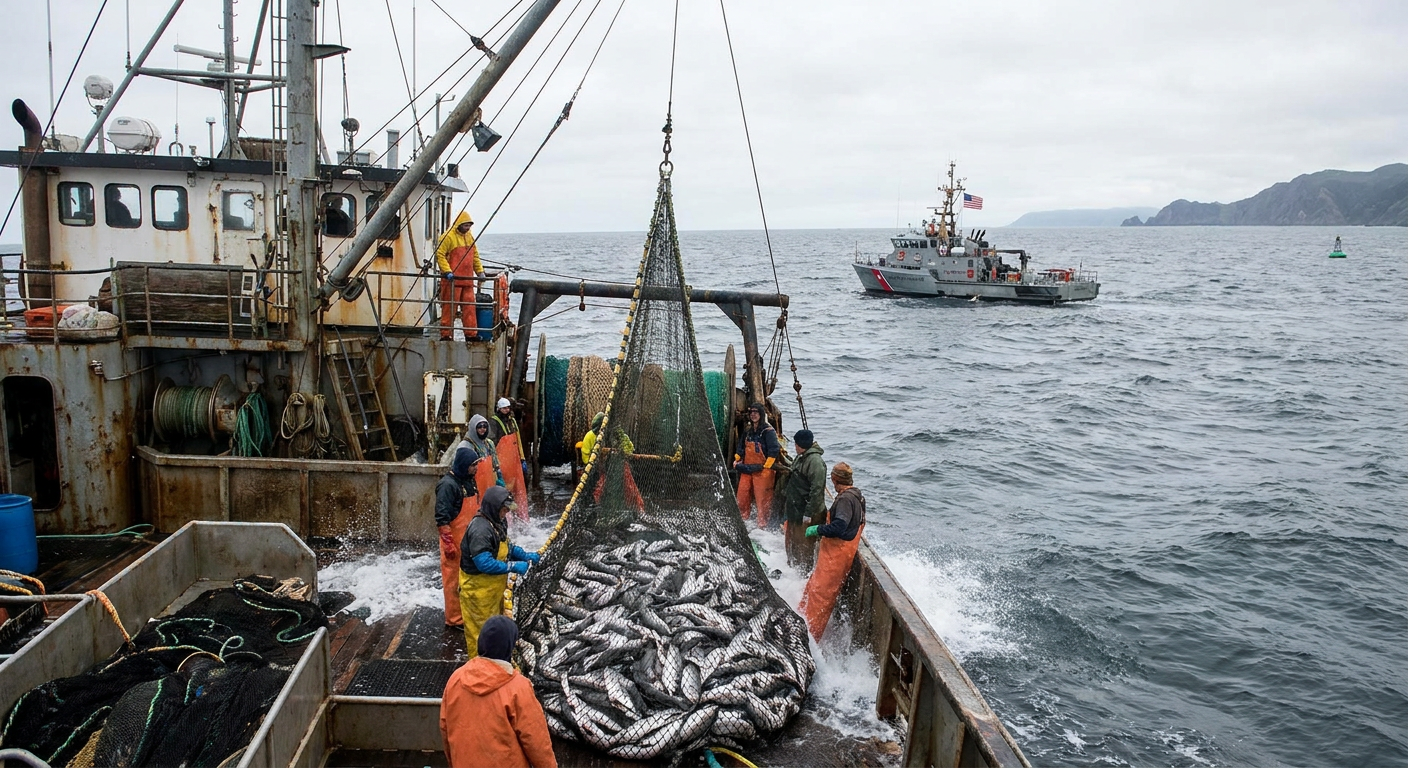
The Trump administration announced plans to open three Pacific marine monuments to commercial fishing, rolling back federal protections established to preserve remote ocean ecosystems. The move will permit commercial activity in waters located more than 57 miles from the shorelines of these protected areas. The administration previously attempted to roll back protections for a fourth monument, Palmyra Atoll, but a court ruling stayed that action pending a full environmental review.
The affected regions encompass more than one million square miles of ocean surrounding U.S.-controlled islands and atolls in the Pacific. These monuments were originally established by President George W. Bush in the 2000s and later expanded by President Barack Obama, who implemented bans on commercial fishing. The ecosystems are home to diverse marine life, including large coral reefs, seabird colonies, and concentrated populations of sharks and tuna.
Representatives for the fishing industry stated the change is necessary to maintain economic viability. Eric Kingma, executive director of the Hawaii Longline Association, reported that the Hawaii-based fishery is worth over $100 million but faces rising fuel costs and competition from foreign vessels in international waters. Kingma said opening the monuments allows U.S. fleets to fish more efficiently and sustainably within U.S. waters.
Opponents of the policy include conservationists and Native Hawaiian groups. Kekuewa Kikiloi, an associate professor at the University of Hawaii, noted that the Papahānaumokuākea monument is considered sacred in Native Hawaiian culture. Scientists, such as Alan Friedlander of the Hawaii Institute of Marine Biology, warned that commercial fishing could result in the accidental capture of endangered species, including oceanic whitetip sharks, and potentially damage ecosystems already stressed by warming ocean temperatures.
For Native Hawaiians, the decision affects the management of the Papahānaumokuākea monument, a region of cultural and spiritual significance. The rollback changes the status of over one million square miles of ocean from fully protected sanctuaries to active commercial zones. Conservationists and researchers state that the move sets a precedent for how national marine monuments are managed and could lead to increased "bycatch"—the incidental killing of non-target species such as critically endangered sharks—which may alter the food web of these remote atolls.
The Trump administration did not respond to inquiries regarding the specific timing or implementation of the fishing permits. However, conservation groups have stated their intent to file lawsuits to block the changes and preserve existing protections. The status of the Palmyra Atoll monument remains unchanged for now due to a prior court ruling requiring an environmental review, though the administration previously sought to include it in the rollbacks. Future court dates and the results of environmental reviews will determine when and if the new fishing regulations take full effect across all four Pacific sites.