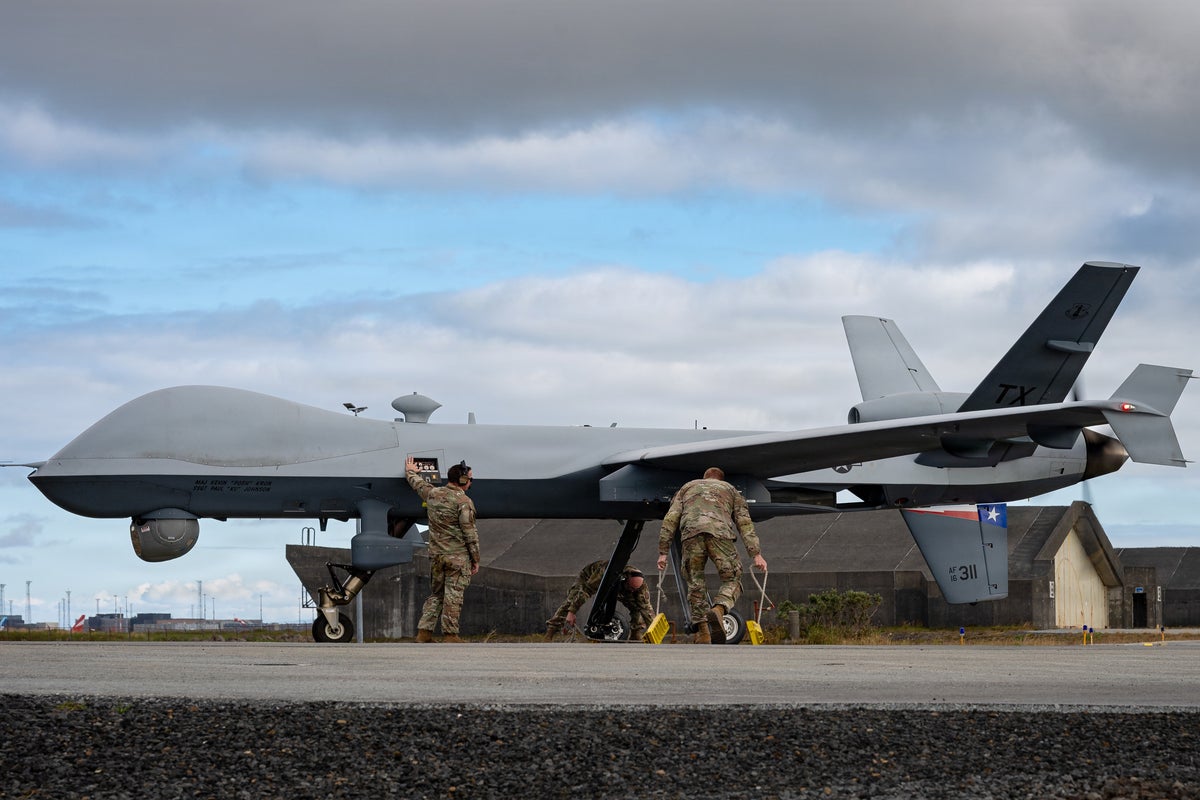
The Trump administration intends to relocate MQ-9 Reaper drones to South America to support operations focused on drug trafficking and terrorism. According to a report by CNN citing six sources familiar with the matter, the remotely piloted aircraft are expected to be transferred from Africa to U.S. Southern Command, which oversees operations in Latin America. The exact number of drones being moved was not reported, though one source stated that "most" of the drones currently based in Africa would be reassigned to the new region.
This planned deployment follows a series of military actions in the Western Hemisphere under the administration. In September 2025, the U.S. began striking boats suspected of carrying drugs near the continent, and in January 2026, U.S. special forces captured then-Venezuelan President Nicolás Maduro and his wife in Caracas. The administration has also recently reached agreements with the governments of Colombia and Panama to deploy drones for surveillance of drug-trafficking activities.
The MQ-9 Reaper drones cost approximately $56 million each and are used by the Air Force for intelligence gathering and precision strikes. The shift in resources occurs as the U.S. military manages assets across several regions. While terrorism concerns persist in Africa, the MQ-9 fleet has faced depletion in the Middle East; at least 45 aircraft, representing about 25 percent of the fleet, were reportedly lost during the war with Iran. The Justice Department reportedly drafted a legal opinion last year stating that the military is permitted to use lethal force against drug cartels if they pose an imminent threat to Americans.
For U.S. personnel and taxpayers, the move signifies a redirection of military technology from counter-terrorism efforts in Africa to counter-narcotics and security operations in the Western Hemisphere. The deployment establishes a precedent for using military drone technology against criminal organizations and drug traffickers. This shift is supported by a Justice Department legal opinion that permits the military to act against non-state actors in the region based on the reported threat to U.S. citizens.
The timeline for the full transfer of these assets was not reported, but the administration has been active in coordinating with regional partners. Defense Secretary Pete Hegseth met with officials from Ecuador, Guatemala, Honduras, Colombia, and Jamaica to discuss these partnerships. A March 2026 operation in Ecuador was described by the Pentagon as "targeted action" against "narco-terrorism networks," though a subsequent investigation by The New York Times indicated the site was a small dairy and cattle farm with no connection to drug trafficking. Future operations will likely involve the implementation of agreements with Colombia and Panama for drone surveillance.