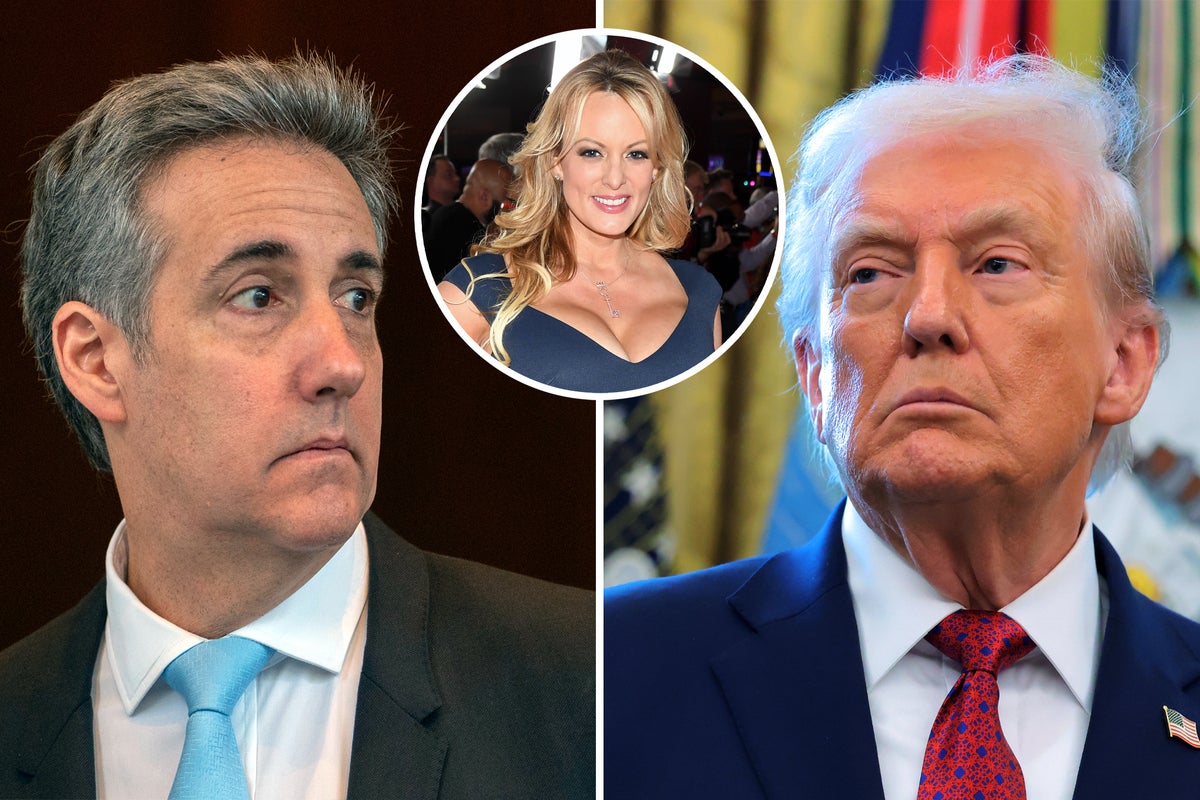
President Donald Trump and his former attorney Michael Cohen appeared together in a WABC radio interview on Thursday, marking a public shift in their relationship following years of legal conflict. During the 15-minute exchange, Cohen referred to the president as "boss," while Trump claimed that Cohen had recanted his previous testimony against him.
The interview follows a period of significant legal friction between the two men. Cohen, who served as Trump’s personal fixer for a decade, testified against him in a 2024 Manhattan trial where Trump was convicted by a unanimous jury on 34 felony counts of falsifying business records. Those charges were linked to a scheme to pay Stephanie Clifford, an adult film star known as Stormy Daniels, to prevent her from discussing a 2016 sexual encounter with Trump. While Trump received a sentence of unconditional discharge, the jury's verdict remained intact.
During the Thursday broadcast, Trump characterized the legal actions as the "weaponization" of Cohen by third parties, a description Cohen appeared to accept. Cohen, who previously served time in federal prison and had publicly labeled Trump a criminal, reportedly resubmitted an application for a presidential pardon within hours of the interview's taping. The discussion avoided the topics of hush money, prison, or the details of Trump’s prior convictions, focusing instead on Trump’s economic policies and his description of the current U.S. economy as a "renaissance."
The scale of this development is tied to the upcoming national elections and the current administration’s standing. The president currently faces an average approval rating of 38 percent, with disapproval at 59 percent. Among independent voters, approval has declined to 34 percent, a 14-point drop from his starting point and two points lower than the approval rating held by the party before losing 41 House seats in 2018. For the average household, these political shifts occur alongside a 37 percent approval rating of the economy, as voters face tariff-driven price increases and a six-month-old war with Iran.
The concrete day-to-day impact for Americans involves a squeeze at the cash register due to rising prices, which the source attributes to tariffs implemented by the administration. While Trump used the interview to highlight chip plants in Arizona and investments by companies like Toyota, Honda, and Eli Lilly, he acknowledged that gasoline prices would be "a little bit higher." A person seeking clemency or legal resolution, such as federal workers or those involved in the justice system, may notice the precedent of a high-profile witness seeking a pardon through a public reconciliation with the official he once testified against.
The next steps in this political cycle include a potential fourth summit between Trump and North Korean leader Kim Jong-un, which the Wall Street Journal reports may occur around the president's Asia trip in November. This would take place roughly two weeks before the midterm elections. Cohen’s pardon application remains pending following the interview, and the generic ballot currently shows Democrats leading by more than six points.