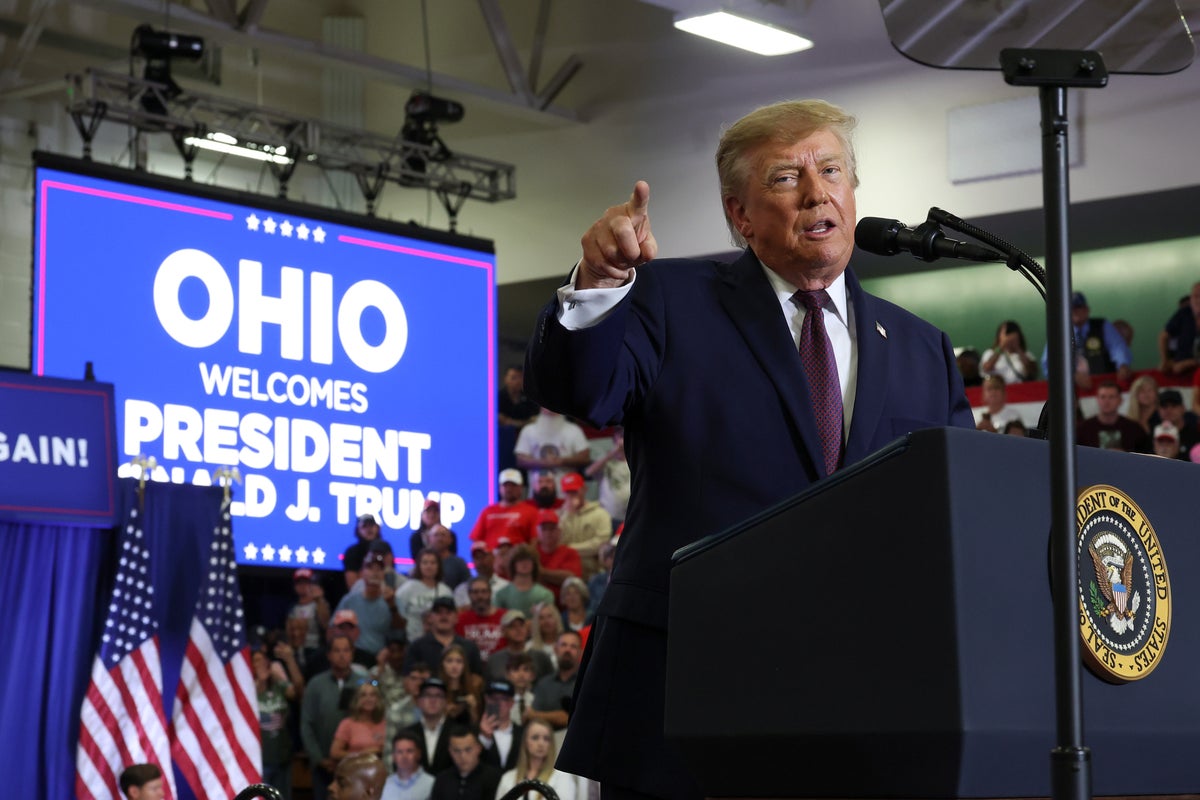
President Donald Trump and former President Barack Obama held dueling rallies in Ohio and Georgia on Wednesday, Oct. 28, to support their respective parties ahead of the midterm elections. During his appearance in Ohio, Trump responded to a protester's shout regarding his past friendship with the late Jeffrey Epstein, stating he had removed Epstein from a club approximately 20 years ago. In Atlanta, Obama addressed the reaction to his previous joke comparing White House renovations to a Cheesecake Factory, questioning the government's focus on his remarks rather than inflation.
The rallies occurred as polling from 254 Labs showed Democratic candidates leading in several Texas statewide races, including a 51 percent to 43 percent lead for James Talarico over Ken Paxton in the Senate contest. In Alaska, Governor Mike Dunleavy announced a Department of Public Safety investigation into allegations that Democratic operatives recruited a second candidate named Dan Sullivan to run against incumbent Republican Senator Dan Sullivan. Trump called for the Alaska election to be canceled, while Democratic candidate Mary Peltola’s campaign denied involvement.
On the same day, the Department of Justice (DOJ) confirmed in court filings that it plans to deploy agents from the Federal Bureau of Prisons, the DEA, and the ATF to serve as election monitors during next week's elections. Additionally, the ACLU and other civil rights groups filed a lawsuit in Northern California to block the Trump administration's efforts to identify noncitizen voters, arguing the initiative targets naturalized citizens. In financial news, the Federal Reserve announced it would keep interest rates unchanged at approximately 3.9 percent, citing elevated inflation.
For voters, the DOJ’s plan to send federal agents to the polls marks a change in election-day environments. While the administration describes these agents as monitors, civil rights groups have expressed concerns regarding voter intimidation. Simultaneously, naturalized citizens in California may face additional scrutiny of their voting qualifications due to the administration's search for noncitizen voters, a practice challenged under the Civil Rights Act of 1964.
Economically, the Federal Reserve’s decision to maintain interest rates at 3.9 percent means households will not see an immediate change in borrowing costs for mortgages or credit cards before the election. However, the central bank’s target of 2 percent inflation remains unmet, suggesting future rate adjustments are possible as the Fed accumulates more information. Legal deadlines are also approaching for President Trump, who must produce records by Nov. 23 or face the potential dismissal of his $10 billion defamation lawsuit against the BBC. Midterm voting will conclude on Tuesday, Nov. 3.