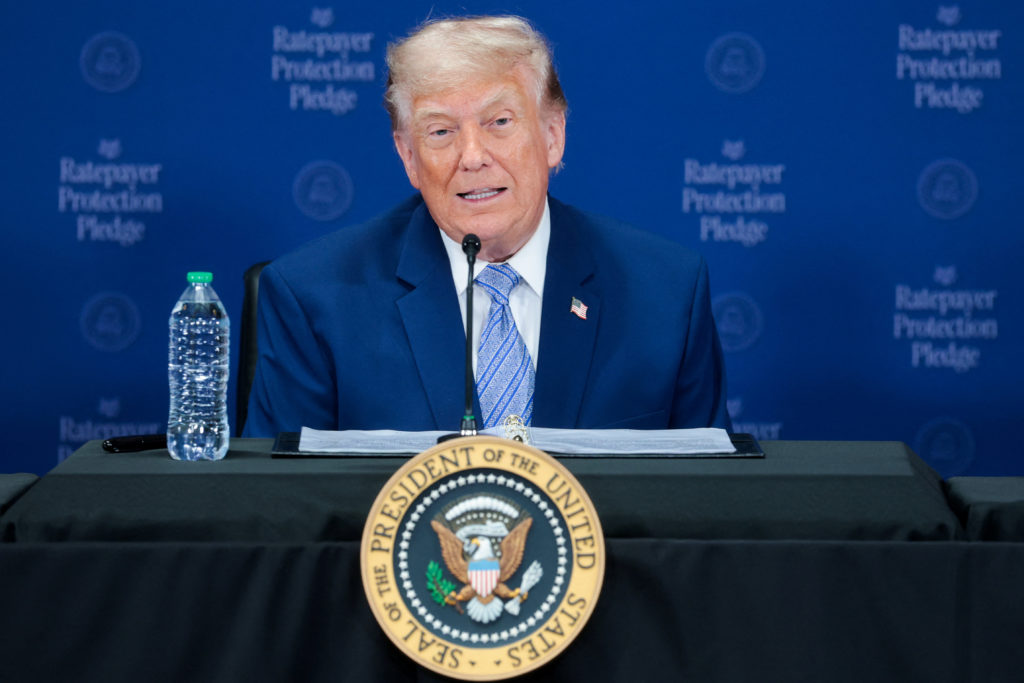
President Donald Trump announced on Thursday that nearly 200 additional stakeholders, including utility companies and governors from both parties, have joined a voluntary pledge intended to protect consumers from rising energy costs. The nonbinding agreement addresses the growing electricity demand from artificial intelligence data centers, with the White House stating the pledge now covers 80% of power delivered to U.S. households and businesses.
During remarks at the Environmental Protection Agency, the president stated that data centers generating their own electricity would create a power surplus that could be redirected to the public grid. Trump said this would result in lower monthly bills for American families. The announcement follows initial commitments made in March by tech companies to manage the resource requirements of the AI industry.
Industry analysts have expressed differing views on the impact of data centers. A recent report by ICF, a consulting firm, suggested that increased demand could raise monthly utility bills by 15% to 40% by 2030. Conversely, data center companies contend that their facilities provide significant tax revenue for local school districts and help reduce property tax burdens for residents.
State-level officials are currently pursuing various approaches to manage the build-out. Florida Gov. Ron DeSantis (R) recently signed legislation to prevent utilities from passing data center energy costs to residential customers, while New York Gov. Kathy Hochul (D) issued a one-year moratorium on large server warehouse construction. Industry representatives in California have opposed similar legislative efforts, arguing such protections could hinder economic growth.