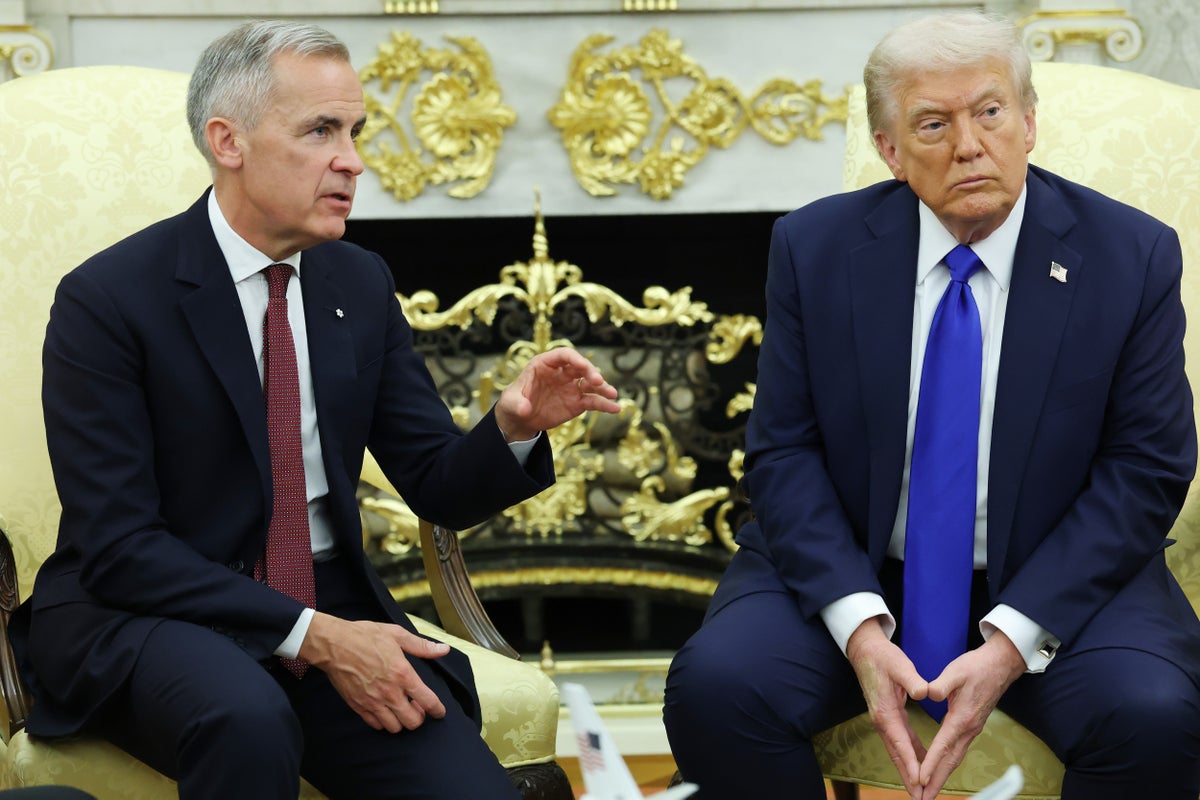
President Donald Trump announced Monday that he intends to impose a 50% tariff on all cars, trucks, automotive parts, and steel imported from Canada. In a post on Truth Social, Trump stated the new taxes are scheduled to take effect on January 1, 2027, citing a trade deficit and Canadian agricultural policies as the primary reasons for the move.
The announcement follows a period of heightened trade tension between the two nations since Trump returned to office last year. During his first term, the administration negotiated the U.S.-Mexico-Canada Agreement (USMCA), which replaced the North American Free Trade Agreement. Despite this existing framework, Trump claimed Monday that Canada has "ripped off" the U.S. with high tariffs on American farm products and created a "not sustainable" $60 billion trade deficit.
Canadian Prime Minister Mark Carney responded to the threats during a televised address, stating that Canadian negotiators were ordered to return home last week after U.S. officials proposed terms he described as "uneconomic" and "unfair." Carney argued that the U.S. trade deficit figure cited by Trump includes essential energy imports, noting that Canada provides 99% of U.S. natural gas imports, 85% of its electricity imports, and 60% of its crude oil imports. The Prime Minister suggested that Canada could potentially retaliate by limiting these energy supplies.
The policy would also impact U.S. energy consumers and utility companies. Because Canada provides the vast majority of U.S. natural gas and electricity imports, any retaliatory measures from Ottawa to cut off energy supplies could lead to increased heating and electricity bills for millions of American households. Furthermore, the automotive supply chain is highly integrated; manufacturers in the U.S. that rely on Canadian steel or specialized parts would face higher production costs, which could lead to changes in factory operations or employment levels in the manufacturing sector.
Beyond the immediate price increases, this move sets a precedent for the unilateral modification of established trade agreements like the USMCA. The tension has already stalled ongoing negotiations for a renewed trade deal, with Prime Minister Carney stating that the reliability of future agreements is now in question. The next significant date is January 1, 2027, the deadline Trump set for the tariffs to begin, though further diplomatic discussions or retaliatory trade actions from the Canadian government may occur before that time.