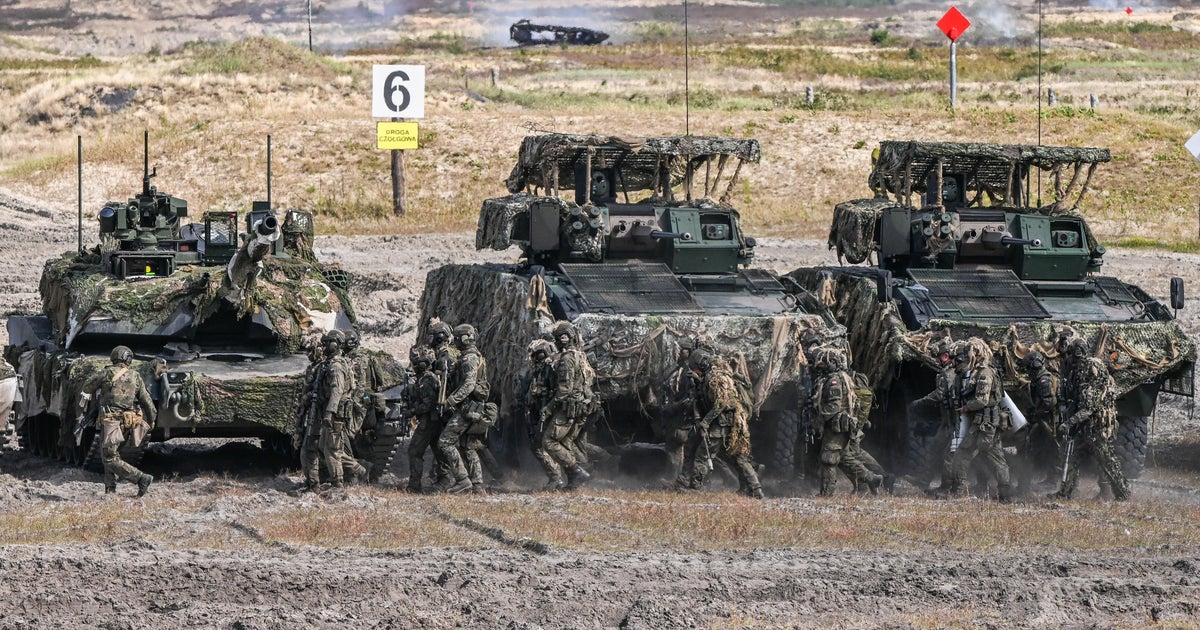
President Trump announced on Thursday, September 17, 2026, that the United States has made progress toward establishing a permanent Army base in Poland. In a social media post, Trump stated that the location would be announced shortly if the plan proceeds, describing the move as a historic step for the alliance between the two countries. The announcement follows a period of differing messages from the administration regarding troop levels in the region.
The proposal comes as Poland reports increased security concerns near its border with Ukraine. Hours before Trump’s post, Polish Prime Minister Donald Tusk told parliament there is a risk of Russian drones or projectiles entering NATO territory. Tusk cited intelligence from NATO, Ukraine, and U.S. agencies suggesting Russia might portray such incidents as accidents to test the alliance’s commitment to Article 5, the provision stating that an attack on one member is an attack on all.
Recent incidents have prompted Poland to increase its military preparedness. On Sunday, September 13, 2026, a Russian drone struck a passenger train inside Ukraine near the Polish border, shortly after foreign dignitaries, including former CIA Director David Petraeus and former British Prime Minister Boris Johnson, had passed through. Other incidents reported this week include the retrieval of a Russian drone with a warhead off Poland's coast on Monday and the shoot-down of a drone in Lithuania on Tuesday.
Defense Minister Władysław Kosiniak-Kamysz stated on Tuesday, September 15, 2026, that engineering soldiers are reinforcing border infrastructure with Hesco bastions and new observation posts. While officials have not disclosed the total number of additional soldiers, they noted the measures are intended to secure the frontier rather than serve as a general mobilization. An anonymous European military official reported that two sites in western Poland are currently under consideration for the permanent base.
A permanent U.S. military presence would represent a concrete change in the security landscape for Poland’s residents and other NATO members on the eastern flank. While Prime Minister Tusk noted there is no evidence of an imminent invasion, he argued that Poland requires greater allied loyalty than western members like Portugal or Ireland due to its proximity to the conflict. The shift from rotational to permanent status would signal a long-term commitment of American resources to the region, potentially affecting future NATO policy and federal defense spending priorities.
The announcement follows a period of shifting troop numbers. In May, the administration first announced the cancellation of a 4,000-troop deployment before Trump stated two days later that 5,000 troops would be sent instead. Secretary of Defense Pete Hegseth also announced a broader review of U.S. deployments in June, stating that NATO allies must increase their own contributions. A final decision and the specific location for the Polish base have not yet been finalized.